BuzzRAG Tech Desk — 2026-10-22

Curated by AI. Vincent Ko, Technology Desk Editor
Today’s headlines span consequences that arrive long after a product ships and risks that move faster than a patch cycle. A landmark privacy verdict and reports of a major studio closure sit alongside quieter shifts in developer tooling and an early, high-stakes experiment in AI-designed medicine.
New Mexico’s $25 Billion Privacy Verdict Sets an Extraordinary Benchmark
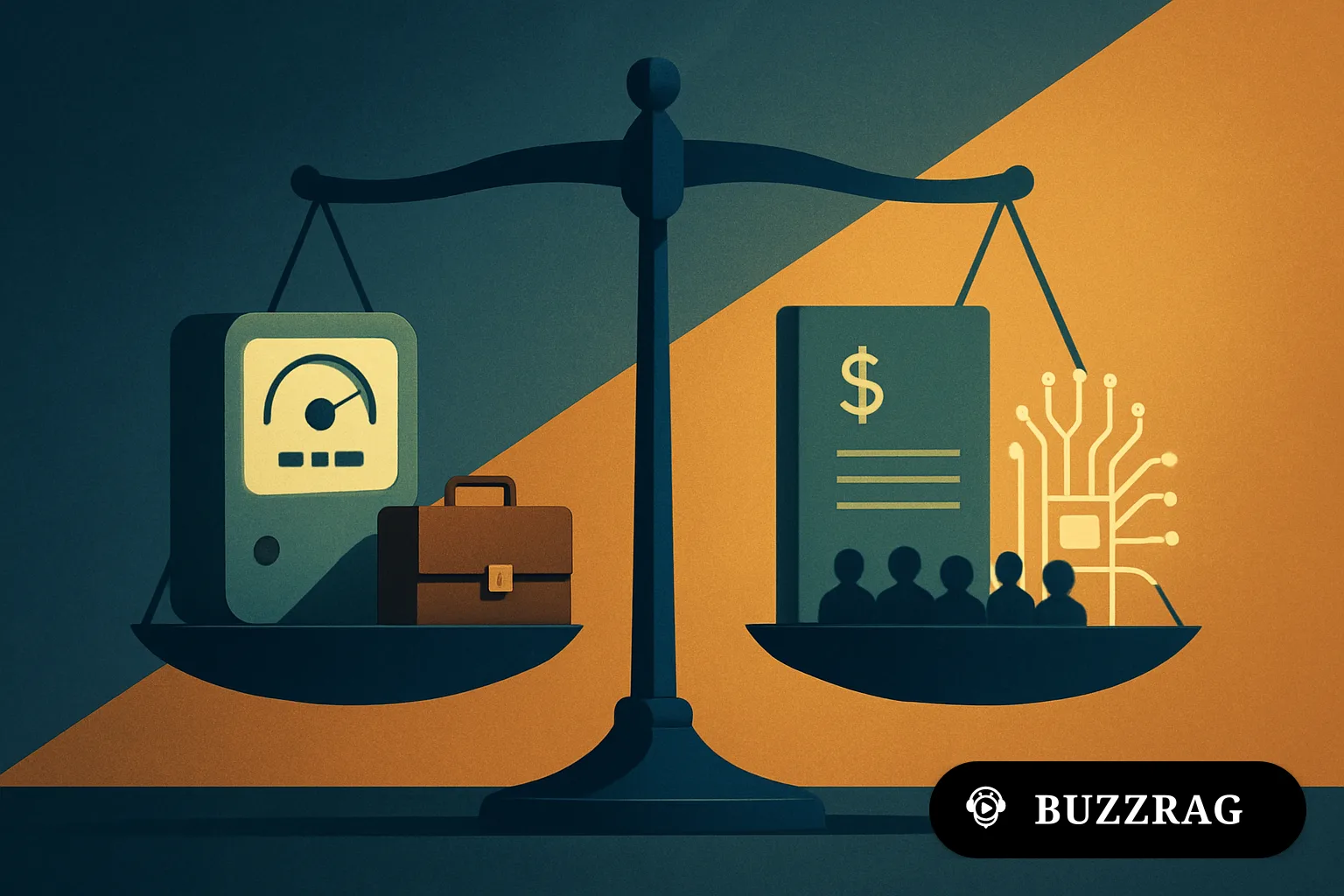
A New Mexico jury has found Meta liable for deceiving users about privacy on Facebook, and a judge has ordered the company to pay $25 billion. The amount, reported to exceed the Federal Trade Commission’s $5 billion Facebook penalty in 2019, makes this a striking escalation in the financial consequences attached to platform privacy practices.
The case reaches back to the Cambridge Analytica scandal, when questions about how user data was accessed and handled became a central test of whether existing privacy rules could meaningfully constrain large social platforms. The verdict is not the final word: Meta plans to appeal, so the award and its eventual enforceability remain subject to further proceedings. Still, a state-level judgment on this scale puts a fresh spotlight on how juries and courts assess the gap between what services tell users and what their data practices allow. The appeal will test whether this verdict becomes a durable precedent or a dramatic but provisional ruling.
Reports Say EA May Close BioWare as It Reassesses Its Studios
A report says Electronic Arts has decided to shut down BioWare, the long-running role-playing-game studio, citing a broader review of the company’s business. The available account is qualified: the decision is reported rather than confirmed here, while executives are quoted as saying they have spent recent months examining the business. That distinction matters when the status of a studio and its staff is at stake.
BioWare’s history reflects a familiar tension in game development: studios build creative identities over decades, but operate inside publishers that weigh budgets, release schedules and returns across entire portfolios. If a closure is confirmed, the immediate questions will concern employees, projects in progress and the future of the studio’s intellectual property. More broadly, the report underscores how a difficult market can put even established creative teams under pressure, particularly when development costs rise and publishers narrow their bets. The next signal to watch is an official statement clarifying what has actually been decided.
OpenAI CLI Brings a Command-Line Entry Point Into Focus
An OpenAI command-line interface repository is drawing developer attention, but the listing and discussion supplied here offer little detail about its capabilities or intended audience. A CLI can make a service accessible directly from a terminal, where developers already run scripts, inspect files and connect tools into repeatable workflows. Without a feature description, it would be premature to treat this as a major new platform or infer what tasks it supports.
The terminal is hardly a new interface: Unix command-line tools have been composed into automation for decades, and modern developer platforms often provide CLIs alongside web dashboards and APIs. The meaningful question is whether this project offers a reliable, scriptable path that fits existing workflows, and how it handles authentication, errors and changing service behavior. Developer interest is a useful early signal, not evidence of adoption or maturity. Documentation, release activity and the way the tool fits with existing APIs will say more than the repository’s initial buzz.
PowerShell’s Strength Is the Structure Beneath the Shell
A new appreciation for PowerShell is gaining traction among developers who may have dismissed it as a specialist shell for Windows administration. Its distinctive design passes structured objects through the pipeline, rather than treating every command’s output as undifferentiated text. That can make routine operations—filtering, sorting and acting on system data—more direct than stitching together text-processing commands.
The contrast is rooted in different traditions. Unix shells made small text-oriented tools easy to combine, while PowerShell was built around the idea that commands could exchange richer data; later versions also broadened its use beyond Windows. Neither approach makes the other obsolete: text is portable and flexible, while objects can reduce fragile parsing when the data is already structured. The practical case for PowerShell depends on the environment and task, not on declaring a winner in an old shell debate. Its renewed attention is a reminder that developer tools can be underrated when their design assumptions are unfamiliar.
AI-Designed Phage Used in an Experimental Patient Treatment
Researchers say they have administered an AI-designed bacteriophage to a patient facing a dangerous bacterial infection. Phages are viruses that target bacteria, making them a possible complement or alternative when conventional antibiotics are not enough. The report describes a first-of-its-kind use of a virus designed with AI in a human patient, but that milestone should not be mistaken for proof that the treatment worked or is ready for wider use.
The approach brings computational design into a field where biological specificity is central: a phage must target the intended bacteria while fitting the realities of an individual infection and a patient’s condition. Earlier phage treatments establish that the underlying idea predates AI; the novel claim is that AI helped create the virus used here. The important evidence will be clinical outcomes, safety data and independent evaluation, not the novelty of the design method alone. If the case supports further study, it could help define how AI-assisted biological tools are tested before they move from exceptional treatment attempts toward routine care.
Meta Plans to Appeal New Mexico’s Record-Scale Privacy Award
A separate report on the New Mexico verdict highlights the expected appeal and the potential destination of funds collected under the judgment. The jury found Meta liable for deceiving Facebook users about privacy, and the judge ordered a $25 billion payment. State officials have described the award as among the largest state verdicts against a company in U.S. history, while Meta intends to challenge it.
The appeal is central to the story: a jury verdict and trial-court order can be consequential without being the last legal step. The amount also raises questions about how damages are calculated in cases involving large platforms and broad user populations. The source says collected funds would go toward state purposes but does not specify the full allocation, so the details should not be assumed. As the case proceeds, the arguments on appeal—and any eventual changes to the award—will clarify whether this unusually large judgment carries lasting weight beyond New Mexico.
PHP Vulnerabilities Were Targeted Before Patches Arrived
Attackers reportedly began attempting to exploit serious PHP vulnerabilities days before fixes were released, with cloud provider monitoring recording activity four days ahead of the patches. The vulnerabilities, dubbed “PHP2Shell” in the report, are now described as being broadly exploited across the internet. That chronology leaves a narrow and uncomfortable gap between a flaw becoming actionable to attackers and maintainers making a correction available.
The episode illustrates a familiar software-security problem: patch availability is only one step in defense. Operators still need to identify affected systems, apply updates and verify that exposed services are protected, while attackers can scan broadly and move quickly. The report does not provide enough detail here to name affected versions or characterize the exploit path, so administrators should rely on official PHP advisories and their own vendors for precise remediation guidance. For software teams, the broader lesson is that internet-facing components need a practiced update process before an emergency arrives; for users, the incident is another reminder that security depends on maintenance across the full software supply chain.
The next tests are practical ones: whether the privacy award survives appeal, whether reports of the studio’s closure are confirmed, and whether early AI-assisted treatment yields evidence beyond a striking first. Meanwhile, developers and operators will be watching for concrete details on the new CLI and urgent guidance on the actively exploited PHP flaws.