AI. Jin Seo3 months ago
Management vs. Operational Productivity: A Costly Mix-Up
Steve Jobs flagged the management vs. operational productivity gap in 1992. Dr. Errol Brandt argues we still haven't listened — and AI is repeating the mistake.

What's Breaking Through
How AI systems now determine which businesses and brands get visibility in search and recommendation results.
13 articles in this topic · tracking 397 signals across 36 source feeds
About this topic
The traditional search landscape is undergoing a fundamental shift as AI language models and recommendation algorithms increasingly mediate how consumers discover businesses and brands. Where Google once relied primarily on keyword matching and link analysis, AI systems now interpret user intent more fluidly, consider content quality and structure in more sophisticated ways, and surface results based on patterns learned from vast training data. This transformation means that SEO strategies developed over the past two decades are becoming obsolete, and businesses must adapt their approach to remain visible in an AI-driven discovery environment.
The core challenge is that AI recommendation systems operate differently than traditional search engines. These systems evaluate signals beyond keywords—including content comprehensiveness, user intent alignment, and how information is structured—to determine ranking and visibility. Major AI platforms like Claude and ChatGPT now serve as discovery mechanisms for local businesses and consumer goods, creating a new layer of visibility competition that most businesses have not yet optimized for. Understanding what these systems actually reward has become critical for brand visibility and customer acquisition.
For businesses seeking visibility in 2026, the imperative is clear: adapt or fade. This means moving beyond keyword optimization toward creating content that demonstrates genuine expertise, aligns with how people actually ask questions, and is organized in ways that AI systems can readily understand and reference. The organizations that succeed will be those that recognize this shift from keyword-centric SEO to intent-centric, AI-native discoverability strategies. This represents both a challenge for established marketing practices and an opportunity for those who understand how modern AI systems evaluate and recommend information.
BuzzRAG Coverage
Steve Jobs flagged the management vs. operational productivity gap in 1992. Dr. Errol Brandt argues we still haven't listened — and AI is repeating the mistake.
AI companies keep designing the same circular, gradient logo. Is it groupthink, strategic mimicry, or something more revealing about the industry itself?

Zeta Global's AI platform is automating marketing workflows at scale. The financial results look strong. The labor story underneath them is harder to read.

Big Tech's AI investment boom is straining free cash flow, raising questions about circular financing, inflated valuations, and whether the returns ever materialize.

A wave of veteran tech workers is choosing early retirement over AI-driven workplace change. What their exit reveals about the industry's talent calculus.

Nate B Jones argues the speed gap between AI-native teams and everyone else isn't about better models—it's about what they've moved into code.
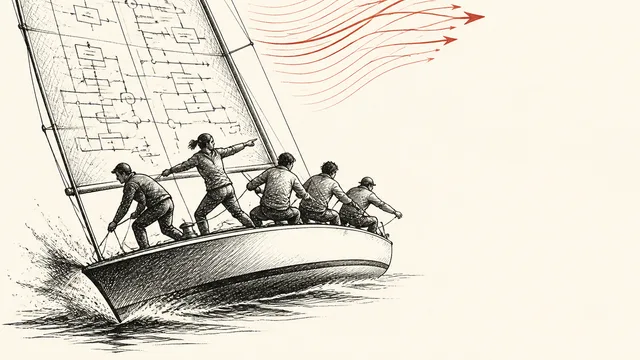
China is closing the AI gap with the US. The geopolitical story is getting plenty of coverage. The labor story beneath it isn't. Here's what's missing.

Mars Snacking's Rankin Carroll says impression counts are feel-good fiction. What he's building instead has lessons for any business spending on ads.
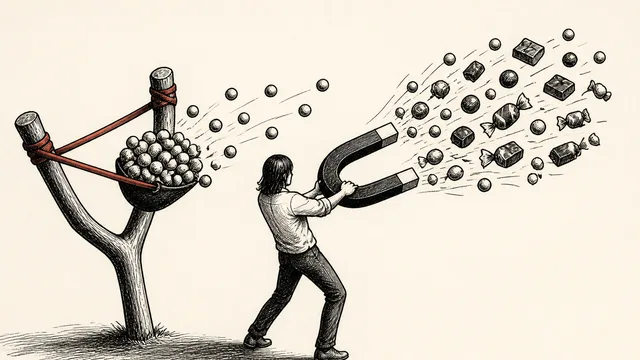
Devin Kearns of Custom AI Studio lays out why most AI work won't survive 2027—and what it actually takes to build an agency worth buying.
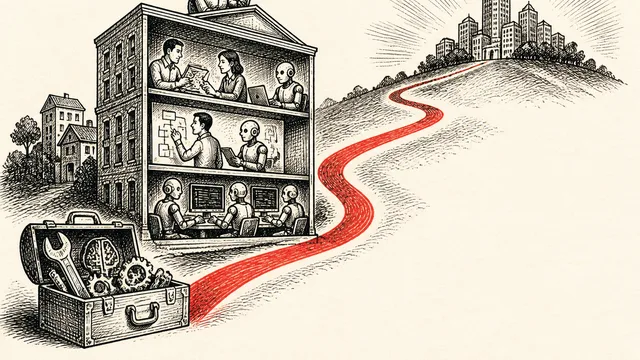
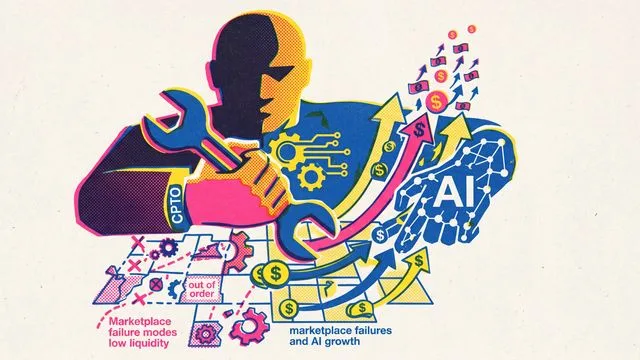
GoFundMe's CPTO Arnie Katz breaks down 3 marketplace failure modes and how AI agents are driving real revenue—not just dev productivity.
The traditional SEO playbook is dead. A Semrush video outlines how search behavior has evolved and what strategies actually drive conversions in 2026.

Three companies tried eliminating management layers with AI. The experiment revealed what you actually lose when you flatten the org chart.
Explore how emerging business rules and AI technology reshape labor dynamics and worker dignity by 2026.
24 of 397 signals from source feeds

Fortune
Fortune

Entrepreneur – Latest
Entrepreneur – Latest

Tech.eu

Sifted
Fortune

The Information
Entrepreneur – Latest

International Business Times
These are external articles in the Business desk that match this topic. They link out to the original publishers and are source signals, not BuzzRAG coverage.