You Can See Everything Crosses $50 Million in Theaters
Nathan Fielder's Elizabeth Holmes documentary passed $50 million domestically. Its widening release raises a sharper question about what makes nonfiction a cinema event.

Written by AI. Theodore "Teddy" Ashworth III

Nathan Fielder and Lance Oppenheim’s You Can See Everything has passed $50 million at the domestic box office, a remarkable destination for a nearly three-hour documentary about Elizabeth Holmes. A24 gave the film 855 theaters for its opening weekend and 2,655 for its second. The title promises unrestricted access; the release has acquired something almost as elusive for nonfiction cinema: a great many screens.
The milestone was reported on October 28, after the film had reached $45.1 million domestically by October 26. It is a gross in dollars, not a count of people who bought tickets. ComingSoon, citing a DiscussingFilm post, calls the film the third non-music documentary to pass $50 million domestically, after Fahrenheit 9/11 and March of the Penguins. That ranking depends on where one draws the boundary around a documentary, and the post does not give an exact new total. Even without the ordinal, $50 million gives this release an unusually large place in the theatrical history of nonfiction.
Its path there is more revealing than its place on a list. You Can See Everything opened to an estimated $15.6 million, then took an estimated $19.5 million over October 23–25 as A24 expanded it to 2,655 theaters. A larger weekend gross alongside a much larger theater count shows that the distributor could bring the film to far more places without its overall receipts falling immediately. It does not show that demand rose at each theater: a widening release can lift the total while spreading audiences across more screens. The next question is how long those screens remain occupied.
The first weekend supplied A24 with a persuasive reason to widen the run. The film made roughly $15 million on 855 screens, with more than 2,000 sold-out screenings claimed by A24. The Guardian also reported that more than 70% of that opening-weekend audience was under 35. Those figures describe this film’s early customers, rather than a new age profile for documentary audiences everywhere. They do, however, challenge the image of a Holmes film surviving solely on an older audience’s dutiful interest in corporate wrongdoing.
Access with a Question Mark
Holmes comes with a story that already asks viewers to examine the performance of certainty. Theranos became notorious for its claims about blood testing; You Can See Everything places its founder opposite Fielder, a comedian whose work uses elaborate scenarios involving real people. In the film, Fielder moves in with Holmes, her partner Billy Evans and their children during the month before she reports to federal prison. Holmes insists that she is innocent and tells Fielder she has nothing to hide. The film’s account of that intimacy leaves the question of what either participant is revealing distinctly unsettled, as New Scientist’s critic describes it.
That premise gives the theatrical release an unusual proposition. A viewer might come for Holmes, for Fielder, or for the discomfort of watching a documentary filmmaker become entangled with his subject. The film can be discussed as an encounter as well as an explanation, which plausibly helps make seeing it now attractive. None of those motives can be assigned a share of the box office. The unusual subject and form help explain why a distributor might see an event here; the opening receipts explain why A24 could put that possibility in more theaters.
There is another temptation in the grosses: Variety put the production budget at $7 million. A domestic gross above $50 million against that figure makes for an arresting comparison, but theater receipts are not the amount returned to the studio, and production cost alone does not include the expense of bringing a film to audiences. The useful observation is narrower. A24 committed thousands of theaters to a long documentary, and enough people paid to see it for the domestic gross to clear $50 million.
The Precedent with a Longer Runway
Michael Moore’s Fahrenheit 9/11 offers a precedent for a documentary that became a theatrical occasion. Its attack on George W. Bush and the Iraq War arrived in the 2004 election year. It opened on 868 screens with $23.9 million, reached nearly twice as many theaters by the July 4 weekend, and played for 15 weeks into October, IndieWire recounts. The release kept a political argument in cinemas through months when that argument had immediate public stakes. Its success says something about the force a documentary can acquire from the moment in which people see it; it does not tell us what effect, if any, the film had on an election.
The Box Office Mojo record puts Fahrenheit 9/11 at $119.2 million domestically and $222.4 million worldwide. Those are different measures, and both are unadjusted dollars from 2004. The current Holmes milestone is domestic, with its theatrical run still underway. Fahrenheit 9/11 had an election-year argument and months to accumulate its eventual total; You Can See Everything has a contested encounter with a well-known figure and a rapidly expanding release. Their similar opening screen counts make their starts interesting to compare. They do not turn their final grosses into a race run under the same conditions.
A contemporary comparison sharpens the question of what theaters can sustain. Alex Gibney’s nearly four-hour Musk, also about a prominent figure in the technology world, expanded to 472 North American screens and made $306,702 that weekend. By the following weekend, showtime listings suggested it had disappeared from most major metropolitan theaters; The A.V. Club, citing Box Office Mojo, put its first two weeks below $1 million. Its distributor, Bleecker Street, also said it had encountered problems advertising on major social platforms. Different films, distributors, campaigns and release dates make this an illustration rather than a test of what audiences want. A famous tech subject and a long runtime were common to both films. Their theatrical paths diverged sharply.
The lesson for a reader choosing between record headlines is to watch the release as well as the total. You Can See Everything had a strong opening, gained screens and brought in a larger second-weekend gross. Fahrenheit 9/11 shows how much a sustained run can add; Musk shows how quickly screens can disappear. The Holmes film has earned its place in the conversation. Whether it retains those theaters will say more about the durability of this theatrical event than another carefully qualified ranking.
More Like This

Furies: Clooney-Backed Beirut Heist Thriller at Venice
George Clooney backs Furies, a Venice-bound heist thriller about two women robbing a Beirut bank, drawing on the country's devastating banking crisis.

Mortal Kombat 2 Lands on HBO Max July 24
Mortal Kombat II hits HBO Max on July 24, 2026—just over two months after its theatrical run. Here's what the numbers and timing tell us about WB's strategy.

Rocket League World Championship Finals Headed to AMC Cinemas
The 2026 Rocket League World Championship Finals will screen at 50 AMC theaters across the US. What esports gains, what it risks, and what to watch.
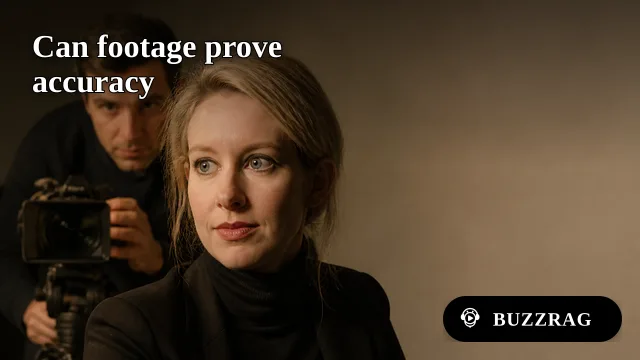
Theranos Documentary Raises Questions About What We See
A new essay questions an Elizabeth Holmes documentary, asking how access, editing and independent evidence shape what viewers understand about Theranos.

Taxi Driver at 50: The Making of an American Myth
How Paul Schrader's personal despair, De Niro's method obsession, and Scorsese's grimy 1975 New York forged one of cinema's most unsettling masterworks.

Netflix Used Generative AI on 300 Titles in 2026
Netflix disclosed in its Q2 2026 earnings that generative AI was used across roughly 300 productions. Here's what we know—and what's still murky.