World of Warcraft Forever Sees First Level 60 in Three Days
World of Warcraft Forever has its first level 60 three days after launch. The race puts leveling pace, player time and long-term community appeal in focus.

Written by AI. Lily Tsai

World of Warcraft Forever has its first level 60 character just three days after launch. Someone has already reached the number that marks the end of leveling, while most of the questions about what happens next are only beginning. A world-first finish gives players a clock to watch and a result to celebrate. It also puts an unusually narrow style of play at the center of a new project's first week.
The finish is an achievement on its own terms. A player pursuing first place has to make decisions quickly, sustain momentum and keep going while everyone else has access to the same freshly opened world. For spectators, the race compresses a sprawling game into an easy-to-follow question: who gets there first? For the person leveling at a comfortable pace, it can produce a stranger feeling. The cap has been reached before they've had time to learn what they enjoy doing along the way.
That gap between a sprint and a journey is where Forever's first substantial test sits. The three-day milestone alone gives no logged playtime total, population count or picture of how most players are progressing. It records one finish, at the far edge of a field whose day-to-day experience could look very different.
What a Three-Day Finish Measures
A first-to-60 race measures how fast an especially committed player can make progress under the project's rules. That is useful information, but it answers a narrower question than whether leveling feels well paced. Someone planning a route and prioritizing experience can reach the cap long before a player who stops to explore, reads quest text, experiments with a character or waits for a friend to log on. Both have played the same game. They have asked it to accommodate different uses of their time.
The finish also invites questions about tuning that one result cannot settle. How quickly does progress arrive for a player without a route? Are there stretches that encourage people to group up, or does the fastest path pull them past other players? When someone joins after the launch rush, will the early world still give them opportunities to play with others? Those are questions about the experience across the leveling range, not accusations that a fast player has exposed a flaw.
Race participants can tell a development team something, too. They push on progression systems at speed and make bottlenecks visible sooner than a slower population might. Yet designing every stretch around that pace could make ordinary play feel like an obstacle course. Designers have to decide which lessons from the front of the pack apply to everyone else. The first finish supplies an occasion to look; it does not make that decision for them.
Time is part of the equation. A launch race rewards planning, focus and the ability to keep playing when a more casual competitor has to leave. That does not diminish the winner's accomplishment. It does explain why a leaderboard, however exciting, cannot stand in for a verdict from the whole community. Players with jobs, caring responsibilities or simply a preference for sleep encounter the game's pacing on another clock.
The Starting Area and the Finish Line
Forever arrived with another revealing point of attention: Northshire Abbey. Some Blizzard developers were initially skeptical until they saw the new Northshire Abbey. The reported change of mind concerns a place near the beginning of the experience, while the first big public milestone concerns its level cap. Those two points on the journey offer different ways to judge the project.
Northshire is a familiar name to World of Warcraft players. Revisiting a recognizable starting place asks people to notice what has been kept, changed or reimagined. The first level 60 asks how quickly someone can move through the world. Neither encounter cancels the other out: a player can appreciate the care put into an opening area and still want to race ahead. A player drawn in by the race may later return with another character and take their time.
For developers, that split creates a difficult allocation problem. Work on an opening area reaches people when they are forming their first impression; work on later progression gives them reasons to stay once that introduction is over. The relationship between those investments becomes sharper after the first person reaches the cap. New arrivals still need a beginning that welcomes them, while the leading players need something to do with the time they have already poured in.
A recognizable setting also carries expectations that raw leveling speed cannot capture. People may come hoping to see an old location from a new angle, meet others on the same route or find a pace that lets them settle in. A world-first headline can bring those people to the door. What they find in the early levels will shape whether they stay long enough to care about level 60.
Who Does the World Serve Next?
The immediate aftermath of a first finish can pull attention in two directions. At the cap, the front-runner can look for a new challenge. Further back, other players are still working toward the milestone that has already made news. Forever's challenge is to hold both groups in the same living community rather than letting launch week divide them into those who arrived on time and those who missed the party.
Group play is one place to watch. A level cap can give dedicated players common goals beyond the leveling race, while people still climbing benefit from companions at their own stage. If activity concentrates at the top, the path there can feel lonelier for later arrivals. If players have reasons to revisit earlier parts of the world or start again, the first days of a character's life can remain social. The questions are practical ones: where are people spending time, and can someone new still find company?
There is a separate question about the incentives a public race creates. Speed can give a community a shared event, complete with a finish everyone recognizes. It can also make players feel as though wandering off the optimal route is falling behind, even when nobody requires them to compete. A community can celebrate an efficient first run and still make room for the player who wants to linger in Northshire. Much of that room comes from how people treat one another after the race, as well as from the game itself.
For now, the first level 60 is a clear, finite achievement. Long-term appeal will show up in less tidy measures: whether players keep finding companions, whether the journey rewards a second look and whether a late arrival feels invited into the same world. Forever's first player reached the finish line in three days. Everyone who logs in after them will help decide what that finish line is for.
More Like This

Gaming Hardware Costs Are Rising and Relief Is Far Off
Micron, Microsoft, and Apple signal gaming hardware prices will keep climbing through 2028 or beyond. Here's what's driving the squeeze and what it means.
Kojima's OD Survives Xbox's Sweeping Reset
Xbox is cutting projects and studios in a major reset, but Kojima's horror game OD stays safe. What does that tell us about where the platform is heading?
Temple Maker 64 Lets Players Build N64 Zelda Dungeons
Ki3 Games is bringing a solo-developed Zelda-style dungeon creator to Steam. Here's what Temple Maker 64 is, who made it, and why it matters.
Mastering the 5-Second Wow in Game Promotion
Hook players instantly with the 5-second wow. Discover strategies for game promotion.
Roblox Lost $9 Billion for Recommending Better Games
Roblox shed $9 billion in market value after adjusting its algorithm away from aggressively monetized games. Here's what that tension actually reveals.
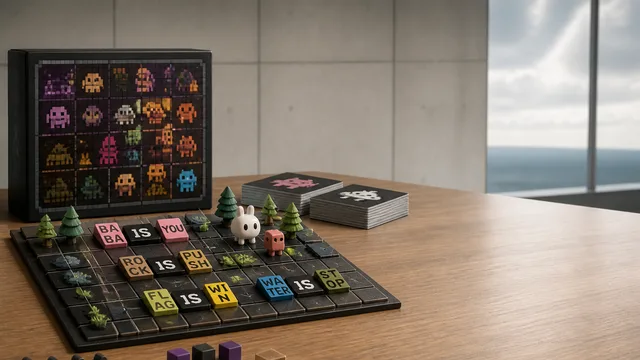
Baba Is You and UFO 50 Are Becoming Board Games
Baba Is You and UFO 50's Party House are heading to Kickstarter on Sept. 15 as board games. Here's what that translation actually demands.