Why We Stop Seeing the Good Things We Already Have
Habituation makes familiar good things invisible until they're gone. Here's what the research says about how attention can interrupt the fade, and its limits.

Written by AI. Marcus Obi
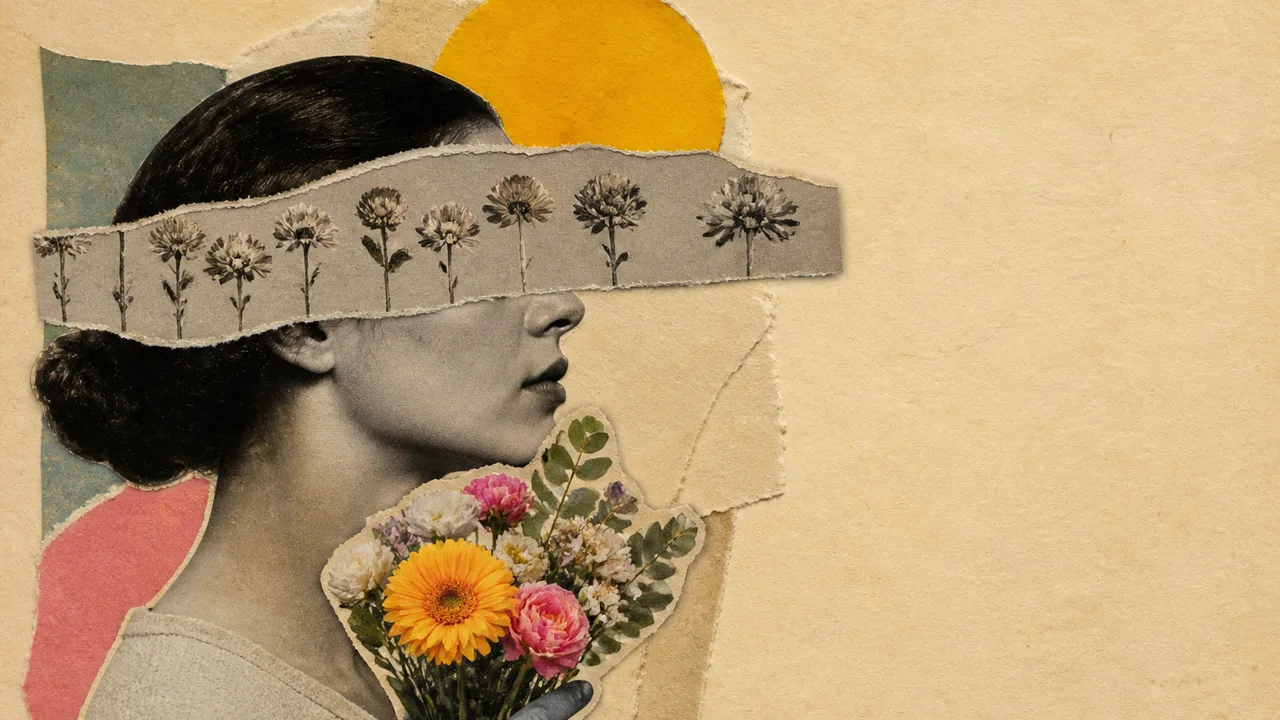
My twins turned seven in June, and somewhere between the birthday cake and the first week of summer break, I stopped hearing them. Not literally; I still intervene in the arguments over whose turn it is to feed the dog. But the sound of them playing in the next room, the thing I would have paid real money to hear during the pandemic years, now registers at about the same level as the refrigerator humming.
A new piece at Psychology Today, "Until It's Gone: Escaping the Trap of Habituation", argues this is a feature of the mind, not a parenting failure. The article describes habituation as the brain's tendency to respond less intensely to stimuli that remain stable and familiar. It's the reason you stop smelling your own house. It's also the reason a marriage, a safe neighborhood, or a healthy kid can stop registering as good news.
The Mechanism, Precisely
The Psychology Today piece is careful about what it's claiming, and the underlying science backs that care up. A peer-reviewed article published in Biological Psychology (hosted at ScienceDirect) explains how habituation differs from sensory adaptation and fatigue. Sensory adaptation happens at the level of the receptors; habituation happens in the nervous system's response to a repeated stimulus, even one that still arrives in full. Your ears hear your kids fine. Your brain has filed them under "ongoing."
A research review by Hall and Rod published in the Journal of Experimental Psychology (University of York) goes further, explaining how repeated exposure changes stimulus salience and connects habituation with associative learning. Translation for the parents in the room: what gets repeated stops standing out, and what stops standing out stops teaching us anything. The good thing doesn't change. Our response to it does.
What the Fade Costs
The cost shows up most clearly at the boundary. The Psychology Today article's title is doing real work here: most of us notice the value of a stable thing at the moment it's no longer stable. The job we complained about is the job we miss. The partner whose habits irritated us becomes, in an empty house, someone whose absence we feel in the walls.
Here's where I want to push on the framing, though, because neutrality cuts in more than one direction.
The gratitude industry has been selling a version of this for years: write five things in a journal, and contentment will follow. The strongest version of that argument is that a small, consistent practice changes what people notice, and noticing is upstream of feeling. The strongest version of the counterargument is that forced gratitude asked of an exhausted parent can read as one more optimization chore, another item on the list of ways we're being told to fix ourselves.
A scholarly review of hedonic adaptation by Lyubomirsky and Sheldon (UC Berkeley's Greater Good Science Center) sits in a useful middle position. The review examines hedonic adaptation, the process by which we return to a baseline after positive or negative change, and evaluates gratitude alongside other strategies intended to preserve positive experiences. Its conclusion supports the brief's framing: appreciation can be supported deliberately, but the strategies evaluated are modest in effect, not cures.
That word, modest, is the one the self-help economy keeps deleting.
What Deliberate Attention Can Actually Do
The practices the Psychology Today article recommends are almost embarrassingly small: vary your routines, notice specific details rather than general feelings, spend occasional time away from a valued person or place, and record what's working before a crisis makes it obvious. None of this requires a journaling app or a morning routine video. One of them is literally "leave the house sometimes."
I've been testing the least glamorous of these for a couple of months: a note on my phone where I write one specific detail per day about my kids. Not "grateful for my family," which my brain dismisses as boilerplate within a second. Specific: Ada taught Felix to whistle today and pretended she always knew how. The specificity is the point. General gratitude gives your attention nothing to grab onto; a detail is a handle.
Whether this works long-term, I can't say. The record here is thin. The hedonic adaptation literature suggests interventions fade, which is a problem for a practice whose entire job is fighting fading. The strategies that hold up best in the research involve variety and timing rather than raw repetition, which matches the Hall and Rod finding about salience: the brain habituates to your anti-habituation practice too. Your gratitude journal becomes the refrigerator hum.
The Tension Nobody Resolves
There's an open question in this research that deserves more airtime than it gets: how much fade should we accept? Habituation exists because it's useful. A parent who responded with full intensity to every familiar stimulus, every cry, every repeated question about Minecraft, would be flattened within a week. The filtering isn't a bug the wellness industry needs to patch. Some things are supposed to recede into the background so we can function.
The goal the sources collectively point toward is selective, not maximal appreciation. You're not trying to feel overwhelmed gratitude for running water every day; that path ends in exhaustion and a journal you resent. You're trying to keep a short list of things visible enough that you'd notice if they changed, and to have checked that list recently enough to act on it.
That last part matters more for parents than anyone. When I think about what fades from view in family life, the big things are rarely what fade. It's the partner who's been carrying the 5 a.m. shift and stopped being thanked for it. The brain files them under "ongoing" and moves on, and nothing in our culture interrupts the file. American family life is built on the assumption that parents will absorb uncounted labor without anyone looking too hard at it; habituation is the psychological mechanism that makes the not-looking feel natural.
The honest counterweight to that is structural, not attentional. No note on my phone fixes a country with no paid family leave and childcare that costs more than rent in most cities. But inside the limits of what an individual attentional practice can do, the record says this: appreciation is partly a skill, one that decays without maintenance, and the maintenance is unglamorous. Vary something. Notice one detail. Step away for a day. Write it down before you have to learn its value from its absence.
My kids are whistling in the other room right now. I heard it this time. The question is how many more times I'll need a reminder before it becomes my default, and whether that's a problem a seven-minute habit can carry, or one that only a different way of living does.
More Like This
Morning Routines: Intention, Gratitude, and a Dash of Skepticism
Explore morning routines focusing on intention and gratitude, with a critical look at wellness industry promises.
Eckhart Tolle Says You're Not Who You Think You Are
Eckhart Tolle's 'historical self' vs 'deep eye' framework is either profound or a very elegant dodge. A parenting writer tries to figure out which.

Handwriting Beats Typing for Learning, Studies Find
New research shows handwritten notes improve memory and recall more than typing. Here's what the science says — and what it actually means for kids and parents.
AI Therapists Are Rising. The Questions Are Hard.
AI therapists are moving from novelty to norm, especially for younger users. Here's what's driving that shift—and what remains genuinely unresolved.

Five Small Habits That Actually Stick
A new video from The Art of Improvement argues that the habits worth keeping are smaller than you think. Here's what holds up, and where it gets complicated.

Treat Your Home Like a Hotel for Better Wellbeing
What happens when you stop tolerating your home and start curating it? A look at the psychology behind the "home as hotel" lifestyle trend.

Nature and Mental Health: What the Research Actually Says
Research increasingly links time outdoors to lower anxiety and better focus—including for kids. But access isn't equal, and that matters more than the science.
Boredom Is Good for Your Brain, Science Suggests
Research suggests boredom sparks creativity and deep thinking. Here's what the science says about letting your mind wander in a distraction-saturated world.