What Flight Attendants Wish Passengers Understood
From grabbing arms to ignoring safety signs, passengers irritate cabin crew in ways they rarely realize. Here's what's actually happening at 30,000 feet.

Written by AI. Mariel Fontaine
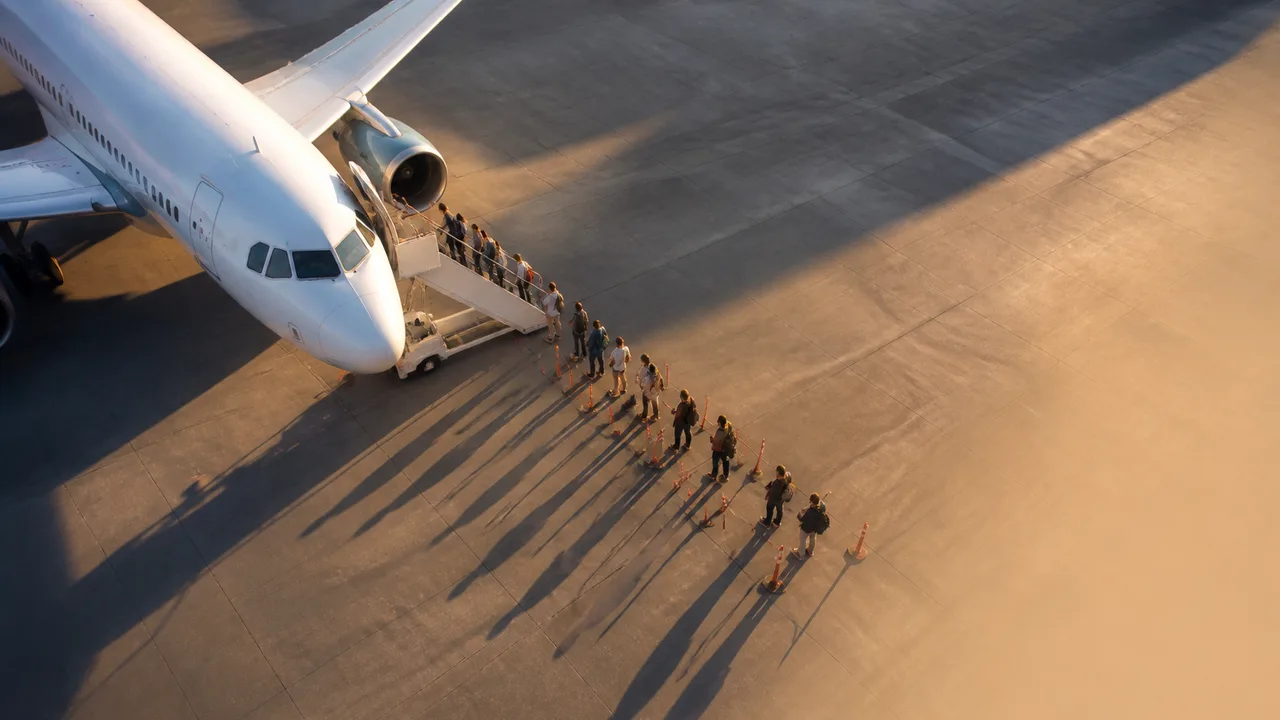
Photo: AI. Rio Sanchez
There is a particular category of social friction that travel tends to produce—friction born not of malice but of obliviousness. People don't mean to be difficult. They mean to get to their destination. The gap between those two things is, apparently, larger than most passengers appreciate.
Mark Wolters of Wolters World recently catalogued the behaviors that cabin crew find most frustrating, filming from London for a video that runs through more than a dozen passenger habits that quietly make a flight attendant's workday harder. What makes the list worth examining isn't that it's surprising—most of it isn't—but that it surfaces a structural tension that the airline industry has never quite resolved: passengers and crew share a sealed metal tube for hours at a time, operating under very different assumptions about whose authority governs it.
The respect problem comes first, and it should
Wolters opens with a recreation that lands with uncomfortable clarity: "Oh, stewardess, stewardess, sweetie, come here for a sec." He's dramatizing a real mode of address that still reaches flight attendants regularly. The framing—diminutive, proprietary, vaguely 1950s—telegraphs something deeper than rudeness. It signals that the passenger has not mentally registered that the person they're addressing holds legal authority over the cabin. Flight attendants are not servers who happen to be airborne. Their primary function is safety, their instructions carry the force of aviation law, and their working conditions include everything from turbulence to medical emergencies. The beverage cart is secondary to all of that.
Which makes the physical contact issue more than a matter of personal preference. Wolters notes that flight attendants specifically asked him to raise this: "Please, tell them to stop touching us." The safety dimension is real—grabbing someone who is pouring hot liquid during turbulence produces predictable results—but the underlying dynamic matters independently of the physics. Reaching out to touch a crew member to get their attention treats them as an extension of the environment rather than a person doing a job. The call button exists. So does the phrase "excuse me."
The operational reality passengers don't see
Several of Wolters' points illuminate the logistics that passengers experience as arbitrary inconvenience but which have structural rationale. Take the overhead bin situation. Asking a flight attendant to hoist your bag is, on its face, a minor request. In aggregate, it's an occupational hazard: Wolters reports that flight attendants have described colleagues suffering hernias and back injuries from repeated heavy lifting. Airlines have increasingly tightened carry-on weight limits partly for this reason, though enforcement remains inconsistent at best.
The boarding process generates its own category of friction. Wolters points out that asking to change seats before the doors close creates a manifest problem—checked bags are linked to seat assignments, and early seat changes can produce cascading confusion around both passenger counts and baggage reconciliation. The instruction to wait until boarding is complete before requesting a seat change isn't bureaucratic fussiness. It's a function of how the system is built.
There's also a compensation dimension that Wolters raises and that passengers rarely consider: many flight attendants don't start earning their hourly rate until the boarding door closes. The passenger who spends three minutes wrestling an oversized bag into the wrong orientation, ignores the crew member's instruction about wheels-in-first, blocks the aisle while doing it, and then asks for help—that passenger is, in a concrete sense, delaying someone's paycheck. "The longer it takes for you to get in your seat already, the longer it takes to shut that boarding door, it's longer until they get paid," Wolters observes.
Safety instructions are not suggestions
The category of passenger behavior that carries the most genuine consequence—and that Wolters addresses with appropriate seriousness—involves safety directives. Ignoring the seatbelt sign during turbulence is the clearest example. When a crew member instructs passengers to remain seated, the instruction isn't covering liability. It's accounting for physics: an unbuckled body during unexpected severe turbulence becomes a projectile that endangers everyone around it, including crew members who are then required to leave their own harnesses to manage the situation.
Wolters identifies a specific cognitive failure mode here—the passenger who hears "remain seated" and interprets a momentary lull as permission to make a quick bathroom run. "You don't think, 'Oh, well, now I can get to the bathroom because nobody's there.' No, no, no. It was a safety situation, stay seated." This isn't an etiquette issue. It's a physics issue dressed up as one.
The broader pattern of non-compliance with crew instructions—not raising window shades when asked, not returning seats to the upright position for landing, not stowing devices—sits in a legally distinct category from the other behaviors on Wolters' list. Following crew instructions is, as he notes, a matter of aviation law in most jurisdictions. That passengers experience it as optional suggests a gap between how airlines communicate authority and how passengers receive it.
The smaller frictions that accumulate
Not everything on the list carries safety weight, and Wolters is careful to distinguish between what's dangerous and what's merely irritating. Some of it is genuinely minor in isolation—the passenger who waits until the call button has been answered for their neighbor before placing their own request, rather than speaking up when crew are already at the row. Wolters acknowledges it's a small thing. But small things at scale, across 400 passengers over a multi-hour flight, shape the texture of the working day.
The "regular coffee" problem is perhaps the best illustration of this: "Tell them you want a regular coffee. What's a regular coffee? Everybody's idea of a regular is different." The complaint is almost endearingly mundane, and yet it points to something real about the cognitive load of service work. Every ambiguous order requires a follow-up exchange, every follow-up exchange costs time, and on a service cart moving through a full aircraft, time is not abstract.
The barefoot lavatory behavior belongs in a different register—less about crew inconvenience than about the passenger's own wellbeing and a basic threshold of shared-space consideration. Wolters is blunt about what's on that floor, and he's right to be.
What this list tells us about flying culture
There's a version of content like Wolters' video that functions as a complaint scroll—a list of grievances laundered into advice. This one earns a bit more credit because most of its entries connect to either safety outcomes or operational realities that are genuinely non-obvious to passengers who fly occasionally. The person who doesn't know that seat assignments are linked to checked bag records isn't being willfully obstructive. They're navigating a system whose mechanics are mostly invisible.
What the list doesn't address—and what's worth holding alongside it—is the passenger's perspective on friction that flows the other direction. Wolters raises this at the close, inviting crew and passengers alike to share their grievances in the comments. That symmetry matters. The working conditions of cabin crew in a deregulated, margin-squeezed airline industry have produced their own documented sources of tension: inconsistent policy enforcement, inadequate rest between flights, abuse from passengers that goes under-addressed by carriers. The etiquette conversation doesn't exist in a vacuum.
Still, the core of what Wolters is documenting is unambiguous: a significant portion of passenger behavior that frustrates cabin crew is behavior that passengers could modify without meaningful cost to themselves. Not touching someone who is pouring hot coffee. Specifying how you take your coffee. Keeping shoes on in the lavatory. Staying seated when the seatbelt sign is on. None of these require sacrifice. They require awareness of a working environment that happens to be the same space as your travel experience.
The aircraft cabin is, structurally, someone's workplace. The passengers who forget that tend to be the ones who never quite understood it in the first place.
More Like This
Spirit Airlines Is Gone. Your Airfare Bill Isn't.
Spirit Airlines shut down in May 2026. For millions of price-sensitive travelers, that yellow plane was the only thing keeping fares honest. Here's what that costs.
Dulles Airport's Mobile Lounges Were Never Built for You
Dulles Airport's 1960s mobile lounges were designed for jet-age elites. When flying democratized, regular people inherited a system built for someone else.
Why Introverts Intimidate People Without Trying
Psychology explains why introverts come across as intimidating—and it has less to do with their behavior than with how others respond to it.
Your Body Already Knows How to Break the Ice
A movement science writer digs into the viral 'social scripts' video — and finds an embodied cognition argument hiding inside a charisma sales funnel.

The 30-Second Hotel Safety Check You're Not Doing
A quick hotel room safety check—doors, locks, windows, exits—could prevent theft or worse. Here's what travel creator Mark Wolters says to do first.
Why Americans Travel Differently—And Who's Really to Blame
Mark Wolters and Shebz tackle overtourism, EES border chaos, and why U.S. vacation policy shapes how Americans see the world—for better and worse.
Airport Behavior That Makes Flying Worse for Everyone
From gate lice to baggage claim crowding, Mark Wolters of Wolters World maps the airport habits that slow everyone down—and why they persist.

Basic French Phrases That Help Tourists in France
A handful of French words can shift how locals treat you in France. Here's what actually matters, and why the effort carries more weight than fluency.