Virtual Nature Shows Promise for Hospital Blood Pressure
A hospital study links virtual river scenery and classical music to rapid blood pressure drops, but key design details and lasting benefits remain unclear.

Written by AI. Mei Zhang
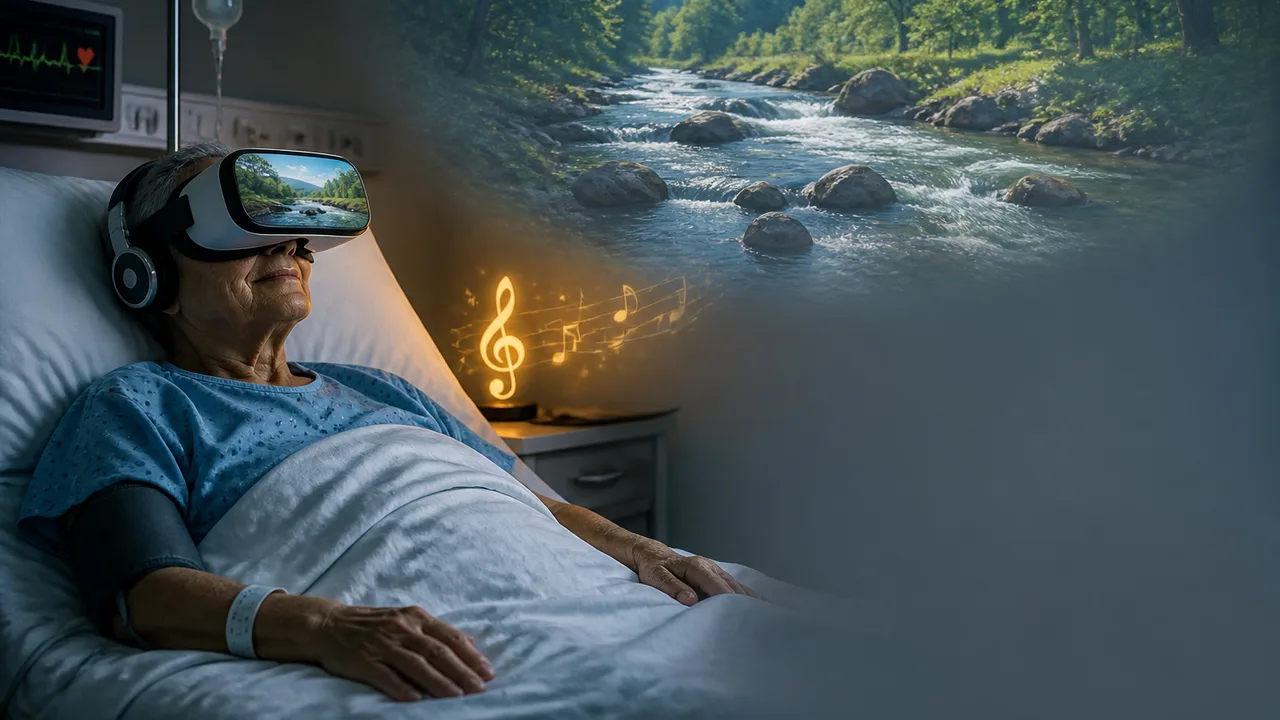
New Scientist reports that hospital patients with dangerously high blood-pressure readings experienced a rapid decrease after viewing a virtual river landscape while listening to classical music.
The finding sketches an appealing clinical tool: put on a headset, trade fluorescent lights and monitor beeps for moving water and trees, add a classical soundtrack, then measure whether the body downshifts. No needle, no new drug and no waiting for an imaginary forest to grow beside the emergency department.
Yet the available reporting leaves several pieces of the scientific puzzle face down. The study's size, participant characteristics, medication use, comparison group and follow-up period will determine whether this was a persuasive clinical experiment or an intriguing early signal. A transient decrease during one session cannot establish long-term control of hypertension.
Why a Virtual River Could Affect the Body
The proposed mechanism is biologically plausible. Stress can activate the sympathetic nervous system, increasing heart rate, narrowing blood vessels and pushing blood pressure upward. A calmer sensory environment may help reverse some of that arousal. Nature imagery can focus attention away from alarms, pain and uncertainty, while music can slow the psychological tempo of the room.
That does not show which ingredient produced the reported change. The intervention bundled virtual nature and classical music together, like serving two spices in the same soup and asking which one changed the flavor. The effect could come from the landscape, the soundtrack, the headset's visual isolation, the act of sitting still, expectations of relaxation or some combination.
Medical Xpress describes the research as involving patients in an emergency department. That setting adds practical importance because emergency departments concentrate many blood-pressure boosters in one place: illness, pain, anxiety, noise, interrupted sleep and unfamiliar people asking urgent questions. It also complicates interpretation because patients may receive medicines, pain relief or other care while their readings change.
New Scientist's account of the hospital study and the Medical Xpress report concern the same research. Their agreement therefore does not count as independent replication.
One High Number Can Mean Several Things
A very high blood-pressure measurement prompts clinical assessment, but the number alone does not describe the whole situation. The American Heart Association's scientific statement on elevated blood pressure in acute care distinguishes severe readings from hypertensive emergencies involving acute organ damage. Clinicians also consider symptoms, repeated measurements and the patient's broader condition.
The published accounts provided here do not establish the participants' diagnoses or whether any had a hypertensive emergency. They also do not say whether researchers standardized measurement conditions, repeated the readings or adjusted for medications. Those omissions limit what readers can infer from the phrase “dangerously high.”
Blood pressure is a moving measurement rather than a permanent barcode stamped on someone's arm. Posture, conversation, pain, recent activity, cuff size and emotional state can influence the result. In a hospital, the measurement may capture both underlying cardiovascular risk and the body's response to an intensely stressful environment.
A PubMed-indexed study of immersive relaxation examined whether virtual reality could influence a cuff reading in the context of white-coat hypertension. That line of research raises two interpretations of a lower post-session measurement. VR could produce a temporary physiological relaxation response, or it could reduce the stress-related inflation surrounding the measurement. Those possibilities can overlap, and neither establishes that the intervention changes cardiovascular outcomes.
What the Study Still Needs to Show
Several design details would determine how much confidence to place in the result.
First comes the control condition. Comparing VR with no intervention may overstate the contribution of the virtual river because the VR group receives time, attention, sensory shielding and structured rest. A stronger trial could compare several groups:
- Virtual nature plus classical music
- Virtual nature without music
- Music without a headset
- Quiet rest under similar conditions
- Usual care
That structure would separate the ingredients and reveal whether the expensive goggles add anything beyond headphones and a calmer room.
Random assignment would reduce the chance that the groups differed before treatment. Blinded outcome assessment and automated measurements could also limit expectation effects, although participants will obviously know whether they are wearing a headset. Researchers should report the size of the reduction, not merely whether a statistical test crossed a threshold.
Timing presents another fork in the river. A lower reading immediately after the session may help clinicians obtain a measurement under calmer conditions. If blood pressure rebounds minutes later, the intervention has a narrow role. If repeated sessions produce longer changes, the clinical case becomes stronger. Follow-up across hours, days or weeks would answer different questions.
The most persuasive studies would also track outcomes beyond the monitor. Do patients need fewer rescue interventions? Do they feel less anxious or report less pain? Does VR shorten observation time, reduce repeat measurements or improve satisfaction? Does it ever delay medication or evaluation when those are needed? A smooth number on a screen is useful only in the context of safe care.
A Treatment, a Measurement Aid or Better Room Design?
The intervention could ultimately fit into hospital care in more than one way.
As an adjunct, VR might help selected patients tolerate a stressful wait while clinicians continue ordinary assessment and treatment. As a measurement aid, it might help staff obtain readings after a period of standardized rest. As an environmental clue, it might suggest that hospitals should reduce sensory stress through quieter spaces, controllable lighting, music or visible greenery.
Those roles demand different evidence. A relaxation aid should show acceptable comfort and patient-reported benefit. A measurement protocol should demonstrate reliable readings and avoid masking clinically relevant instability. A therapy intended to improve health should produce durable benefits or better clinical outcomes.
Calling all three uses “blood-pressure treatment” would mash separate questions into one clinical smoothie. Researchers need to label the cup.
The Headset Has Its Own Baggage
Non-invasive does not mean friction-free. Some patients may find immersive equipment uncomfortable or disorienting. Headsets may be impractical for people with facial injuries, visual limitations, severe nausea, cognitive impairment or difficulty communicating. Emergency staff would also need procedures for cleaning equipment, fitting it safely and stopping the experience when clinical care requires immediate access.
Cost depends on what the intervention actually requires. Consumer VR hardware can be cheaper than many medical devices, but deployment adds maintenance, sanitation, software support, staff time and replacement equipment. Music through headphones or a tablet showing nature footage could deliver part of the benefit with less machinery. That possibility belongs in the comparison trial, not in the assumptions column.
Connected headsets introduce a separate privacy question. A basic system may collect little information, while commercial platforms can record account, device or behavioral data. Hospitals would need to know what leaves the device, who controls it and whether patients can receive the intervention without surrendering data unrelated to care.
Equity also sits inside the design choices. A headset-based service may become easier to offer in well-funded hospitals than in crowded facilities with limited staff. If quiet rest or inexpensive audio performs similarly, the lower-tech option could spread farther. If immersive VR proves substantially better, researchers and health systems would then need to decide who gets access and under what clinical criteria.
The early finding gives researchers a useful signal rather than a finished protocol. A larger randomized trial can establish whether the reported decrease exceeds quiet rest or music alone, identify who benefits, measure how long the effect lasts and check whether any improvement reaches beyond the session.
Until those data arrive, the virtual river is best understood as a research route through hospital stress. The next trial has to show whether its current carries beyond the moment when the cuff tightens.
More Like This
Unraveling the Golden Ratio's Mathematical Magic
Explore how the golden ratio's unique irrationality connects math, nature, and fractals.

How Maxwell Unified Electricity and Magnetism
A compass needle twitched in 1820 and set off a chain of discoveries that now powers every wireless signal in your life. Here's the physics behind it.

August's 96% Blood Moon Lunar Eclipse Explained
A 96% partial lunar eclipse turns the moon deep red on Aug. 27-28. Here's when to watch, why it happens, and what's threatening our view of it.

SpaceX Rocket Team Wins First Neil Armstrong Prize
SpaceX's Falcon 9 landing team won the first Neil Armstrong Space Prize, spotlighting reusable rocket engineering, costs, climate and access to orbit.
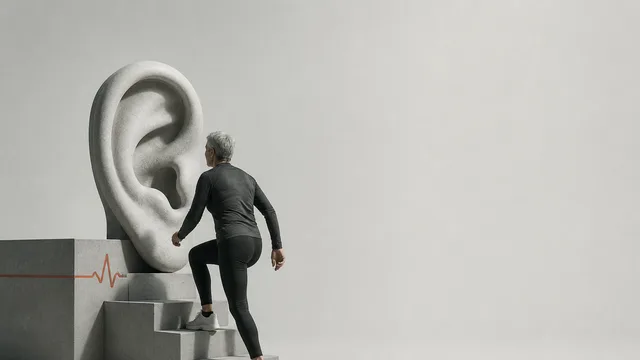
Can Better Physical Function Help Protect Your Hearing?
A study links better physical function with better hearing, but it does not prove exercise prevents hearing loss or rule out blood pressure as a factor.

The Two Poles Theorem Solves a Geometry Puzzle
A geometry puzzle about two walls and a man's height reveals a classical theorem — and a surprising connection to teamwork math. Here's what's actually going on.

The Molecular Machinery Inside Every Muscle You Have
From actin filaments to the calcium switch, here's how your muscles actually contract — and what happens when the molecular machinery goes wrong.