Can Better Physical Function Help Protect Your Hearing?
A study links better physical function with better hearing, but it does not prove exercise prevents hearing loss or rule out blood pressure as a factor.

Written by AI. Samir Patel
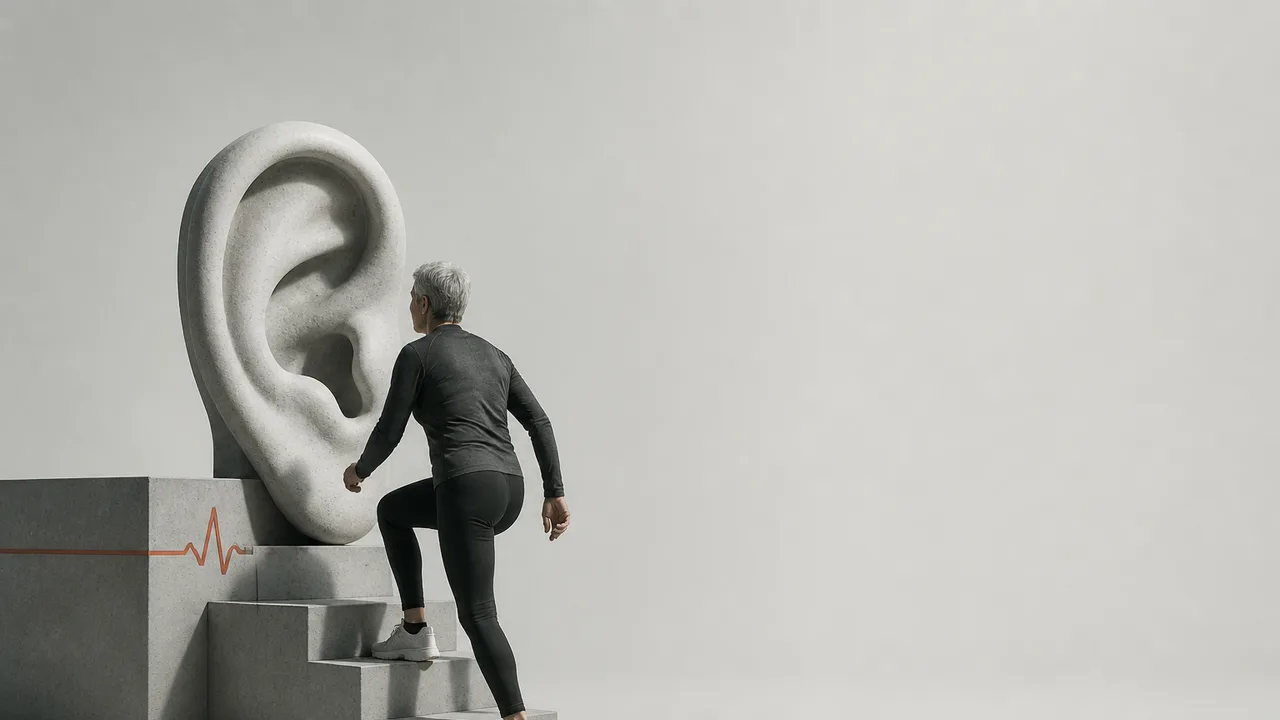
University of South Carolina researchers studied 150 adults ages 50 to 80 to ask whether physical function, hearing, blood pressure and cognition might move together as people age.
Published accounts of the 2026 Scientific Reports study describe a result that resists conversion into a tidy wellness commandment. Participants with better physical function also tended to have better hearing. Systolic blood pressure, the top number in a blood-pressure reading, was not associated with hearing or cognitive performance in this group of relatively healthy adults.
That finding supports a research question. It does not support the promise that taking more walks will preserve your hearing, nor does it establish that blood pressure has no role in hearing health. The useful story sits between those two overstatements.
What the Researchers Measured
The participants came from the University of South Carolina’s Aging Brain Cohort. As one account of the research explains, researchers had information about participants’ hearing, cognition, physical function, daily activities and blood pressure.
Physical function carries more baggage than its gym-adjacent name suggests. In this research, it included reported abilities such as walking, climbing stairs and managing self-care. A second description connects it more broadly with strength, balance, mobility, endurance and independence.
That distinction matters because physical function is an outcome produced by many parts of a life. Activity can contribute, but so can illness, joint health, body weight, strength and overall fitness. Two people may exercise equally and still have different levels of function. Two people with similar function may have arrived there through very different combinations of health, environment and support.
The study found that participants with higher physical-function scores tended to have better hearing. Mindbodygreen’s account says the relationship remained after researchers accounted for blood pressure. It also reports that age was associated with higher blood pressure and worse hearing, men had poorer hearing than women, and the relationship between physical function and cognition was relatively small.
Without the study’s effect sizes, readers cannot judge whether the hearing association was large enough to alter an individual’s everyday life. The available accounts also do not establish that improving physical function would improve or preserve hearing.
Why Blood Pressure Was Part of the Question
For years, researchers have considered whether cardiovascular health could help explain why physical ability, hearing and cognition can decline alongside one another. The proposed biological connection is plausible: small blood vessels supply the inner ear and brain with oxygen and nutrients, while high blood pressure can damage blood vessels.
This history helps explain why the blood-pressure result matters. The researchers were testing one candidate for a shared cause of several age-related changes. In this sample, systolic pressure did not explain the observed relationship between physical function and hearing.
A null result narrows one explanation under the conditions measured. Its reach ends there. A single systolic reading cannot reconstruct years of cardiovascular exposure, and one measure of vascular health cannot represent the entire cardiovascular system. A separate summary of the study notes that lifetime blood-pressure exposure, other cardiovascular measures and different health conditions could still matter.
The finding therefore leaves two possibilities open at once. Current systolic pressure may be a poor explanation for the hearing differences observed in this group, while vascular health over a lifetime may still contribute to hearing outcomes. Those possibilities do not conflict because they refer to different measurements and timescales.
This also explains why the result should not change anyone’s blood-pressure care. The study examined whether systolic pressure explained variation in hearing and cognition among 150 relatively healthy participants. It did not test whether hypertension is harmless, and the accounts emphasize that high blood pressure remains associated with serious damage to arteries and organs.
Physical Function is a Clue, Not yet a Treatment
Several causal stories could produce the association. Maintaining physical function might help protect hearing through circulation, inflammation, metabolic health or other pathways. Better overall health might independently support both mobility and hearing. Chronic illness, diet, social connection or other lifestyle factors could also influence both.
The direction could run partly the other way. Hearing difficulty can make communication and social participation harder, and reduced participation could shape how active or independent someone remains. The study as described compared health measures; it did not track which change came first.
That makes a useful comparison possible. An exercise trial would ask whether assigning or supporting a change in activity alters later hearing outcomes. This study asked whether people who already differed in physical function also differed in hearing. Both approaches can investigate a connection between movement and hearing, but they answer different questions. Association identifies a pattern. A longitudinal or intervention study would be better placed to test prevention.
The distinction also protects people from a familiar health-media trap: turning a broad marker of health into a personal assignment. Physical function reflects illness, joint health and other constraints as well as activity. Advice built around mobility lands unevenly when people have pain, disability or limited support. The study does not tell us whether participants had equal access to safe movement, rehabilitation, hearing assessment or assistive technology. Those omissions limit any claim about what an individual should be able to change.
What Readers Can Reasonably Do with the Finding
Walking, resistance work and balance exercises can help maintain everyday physical abilities when they are appropriate for someone’s health and circumstances. The new study adds a reason to investigate whether those benefits might extend to hearing, but it supplies no exercise dose, program or guaranteed hearing benefit.
Hearing care remains the direct route for a suspected hearing change. Difficulty following conversations, repeated requests for others to speak up or a steadily rising television volume can justify a hearing check. Hearing aids and other technologies can help after hearing loss occurs, although the research discussed here does not examine affordability, availability or who can obtain that care.
The study’s sample also deserves restraint. It included only 150 people and consisted mainly of educated women. Results from that group may not represent men, people with different educational backgrounds, people with more serious illness or the wider population of older adults. Larger, more diverse studies that follow participants over years could test whether maintained or improved function precedes slower hearing decline.
For now, better physical function and better hearing appear together in one modest cohort. That pattern gives researchers a route to explore, while leaving readers with a more modest proposition: maintain mobility for its established benefits, treat hearing changes as worthy of assessment, and wait for stronger evidence before calling exercise a hearing-loss prevention strategy.
More Like This
Statins May Cut Dementia Risk in Type 2 Diabetes
A major study finds early statin use after a type 2 diabetes diagnosis is linked to up to 15% lower dementia risk. Here's what the evidence actually shows.

Can Reading for Pleasure Protect Your Brain Health?
A 2026 review links pleasure reading to cognition and wellbeing, but most evidence is observational. Here is what readers can reasonably conclude today.

Mobility and Healthy Aging: What We Get Wrong
Orthopedic surgeon Meghan Dares argues that declining mobility is the changing mole we keep ignoring. Here's what the evidence actually says—and who gets left out.
Humming for Health: What the Science Actually Says
A grandmother's humming habit gets credit for a long, healthy life. Here's what breathing science supports and which medical claims remain unproven.
Communicating with Hearing Loss: Beyond the Bluff
Gael Hannan shares how honest communication overcomes the stigma of hearing loss for deeper connections.

Languishing Is Real — and Distinct from Depression
Languishing sits between thriving and depression. Here's what the science says about why you feel nothing — and how behavioral activation can help.

How Trauma Shapes the Way We Love and Receive Love
Trauma doesn't just affect the past—it rewires how we connect with others. Here's what the psychology of love after trauma actually looks like.