U.S. Border Device Searches Climb Over 32% in Nine Months
U.S. border searches of travelers' phones and laptops rose more than 32% in the first three quarters of fiscal 2026. What that means for privacy and access.

Written by AI. Zara Chen
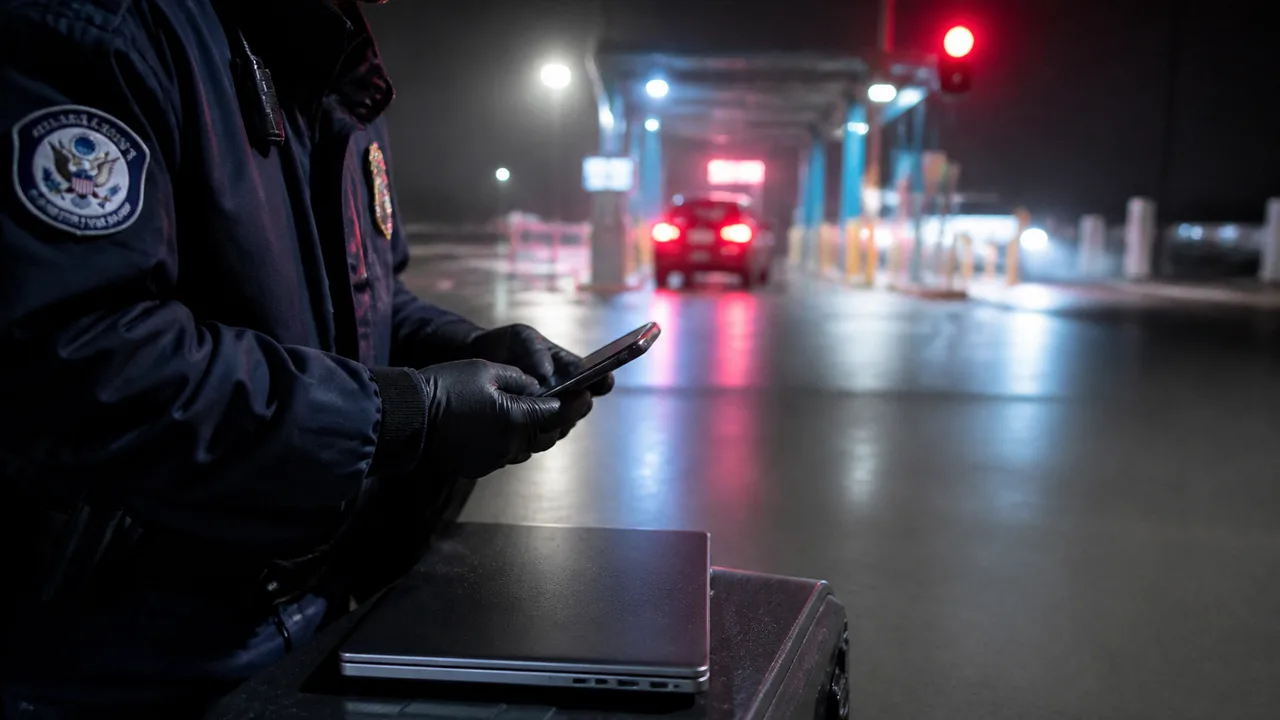
U.S. Customs and Border Protection searched travelers’ electronic devices more frequently in the first three quarters of fiscal 2026, with the count up more than 32%, CBC News reported after obtaining agency data. The figure covers phones, laptops and other devices belonging to people entering the United States. For a traveler, the immediate question is simple: If an officer asks to see your phone, how much of your life travels through that screen?
A suitcase contains what you packed for this trip. A phone may hold conversations from years ago, family photos, work files, account alerts and access to information that never physically crossed the border. The officer sees an item subject to inspection, while the traveler sees a gateway to a much larger archive.
The 32% increase alone does not tell us how many individual travelers were searched, whether examinations became more intrusive, or how the change compares with the volume of people entering the country. Those measures would give the increase a clearer scale. The privacy question exists either way, because even a brief inspection can involve information a traveler did not think of as luggage.
What a Device Search Reaches
A device bundles categories of information that used to be easier to keep apart. A work laptop can contain client correspondence alongside a personal browser session. A parent’s phone can hold vacation pictures beside a child’s school messages. Someone crossing to visit family may have years of private conversations on the same device they use to show a boarding pass.
That accumulation changes the practical stakes of an inspection. An officer might be interested in one question about a traveler’s entry, while the device presents many unrelated details. The difficulty is not confined to embarrassing photos or private messages. A traveler may also be carrying information about other people who had no say in the border crossing: colleagues, customers, patients, friends or relatives.
Phones complicate the idea of a contained search further because many apps connect to accounts elsewhere. A downloaded document, a cached message and a file that loads only after an app connects to the internet may appear similar to someone holding the phone. They raise different questions about what is stored on the device and what an inspection might reach through it. Treating “the phone” as a neat container is convenient; using one makes clear how messy that boundary has become.
The strongest case for border inspection powers starts with the government’s responsibility to assess who and what enters the country. Officials may need to investigate suspected violations, and relevant information can be digital rather than tucked into a bag. A rule that made every device inaccessible at the border could leave a significant gap in that work.
The corresponding concern is the breadth of access. If inspecting an object also exposes unrelated correspondence and records, a targeted question can lead to a much wider look at a person’s life. The useful policy questions become more concrete: What prompts a search? How far may it go? What happens to information encountered along the way? Those questions serve legitimate enforcement interests as well as travelers who want to know what an inspection entails.
A Password is Not the Whole Problem
Encryption is useful because it can make stored information harder to read without the right credentials. It does not decide how a traveler should respond to an officer’s request for access, what could happen to a device during an inspection, or whether an unlocked app exposes information held in the cloud. A separate lock on an app can create another access decision; it does not supply a universal answer about a traveler’s obligations.
The choices also have costs. Removing sensitive material from a device before a trip might reduce what sits locally on it. It could also leave the traveler unable to retrieve a document needed for work or family. Signing out of accounts may narrow immediate access, then make it harder to deal with a changed itinerary or an urgent message. Advice that sounds effortless from a couch can feel different at an airport counter.
Legal position and practical leverage are separate questions. A person deciding whether to decline a request may need to consider entry, delay, access to the device and access to essential accounts. Those considerations can vary with the traveler’s status and circumstances; a social-media tip cannot settle them. Anyone facing a consequential decision about access should seek current, situation-specific guidance rather than assume that a setting on a phone determines the outcome.
Employers have their own version of the problem. Sending a worker across a border with a laptop full of internal material may be convenient, but it also puts the worker in charge of decisions about information belonging to colleagues or customers. Requiring employees to travel with fewer local files, or giving them a way to regain necessary access after arrival, could reduce that burden. It also takes planning: a device stripped of the files someone needs may be a very secure paperweight.
The Choices Behind the Increase
A rise in searches invites questions about why the number changed. Enforcement priorities, staffing, travel patterns and the way searches are counted could each affect a total. Those possibilities point to different policy debates. More searches among far more arrivals would describe a different traveler experience from more searches among a similar number of arrivals. An increase concentrated in brief manual checks would raise different concerns from an increase in extensive examinations.
For travelers, the percentage may still alter how they prepare. People routinely decide what documents to pack and which valuables to carry. Digital preparation asks them to consider what information is stored locally, what accounts remain open and whose data is mixed with their own. None of that requires assuming an inspection will happen. It requires recognizing what a device would expose if one did.
There is a wider civic cost to uncertainty, too. Journalists, researchers, business travelers and families have reasons to carry private information, and a single rule of thumb will not fit all of them. Clearer public information about the scale and types of searches would help people assess the risk without treating every border crossing as a worst-case scenario.
The reported increase puts a familiar border power against an unfamiliar amount of personal data. Travelers once decided what went into a suitcase. Now they also have to decide how much of an archive to bring along when they carry a phone.
More Like This

This Creator Got Shadowbanned on YouTube in 25 Days—On Purpose
A vidIQ creator deliberately shadowbanned their channel with AI-generated content to expose how YouTube's algorithm actually works. The results are wild.
Flock Cameras Track Far More Than License Plates
Flock Safety's AI-powered cameras are spreading fast across U.S. cities—and they're capturing far more than license plates. Here's what's at stake.

Renewables Hit 30% of US Electricity in Early 2026
EIA data shows renewables reached 30% of US electricity in early 2026, up from 27.8% a year ago. Here's what that number actually means—and what it doesn't.

Apple's Reference Image Builds a Photo Evidence Chain
Apple's Reference Image proposal could preserve photo provenance through edits and platforms, but its value depends on adoption and careful trust rules.

Google Now Lets You Log In With a Selfie Video
Google's new selfie video login is a convenience play with real privacy stakes. Here's what it actually does, how it works, and what you should think about before opting in.

LG Bans Smart TV Apps That Sell Your Internet Connection
LG is banning webOS apps that secretly turn your TV into a residential proxy node. Here's what that means, why it took this long, and whether it'll actually stick.