Twitch's Default AI Training Opt-Out Angers Streamers
Twitch quietly enabled AI training on streamer content by default. For small creators with no legal team and no leverage, the implications go deeper than a settings toggle.

Written by AI. Lily Tsai
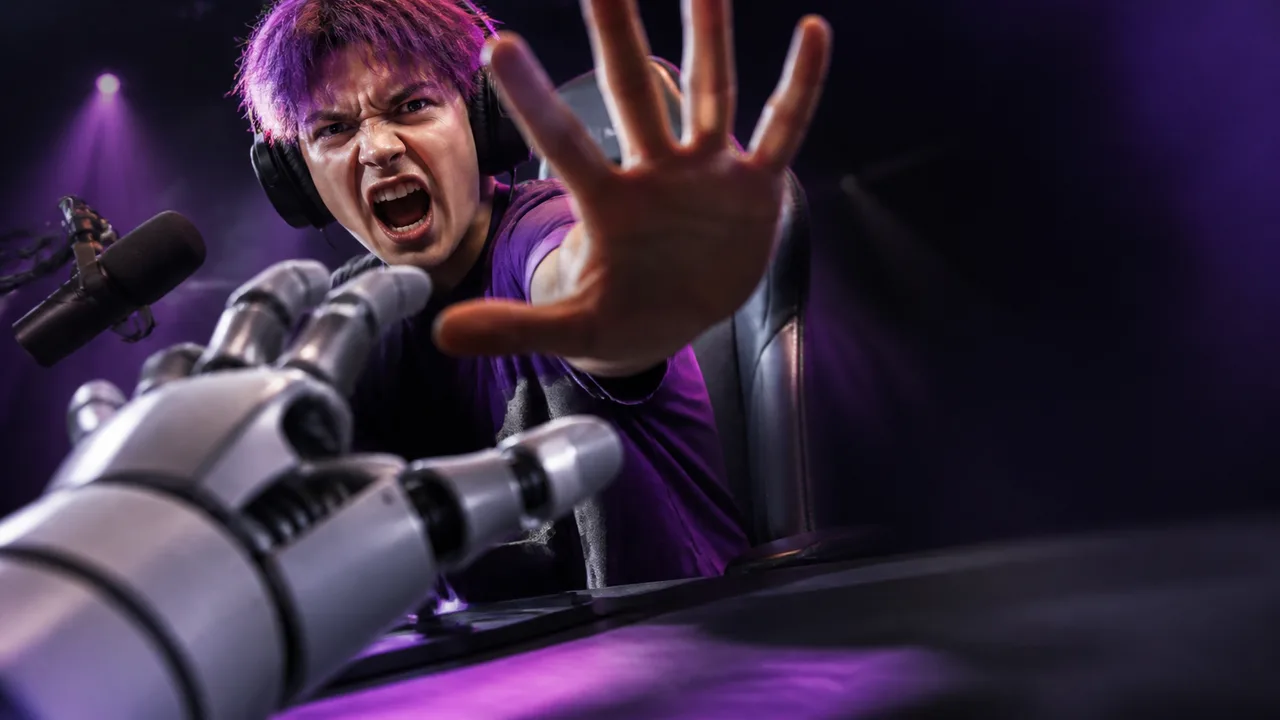
Think about the streamer you've been watching lately — not a partnered creator with a merch line and a manager, but the one with 50 viewers who does blind playthroughs of weird little indie games, whose whole appeal is their specific sense of humor and the particular cadence of how they panic during horror sequences. They built that. It's theirs. And as of right now, unless they found the right toggle in the right settings menu, it belongs to Amazon too.
On August 12, 2026, Twitch's support account posted a message announcing a new feature: a setting that allows creators to opt out of having their channel content used to train generative AI models across Amazon. According to tbreak.com, streamers did not take the framing — we've added a setting that lets you opt out — as intended. The community's read was simpler and angrier: Twitch had enrolled them in an AI training program without asking, then offered to let them leave.
That reading is accurate. As eWeek reports, "Twitch has introduced a setting that lets creators stop their channel content from being used in future training of Amazon generative AI models. The catch is that creators have to turn it off themselves." There's no ambiguity in that sentence. The feature being described as a gift — look, we gave you a setting — is a setting to undo something Twitch started doing automatically.
What Opting Out Actually Looks Like
For those who want to protect their content, the opt-out process has been documented by several outlets. Engadget describes accessing it through account settings: click your avatar, go to Settings, then Security and Privacy, then scroll down to "Training for Generative AI." Dot Esports and NDTV Profit both confirm the same pathway through the Streamer Dashboard.
It's findable. It's not buried under twelve menus. But it requires a creator to know it exists, care enough to go looking, and then manually reverse a decision Twitch made on their behalf. That's a meaningful series of steps, and the number of people who complete all three will be a fraction of those affected.
This is a design choice, not a technical constraint. Anyone who's watched a game monetization system in action recognizes the shape of it — it's the same logic as auto-renewing battle passes that charge you on the first of the month before you've thought about whether you want another season. The default does the heavy lifting. Whatever behavior the platform benefits from, that's what the default enables. Opting out requires intention, and most people's intention is elsewhere.
Video Games Chronicle captured the bluntest version of this logic circulating in community spaces: the sentiment that if it were opt-in, nobody would opt in. VGC doesn't attribute this to a specific named streamer — it reads as a broadly held position rather than a quotable statement — but its plainness is the point. Twitch's CPO Mikey Minty was referenced in Kotaku's coverage of the backlash, and what's notable about Kotaku's look at Twitch's own community feedback board is this: in the "Creators and Stream Features" category, the top community suggestion is "Make all AI features optional and opt-out by default." Kotaku notes, somewhat beautifully, that they meant opt-in. The community was so angry about the default that they fumbled the terminology of the thing they were asking for.
The Part That Gets Small Creators Specifically
Most of the coverage on this story frames it as a creator rights issue broadly, which it is. But I want to stay with the specific population that doesn't have options.
Large streamers with significant audiences and business infrastructure have leverage. They can make noise, threaten to migrate to a competitor, or lawyer up if it comes to that. They might not win, but they can fight. The creators who built communities around discovering obscure indie games, streaming niche titles to a few hundred regulars, cultivating a personality so specific that their regular viewers could identify them by their laugh — they have none of that. Their Twitch presence often is their discoverability surface. They can't blow it up in protest without blowing up the thing they spent years building.
What's being fed into Amazon's generative AI pipeline isn't just video content. It's the texture of how a particular person talks about games, the specific vocabulary they use to describe a mechanic they love, the way they react when a game does something unexpected. For the streamer who built a following by being the funniest person doing commentary on metroidvanias, or the one who became known for genuine emotional honesty during narrative games — that specificity is the asset. It's also, currently, the training data.
There's no compensation structure attached to this. There's no credit system. The framing from Twitch is that this is a feature, something they added for creators' benefit, when what's actually happening is that the value flows in one direction: from creators' content into Amazon's AI development pipeline. The opt-out mechanism doesn't change that calculus. It just means individuals who catch the news and act on it get excluded. Everyone else stays enrolled.
What Twitch Is Actually Saying
It's worth sitting with Twitch's framing for a moment, because it's instructive even if it's unpersuasive. The announcement language cited by tbreak.com presents the opt-out as an addition, a new capability extended to creators. From a feature-development standpoint, that's technically true: the opt-out didn't exist before. But announcing the off switch while the machine is already running is a strange kind of gift.
Twitch hasn't, as far as the public record shows, explained what content is being used, how it's being used, or what safeguards exist around how Amazon's AI systems will deploy what they learn. The record here is genuinely thin. What we have is the opt-out announcement, the backlash, and the settings menu. The substance of what Amazon is building with this data isn't part of the public conversation yet.
That absence matters. For the small streamer trying to decide whether to opt out, there's no real way to assess what opting in (or staying in by default) actually means for them in practice. Is their content training a customer service chatbot? An AI-generated stream summary tool? A synthetic voice model? The framing "generative AI content models across Amazon" is expansive enough to mean nearly anything.
Where This Lands
I'll be straight with you: I don't think Twitch flips the default. Not because the backlash isn't real — it is, and the community feedback Kotaku surfaced is pointed — but because the default is the point. The data Twitch collects from creators who never find the settings menu is more valuable than goodwill from creators who do. That's not a conspiracy; it's just the math of how opt-out systems work at scale.
What I do think matters is what the community does with the anger. The streamers most affected by this — the small ones, the ones who built their whole creative identity into their channel and now have no manager to make calls on their behalf — are also the ones most capable of being specific about what was taken. Not "our content," in the abstract, but this voice, this bit, this taste in games, this way of being funny about something most people don't care about. That specificity is what makes the argument real instead of theoretical.
Twitch can absorb a general complaint about data policy. It's harder to absorb three hundred streamers articulating exactly what piece of themselves got enrolled in an AI training run without their consent.
The opt-out is there. Settings > Security and Privacy > Training for Generative AI. Go find it. And then figure out what you want to say about the fact that you had to.
More Like This
A YouTuber Deleted 400 Videos Over AI Privacy Fears
TechLead wiped 400 videos citing AI data permanence. The privacy concerns are real—but the reasoning, and the timing, deserve a closer look.
GPT-5.6 and Codex: What the Hype Tour Reveals
Julian Goldie's GPT-5.6 tutorial maps a genuinely new agentic workflow — but what it leaves unsaid about open source and agent governance matters just as much.

Run an Uncensored AI Locally: What It Means
Uncensored local AI models are going mainstream. Here's what's actually happening—the tech, the tradeoffs, and the questions nobody's quite answering.
Higgsfield's AI Cloned a Creator's Voice. Who's Liable?
Higgsfield's AI reproduced an Australian creator's voice without consent. What does that mean for right-of-publicity law, the EU AI Act, and platform liability?

A Century of AI: The Data and Power Behind the Hype
A security correspondent's read on AI's 100-year history—tracing the hype cycles, data grabs, and privacy trade-offs that shaped the technology reshaping your life.
ChatGPT Blocks Author Style Cloning Requests
ChatGPT now refuses to clone famous authors' writing styles. OpenAI says it's a principled move — but the timing and the loopholes tell a more complicated story.
Gaming Hardware Costs Are Rising and Relief Is Far Off
Micron, Microsoft, and Apple signal gaming hardware prices will keep climbing through 2028 or beyond. Here's what's driving the squeeze and what it means.
Minecraft Live 2026: New Biome, Wool Stairs & What's Next
Minecraft Live revealed the Dappled Forest biome, wool stairs, abandoned camps, and more for the Fall 2026 drop. Here's what it means for builders and creators.