A Century of AI: The Data and Power Behind the Hype
A security correspondent's read on AI's 100-year history—tracing the hype cycles, data grabs, and privacy trade-offs that shaped the technology reshaping your life.

Written by AI. Rachel "Rach" Kovacs

Photo: AI. Hayden Cross
Before we get into the history, a disclosure you should know about: Nate Herk, whose video "100 Years of Artificial Intelligence Explained" I'm drawing on here, sells AI automation courses and lists Claude Code as a sponsored tool in his video description. That doesn't make his history wrong—it's actually quite solid—but it does mean his framing of the current moment, particularly around Anthropic and Claude Code's dominance, comes from someone with a financial stake in your enthusiasm about those tools. Read accordingly. I'll flag where the promotional frame matters most.
Now. The actual history is worth your time, because it's not just a story about clever researchers and compute breakthroughs. It's a story about who controls the data, who captures the value, and what ordinary people are left holding when the hype cycle turns.
The original sin: building intelligence on other people's images
The pivot point in Herk's telling—and in most AI histories—is 2012, when a grad student named Alex Krizhevsky ran a neural network called AlexNet on a dataset called ImageNet and dropped the image recognition error rate by eleven points in a single competition. It was a genuine shock to the research community. Within two years, Google, Facebook, and Microsoft had hoovered up most of the serious deep learning talent out of universities.
What Herk doesn't pause on—and what I keep returning to—is what ImageNet actually was. Fei-Fei Li and her team assembled a labeled photo collection that reportedly reached tens of millions of images. The commonly cited figure of 14 million by 2010 has some dispute around its exact timeline, but the scale isn't in question. Those photos came from the web. They were scraped, labeled by crowdsourced workers, and fed into neural networks that would eventually power Google Photos, facial recognition, and commercial surveillance systems.
Nobody asked the people in those photos. The legal framework for doing so barely existed. And the systems trained on that data are now embedded in products that scan your face at airports, unlock your phone, and flag you to law enforcement.
That's the founding data ethics problem of modern AI, and it didn't start with ChatGPT. It started with a grad student competition and a very large hard drive.
Hype cycles have sponsors
Herk's history of AI is, among other things, a catalog of hype—and the honest read on that catalog is that the hype was never accidental. Each boom had a sponsor with an interest in the excitement.
In 1958, the US Navy funded Frank Rosenblatt's perceptron—a machine that, after about fifty training attempts, taught itself to distinguish between two types of punched cards. Genuinely impressive for its era. The Navy staged a press conference, and a New York Times article quoted the Navy expecting the device to be "the embryo of a computer that will be able to walk, talk, see, write, reproduce itself, and be conscious of its existence."
The machine sorted punched cards. The Navy wanted funding and relevance. The gap between those two things is instructive.
The same dynamic played out in the expert systems boom of the 1980s. XCON, an expert system built at Carnegie Mellon, was doing something genuinely useful: configuring custom computers for DEC orders, saving the company real money. By 1985, Fortune 500 companies were spending more than a billion dollars a year on similar systems. Then the specialized hardware those systems ran on got undercut by cheaper workstations, the brittle rule-based architecture proved impossible to maintain at scale, and the entire sector collapsed inside two years.
The researchers were doing real work. The commercial infrastructure around them was selling a vision that the technology couldn't sustain. When you read today's AI investment announcements—Amazon committing up to $25 billion to Anthropic in tranches, Google reportedly pledging up to $40 billion in structured conditional investments—it's worth keeping that pattern in mind. These are not cash transfers. They are announced commitments, with conditions, from companies that have their own reasons to signal confidence in the sector.
The transformer and the question nobody asked
The 2017 paper "Attention Is All You Need"—published by a team of researchers primarily at Google, though the precise affiliations of all co-authors warrant more precision than Herk gives them—proposed a neural network architecture that reads entire sequences simultaneously rather than word by word. It was designed to speed up language translation. It became the engine of every large language model you've interacted with.
OpenAI took that architecture, stripped out half of it, and trained what remained on a massive corpus of web text, books, and code. The result was GPT, and eventually ChatGPT—which, according to a widely-cited UBS analyst estimate (not an official OpenAI figure), reached 100 million users in roughly two months after its November 2022 launch. That's the fastest consumer adoption on record at the time.
What went into training that model? Web text. Your web text, in the sense that the internet's contents—forum posts, articles, social media, personal blogs—fed the training corpus. OpenAI has never published a full accounting of what GPT was trained on. Neither has Anthropic for its Claude models. Neither has Google for Gemini.
We are using products trained on data that their creators won't fully disclose, to generate outputs whose decision logic we can't inspect, on infrastructure controlled by three companies currently racing to lock in platform dominance before any regulatory framework catches up with them.
That's not a reason to panic. It is a reason to ask better questions than the ones the hype cycle encourages.
The "vibe coding" problem is specifically a security problem
Herk is enthusiastic about what he calls "vibe coding"—the phenomenon, accelerated by tools like Claude Code, of people with no programming background building complete software applications. He describes it as democratization, and in one sense it is. The barriers to building functional software have dropped dramatically.
Here's my read from the security side: "vibe coding" is people building applications they don't understand, handling data they haven't thought carefully about, deploying code whose security properties they can't evaluate.
A non-programmer who builds a web app using AI-generated code over a weekend doesn't automatically know to sanitize inputs against SQL injection. They won't necessarily configure authentication correctly. They may not understand what data the app is collecting, where it's stored, or whether the AI-generated database schema is exposing things it shouldn't. They won't know to read the output for logic errors that look plausible but are subtly wrong.
The 1958 Navy press conference problem, in modern form: the capabilities are real, and the expectations being built around them are outrunning what people actually know how to do safely with the tools.
What Anthropic's "Claude Shannon" story tells us
Herk states as fact that Anthropic named its Claude models after Claude Shannon, who was reportedly among the signatories of the 1955 Dartmouth proposal that helped launch the AI field as a recognized discipline. (Historians note Shannon's involvement with the subsequent 1956 workshop was brief and peripheral—he was not a core participant.) The naming claim is widely repeated but has not been formally confirmed by Anthropic. It may well be true. But it's the kind of origin story that serves a company's brand narrative—connecting its product to a founding figure of information theory is excellent positioning—and should be taken as reported, not established.
That's a small thing. The larger thing it points to: every company in this race is building a mythology about itself, because mythology drives investment, adoption, and regulatory goodwill. Shannon as founding ancestor. AlphaGo's "Move 37" as proof of machine creativity. ChatGPT as the moment AI "reached the general public." These framings are not wrong, exactly, but they're curated. The century of AI history looks clean in retrospect because the dead ends, the government-funded failures, the harm done by systems that didn't work, and the consent that was never sought have been edited to the margins.
Lee Sedol—holder of 18 international Go titles, though the specific characterization of "world champion" involves some complexity in how Go titles are structured—retired from professional play in 2019. His stated reason: "Even if I became number one, there is an entity that cannot be defeated." The AI industry cited this as a triumph. Sedol described it as a loss.
Both things are true. That's the part the hype cycle consistently fails to hold.
What to actually watch for
The race between OpenAI, Google, and Anthropic is partly a race for compute and talent. It is also, inescapably, a race for user data—the behavioral data, the queries, the code repositories, the documents fed into these systems. Each company's product strategy reflects what kind of data relationship they're optimizing for. OpenAI wants consumer scale: the widest possible data funnel. Google wants integration depth: AI embedded so thoroughly in existing products that switching costs become prohibitive. Anthropic, at least in Herk's telling, is going after developers—the people building the next layer of applications on top of these models, who will in turn make data decisions for the users of those applications.
The privacy exposure in that third scenario is multiplicative, not additive. When a developer with no security background builds a health-tracking app using Claude Code, and that app reaches ten thousand users, and the developer hasn't thought through their data retention policy—the harm isn't one person's data. It's ten thousand people's data, handled by someone who was sold empowerment without the corresponding responsibility.
The history of AI is, at its core, a history of what happens when the tools outpace the governance. We've run that experiment twice already, in 1973 and 1987. Both times, the field overcorrected. The winters were real.
What's different now is the scale of the deployment, and the fact that this time, the tools are woven into daily life before anyone has agreed on the rules.
The vibe coding boom is happening right now. If you're building something with AI-generated code—or using an application that was—the questions worth asking are not "is this impressive?" They are: what data does this collect, where does it go, who controls it, and does the person who built it know the answers?
More Like This
When AI Products All Look the Same, Is That Actually the Point?
Why every AI company is suddenly building an everything app—and what it reveals about code as the foundation of all knowledge work.
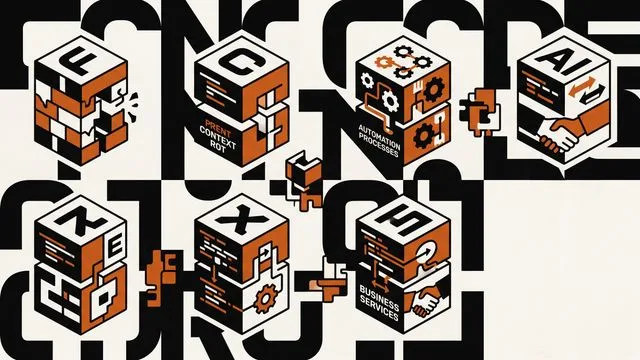
6 Claude Code Skills That Actually Sell to Businesses
Nate Herk spent 400 hours in Claude Code and found 6 skills businesses keep paying for. Here's what they do—and what to verify before trusting the hype.
Nvidia's GPU Era: Facing AI Hardware Evolution
Exploring Nvidia's potential decline as AI companies turn to specialized chips.

Who Gatekeeps AI? The Question Washington Just Made Urgent
Google posted $109.9B in revenue as the White House eyes pre-release AI vetting. The real question: who controls what gets out—and who benefits from controlling it?

Anthropic Passed OpenAI. Your Data Is Why.
Anthropic just overtook OpenAI in business adoption—and both companies responded with free offers within the hour. Here's what that speed tells you about who the real product is.
OpenAI's Codex Launch Feels Like Playing Catch-Up
OpenAI released Codex, its coding agent app. Industry experts aren't impressed—it's table stakes, not innovation. Plus: AI agents got a Reddit, and it went badly.

Flock Safety Cameras: Crime Tool or Privacy Risk?
Flock Safety's license plate readers are spreading fast. Retired Microsoft engineer Dave Plummer breaks down what they actually capture—and what's at stake.

Why AI AppSec Needs Organizational Context to Work
AI finds more vulnerabilities than ever—but without organizational context, it still can't tell you which ones actually matter. Here's what that gap costs.