Coding Models Have Become the AI Arms Race Nobody Expected
OpenAI's GPT-5.5 leak and Google's emergency response reveal why coding ability—not chatbots—now determines which AI lab wins the future.

Written by AI. Bob Reynolds
When the Pentagon labels your AI model a supply chain risk but the NSA keeps using it anyway, you've built something people can't ignore. That's the position Anthropic finds itself in as its Claude models continue setting the standard for AI coding ability—a capability that matters far more than most people realize.
The evidence is everywhere. OpenAI appears to have quietly updated its GPT Pro service with capabilities that Polymarket bettors—whose track record on OpenAI releases borders on prophetic—believe signals the arrival of GPT-5.5, possibly as soon as April 23rd. The focus? Frontend coding and UI design, areas where Anthropic's Claude has been dominant. xAI is rushing Grok Build and Grok Computer to market. And in the most telling move, Sergey Brin has personally returned to Google to lead what amounts to a coding model strike team.
These aren't coincidences. They're symptoms of an industry coming to terms with a reality that's been obvious to anyone paying attention: whoever builds the best coding model doesn't just win a feature comparison. They potentially win the entire AI race.
The Flywheel Nobody Wanted to Acknowledge
The logic is straightforward, even if the implications are unsettling. A model that can write, debug, and iterate on code becomes a tool for building better AI models. Those better models can then write better code, which enables even better models. It's a compounding advantage—a flywheel that accelerates whoever spins it first.
This isn't speculation. It's been discussed in AI circles for years, notably in papers like Aschenbrenner's work on intelligence explosions. But there's a difference between theoretical understanding and watching it happen in real time. Anthropic appears to have achieved what every lab knew was possible: a meaningful lead in coding that translates into faster research cycles and broader capability gains.
As Wes Roth, the YouTuber documenting these developments, observes: "Anthropic was the first company, the first model to kind of pull ahead of the competition with coding specifically. And since then, the others have been releasing, but it never seems like any given company or model is able to jump ahead."
The question hanging over the industry now is whether that early advantage becomes insurmountable.
Google's Complicated Position
The drama at Google deserves attention because it illustrates the organizational challenges that pure technical capability can't solve. Steve Yegge, a veteran engineer, sparked a minor firestorm by suggesting Google's AI adoption levels were comparable to John Deere's—which sounds like an insult until you learn that John Deere is actually one of the more aggressive AI adopters outside Silicon Valley.
Demis Hassabis, the knighted founder of Google DeepMind, fired back sharply, calling the claim "completely false and just pure clickbait." But the subsequent reporting painted a more nuanced picture: a two-tiered system where DeepMind engineers use Claude extensively while the broader Google organization lags behind. When the idea of equalizing access came up internally, the proposed solution was reportedly to remove Claude from everyone—the kind of backwards thinking that suggests deeper cultural issues.
Brin's response has been characteristically direct. According to reports from The Information, he's mandated that "every Gemini engineer must be forced to use internal agents for complex multi-step tasks." The word "forced" is doing considerable work in that sentence.
Google has advantages Anthropic can only dream about: 200,000 employees compared to Anthropic's roughly 5,000, massive compute infrastructure including the TPUs that Anthropic actually uses to train Claude, decades of internal codebases, and research budgets that dwarf any competitor. If those advantages matter, we'll know soon enough. If they don't—if a smaller, more focused team can maintain superiority despite the resource gap—that tells us something important about how this technology actually develops.
When Government Departments Ignore Government Policy
The NSA's continued use of Anthropic's Mythos model, even after the Pentagon designated Anthropic a supply chain risk, is perhaps the clearest signal of Claude's technical lead. Government agencies aren't known for flexibility or for ignoring official guidance. When they do, it's because the alternatives are genuinely inadequate.
This creates a peculiar dynamic. Anthropic refused to accept certain Pentagon restrictions on their models—a principled stance that resulted in the supply chain designation. But the quality gap appears large enough that critical departments are using Claude anyway. That's the "be so good they can't ignore you" strategy taken to its logical extreme.
It also suggests the coding capability lead is substantial, not marginal. Marginal advantages get papered over with policy and procurement preferences. Only significant technical gaps produce this kind of institutional contradiction.
The Race That Determines The Race
What makes coding models the central battleground isn't just their immediate utility. It's that they determine the pace of everything else. A model that can automate portions of AI research—and the evidence suggests we're approaching that threshold—changes the development timeline for all subsequent capabilities.
This is why OpenAI's apparent focus on frontend coding in GPT-5.5 matters, why xAI is rushing Grok Build to market, and why Brin felt compelled to return to active development work. They're not chasing a feature. They're trying to avoid falling permanently behind in the meta-competition: who can iterate fastest.
The unsettling question is whether that's still possible. If coding ability genuinely compounds—if being ahead makes it easier to stay ahead—then Anthropic's current position might be more durable than anyone wants to admit. Google has the resources. OpenAI has the brand. xAI has the speed. But Anthropic has the flywheel spinning.
We'll know which advantages matter most by whether any of them can actually catch up.
More Like This
Building Multi-Agent AI Systems: What Google's Lab Reveals
Google demonstrates multi-agent AI architecture using MCP servers and ADK. The hands-on lab reveals how agents communicate and what developers need to know.
AI Progress Is Accelerating Faster Than Anyone Expected
New data shows AI capabilities doubling every four months, not seven. Industry leaders say coding is 'solved.' What does this mean for the rest of us?
Anthropic vs. the Pentagon: When AI Principles Meet Power
Dylan Patel breaks down why Anthropic got labeled a supply chain risk while OpenAI signed defense contracts. The answer isn't what you'd expect.
Kimmy K2.5: AI's New Contender or Overhyped Hope?
Explore Kimmy K2.5's potential in AI, its standout features, and performance legitimacy.
AI Coding Tools Might Freeze Dev Progress—Or Not
Sam Altman says AI models will adapt to new code. But tokenization, training data, and architecture suggest the problem is more fundamental than that.
Meta's Avocado Model Tests Whether Speed Beats Perfection
Meta's new Avocado AI model performs well before post-training, but the company's Llama 4 disaster raises questions about its comeback strategy.

Selling AI Is a Storytelling Problem, Not a Tech One
Nate B. Jones argues that AI sales stall because of weak storytelling, not weak tools. Here's what that means for agencies, operators, and C-suites.
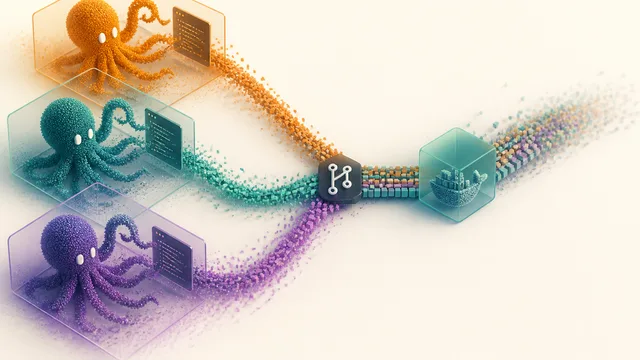
Running Parallel AI Coding Agents Without Chaos
Running multiple Claude Code sessions in parallel creates real coordination problems. Here's the infrastructure stack that actually prevents them from breaking each other.