Anthropic vs. the Pentagon: When AI Principles Meet Power
Dylan Patel breaks down why Anthropic got labeled a supply chain risk while OpenAI signed defense contracts. The answer isn't what you'd expect.

Written by AI. Zara Chen
There's this moment in Dylan Patel's latest interview that perfectly captures the absurdity of where we are with AI and government right now. Someone at Anthropic gets asked: if a nuclear missile is heading from China to America and AI could stop it but requires surveillance and autonomous weapons, what would you do? The response, according to Patel: "Well, you can call us. We'll figure something out."
Patel, who runs SemiAnalysis and tracks AI companies closer than pretty much anyone, literally said: "This is just the dumbest response you could ever come up with."
And yet—this might also be the most interesting corporate standoff in tech right now.
The Scorecard Everyone's Watching
Eight months ago, Patel made some predictions. GPT-4.5 would fail (nailed it—the model never even launched publicly). Scale AI was "cooked" as a company (they're now hemorrhaging clients). The junior dev market was "nuked" (Anthropic just hit $19 billion in revenue, mostly from Claude Code replacing... junior devs).
But the prediction getting tested in real-time is the one about which company reaches superintelligence first. Because right now, the US government is actively trying to decide which AI lab gets to build the future—and Anthropic just got labeled a supply chain risk while OpenAI signed a Pentagon deal.
The timing is almost comedic. Same week. Different outcomes.
What "Bending the Knee" Actually Means
Here's what makes this complicated: Anthropic was actually first to work with the US government. They're the only AI company with models deployed in classified military networks right now. Claude 3.5 Sonnet is literally running on defense systems.
But then the Department of War (rebranded from Department of Defense, because subtlety is dead) wanted more. And Anthropic's leadership said... not quite.
Meanwhile, OpenAI's Sam Altman—who Patel describes as someone who "certainly knows how to take advantage of a good crisis"—swooped in. Signed a deal on Friday. His own employees rioted over the weekend. Signed a different deal on Monday with tighter restrictions. But still: deal signed.
Patel's read on the politics is blunt: "Anthropic has a lot of their policy people who are former Biden admin people. OpenAI hired people from both parties, which is the pragmatic thing. You look at Microsoft, Amazon, Lockheed—they all have people from both sides."
Every major tech company bent the knee to the new administration. Donated. Issued statements. Anthropic... didn't.
Is this about principles or politics? Patel thinks it's both, which is exactly why it's messy.
The Dogma Problem
Here's the tension Patel identifies: Anthropic's whole identity is being dogmatic about AI safety and ethics. That's their brand. That's why their researchers work there instead of OpenAI or Google. They're the "good guys" who care about alignment and won't compromise.
But Patel argues that might be exactly what makes them bad at this game: "You can't just be a dogmatic person. Or company. Unfortunately, to get to your end mission, your end goal, it requires being a slithering snake and playing both sides."
The chess move he sees: Anthropic might need the government to force them. Let the pressure build. Then, when they finally capitulate, leadership can tell their researchers: "Look, we had no choice. Either we build aligned killer robots or the government takes our weights and builds unaligned killer robots with someone else's model."
It's kind of brilliant, actually. Use coercion as cover for pragmatism.
"At some point," Patel says, "Dario just has to be like, 'I love Trump. I love everything Trump says. I love the Department of War.'" He's half-joking. Maybe.
What Actually Happens Next
The practical question: can the government actually rip Claude out of military systems in six months?
Patel's answer surprised me. The version of Claude deployed in classified networks is old—3.5 Sonnet era. Not their current flagship. Just the weights from an earlier model running on-premises.
"Get OpenAI to give you GPT-5 weights," he suggests. "Or Grok 4.2. Hell, Chinese models are better than Claude 3.5 Sonnet at this point."
Which raises a darker point: while the US government slowly navigates procurement processes and political theater, China is shipping their newest models—Qwen, Kimi, DeepSeek—directly into military applications. No lag. No bureaucracy. Just deployment.
That asymmetry might be what ultimately forces Anthropic's hand. Not threats from DC, but the reality that principled slowness is its own form of risk.
The Existential Threat Everyone's Ignoring
There's this other moment in the interview that stuck with me. Patel mentions his head of data centers—not a programmer—now spending $5,000 per day on Claude Code. Building his own tools. Moving faster than contractors.
Patel jokes that his own company won't exist in two to three years because AI will make analyst firms obsolete. Then the interviewer mentions his kid asked why people pay Dylan's company when they could "just ask AI."
Cooked. That's the word Patel keeps using. Junior devs: cooked. Knowledge work: cooked. SaaS companies: cooked.
But here's what's fascinating—everyone at the AI companies knows this too. Patel says even at Anthropic, "the furthest ahead" in the race, researchers are "freaking out" that being behind in one capability means they'll lose everything through compounding effects.
The people building the future are terrified they're not moving fast enough. The people being replaced are just starting to notice. And the government is trying to figure out which company gets to control the acceleration.
Anthropor's bet is that being right matters more than being first. OpenAI's bet is that being there when power is distributed matters more than being pure. And Patel's sitting there watching both companies pretend they have more control over this than they actually do.
The missile is already in the air. Someone's going to have to answer that call.
More Like This
NVIDIA's $20B Groq Deal: A Game-Changer in AI Chips
NVIDIA acquires Groq for $20B, shifting focus to AI inference tech amid evolving market dynamics.
Pentagon Threatens Anthropic Over Two Red Lines
The Defense Department is threatening to blacklist Anthropic as a supply chain risk. The AI company's crime? Two usage restrictions on Claude.
Pentagon vs. Anthropic: The Fight Over AI Ethics
The Pentagon is threatening to designate Anthropic a supply chain risk after the AI company refused to remove safety guardrails from Claude.
The Pentagon Just Tried to Kill an AI Company
When Anthropic refused to remove safeguards on autonomous weapons and mass surveillance, the Trump administration escalated beyond refusing to work with them.
Claude Code Just Got Voice Mode—And It's Free
Anthropic rolls out free voice input for Claude Code. No extra costs, no rate limits. Should developers ditch paid dictation tools?
Claude Code's Scheduled Tasks: AI That Works While You Sleep
Anthropic just gave Claude Code the ability to run tasks automatically on a schedule. Here's what that means for AI automation—and where it gets tricky.
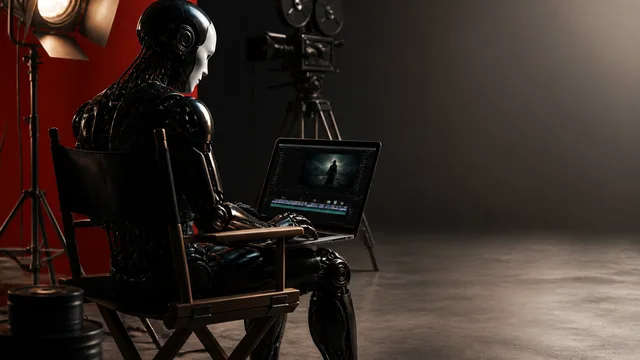
Netflix Used AI in 300 Titles. Here's What That Means.
Netflix disclosed AI use in roughly 300 titles in its Q2 2026 earnings. We break down what that number actually tells us — and what it doesn't.
Applied Computing Bets $20M on AI for Oil and Gas
Applied Computing raised $20M to build a foundation AI model for oil, gas, and petrochemical plants. Here's why that's more complicated than it sounds.