Higgsfield's AI Cloned a Creator's Voice. Who's Liable?
Higgsfield's AI reproduced an Australian creator's voice without consent. What does that mean for right-of-publicity law, the EU AI Act, and platform liability?
Written by AI. Samira Barnes
Photo: AI. Mika Sørensen
There's a moment in developer Alex Ziskind's recent demo of Higgsfield's AI platform that he frames as a punchline. He'd asked the system to generate video effects for a Mac mini cluster build — energy pulses, no text overlays — and what came back looked great. But the audio was unexpected: gibberish spoken in the distinctive cadence and Australian accent of a separate YouTube creator whose channel, Optimum, covers PC builds. Ziskind recognized it immediately and laughed. "The model was obviously trained on a little bit of Optimum videos," he said. "Obviously, that's his voice."
He found it "extremely hilarious." I find it a disclosure question with no current answer.
The creator in question — whose real name Ziskind doesn't state — appears to have had no involvement in Higgsfield's training data acquisition, or at least none that's publicly documented. Higgsfield has not, to my knowledge, published a training data sourcing statement of the kind that would let affected creators know their voice patterns are in the model. That's not unusual in this industry, which has generally operated on the principle that publicly available video is fair game for training unless a court says otherwise. But "not unusual" and "legally settled" are not the same thing, and that gap is where the policy story actually lives.
What the plumbing does
The technical architecture Ziskind demonstrates is worth understanding briefly, because the policy questions flow directly from it. Higgsfield has built what it calls an MCP endpoint — MCP being the Model Context Protocol, an open protocol developed by Anthropic that has since become a community standard for connecting AI agents to external tools. The protocol is not proprietary Anthropic infrastructure; it's an open specification that any platform can implement.
What Higgsfield's implementation means practically: Claude Code, which doesn't natively generate images or video, can be configured to call Higgsfield's generation models through a single connector. The setup takes about sixty seconds — navigate to Claude's settings, add the Higgsfield server URL as a custom connector, toggle the tool permissions. After that, a developer can instruct their AI agent to generate images, apply video effects, clone voice, or translate video into another language, all without leaving their coding environment. Ziskind notes this works with other AI coding tools as well, though the specific models he names by ear from the transcript are difficult to verify independently.
The integration is genuinely elegant. It collapses what used to be a multi-platform, multi-API workflow into a single conversational interface. That's the feature. But features, in media law, are also fact patterns.
The Australian accent problem
Start with what happened: a generation model trained on publicly accessible video reproduced not just the speech patterns but the vocal timbre of an identifiable creator, without that creator's knowledge or consent, and delivered that output to a paying subscriber.
Right-of-publicity law in the United States covers this unevenly. California — where most AI companies are headquartered — protects against the unauthorized use of a person's voice for commercial purposes under Civil Code § 3344, but enforcement has historically required that the voice be used to sell something or to impersonate the person in a misleading way. Ziskind's use was neither; it was an accidental byproduct of a generation request. That might put it outside the statute's reach. But California also enacted AB 1836 last year, extending digital replica protections to deceased performers, and the broader AB 2602 — signed in 2024 — restricts the use of AI-generated replicas of workers in entertainment contracts. Neither bill was designed for the "incidental vocal reproduction in a special effects video" scenario, which tells you something about how fast the tooling is outpacing the law.
New York's right-of-publicity statute, similarly, protects voice from commercial appropriation — but "commercial" does the same limiting work there as in California. A platform generating AI effects for a subscriber who paid for a service may or may not constitute commercial use of the third party whose voice pattern was reproduced. That question has not been stress-tested in court.
What about the EU? The EU AI Act, which began phased enforcement this year, requires providers of AI systems that generate synthetic media of real persons to implement technical solutions ensuring output is marked as AI-generated — and requires deployers to disclose when video or audio of real persons has been synthetically generated or manipulated. Higgsfield's video translation feature — the one that made Ziskind appear to speak fluent Chinese, with lip sync — almost certainly falls within that disclosure requirement for EU-facing deployments. Whether Higgsfield's terms of service or interface currently satisfies that requirement is a question the platform's legal team should be able to answer. I've asked; I haven't received a response as of publication.
Soul ID and the consent architecture question
Ziskind also previews a feature called Soul ID, which Higgsfield describes as a system for training a personalized character on a creator's own images and likeness for use in their videos. He's enthusiastic about it for workflow reasons — character consistency across productions, without manual frame-matching. "Not because I'm going to replace myself in these videos," he says, "but essentially you can train your own character on your images and then use that inside your videos."
The distinction he's drawing is real: consensual self-training for personal production use is categorically different from a platform scraping third-party video to train a base model. The problem is that this distinction exists entirely in Ziskind's intention, not in any technical or legal architecture that the platform encodes.
California's AB 602, signed in 2022, requires that AI-generated sexual deepfakes of real people be removable on request. AB 2602 addresses digital replicas in entertainment labor contracts. Neither bill creates an affirmative consent framework for training-data collection from publicly posted video. The FTC's 2023 guidance on AI-generated endorsements requires disclosure when an AI voice or likeness is used in advertising, but it doesn't reach back to the training stage. There is no federal right-of-publicity statute. The patchwork of state laws and agency guidance doesn't add up to a coherent answer for a platform that collects training data across jurisdictions, serves users globally, and generates output that can reproduce identifiable voices as a side effect.
Whose job is it to fix that? Platforms have every incentive to interpret the silence as permission. Regulators have been slow — the FTC and Copyright Office have both opened comment periods on AI and creative rights, but neither has issued final rules with teeth. Congress has not passed comprehensive legislation despite several attempts. The EU AI Act is the most operationally specific framework currently in force, which is why the question of whether Higgsfield's synthetic video tools meet its disclosure requirements isn't academic. It's the one legal lever that's actually engaged.
What Ziskind is actually buying
To be clear about what the demo shows: the technology is capable. The video effects iteration — running from unwatchable to usable in four or five prompts — reflects real improvement in both the generation models and the agentic workflow that strings them together. The Chinese-language video translation was seamless enough that Ziskind's reaction ("I don't speak Chinese, but it looks like I do") captures something genuinely new about the moment we're in. He paid for a subscription upgrade. That's a rational decision for a creator who wants to automate post-production.
But "I don't speak Chinese, but it looks like I do" is also a precise description of a synthetic media product that the EU AI Act was specifically designed to regulate. The feature is impressive and the regulatory question is live simultaneously. Those aren't in tension — they're the same story told from different vantage points.
Higgsfield has not published a training data disclosure. The Australian creator whose vocal pattern appeared in Ziskind's output has not, publicly, been notified. The Soul ID system's terms of service — governing what Higgsfield can do with the likeness data it collects from consenting creators — are worth reading carefully before anyone opts in. Platforms have a way of using broad terms to authorize uses that users didn't specifically contemplate, and courts have been inconsistent about whether click-through consent covers downstream training.
The policy question that doesn't yet have an answer: when a platform's model incidentally reproduces an identifiable person's voice as a byproduct of a generation request that person had nothing to do with, which existing legal framework — right of publicity, the AI Act's synthetic media provisions, FTC endorsement guidance, or copyright — if any, gives that person standing to object?
Right now, mostly none of them do. That's the gap that regulators on both sides of the Atlantic are still deciding whether to close — and that platforms, in the meantime, are building products inside.
More Like This
Anthropic's Code Leak Exposes AI's Copyright Loophole
Anthropic accidentally leaked Claude Code's source code, revealing unshipped features and exposing how AI tools could fundamentally break copyright law.

Anthropic's Subscription Mess Has a Regulator's Name on It
Anthropic's quiet pricing changes and Easter-weekend policy announcements aren't just bad comms—they may meet the FTC's definition of deceptive subscription practices.

AI Agents and Your Database: Who's Responsible?
Google's MCP Toolbox addresses AI agent data vulnerabilities—but with no regulatory framework for agentic AI, the real question is who's liable when it fails.
Google's Lyria 3 Brings AI Music to Gemini—But Misses the Point
Google launches Lyria 3 for AI-generated music in Gemini, while Anthropic's OAuth mess reveals deeper tensions about who controls AI development.
Kling 3.0 AI Video Generator: Testing the Hype
CyberJungle stress-tests Kling 3.0's AI video generation: multi-shot scenes, native audio in 5+ languages, and character consistency. The results reveal both promise and problems.
Google's Lyria 3 Makes AI Music From Text (And Images)
Google's Lyria 3 generates custom music from text, images, and video in seconds. Built into Gemini, it's multimodal, free, and targeting creators.

AI Chip Smuggling and the US-China Tech Divide
FT's Eleanor Olcott investigates the black market for Nvidia AI chips reaching China despite US export controls — and what it reveals about the tech race.
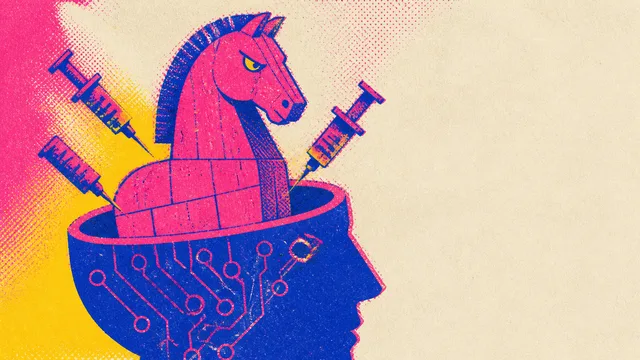
Promptware: When AI Agents Become Attack Vectors
Prompt injection attacks on AI agents follow a structured kill chain — and existing legal frameworks have almost nothing to say about who's liable when it works.