Anthropic's Code Leak Exposes AI's Copyright Loophole
Anthropic accidentally leaked Claude Code's source code, revealing unshipped features and exposing how AI tools could fundamentally break copyright law.

Written by AI. Dev Kapoor
An Anthropic engineer accidentally pushed a 60-megabyte source map to production. Within hours, the internet had forked it 42,000 times. By the time Anthropic yanked it back, every competitor had already archived 200,000 TypeScript files containing Claude Code's entire architecture—including features nobody outside the company knew existed.
This is the second major leak from Anthropic in less than a week, but this one matters more. The earlier Mythos model leak was marketing material that escaped early. This leak is different. It's the actual harness—600,000 lines of code showing exactly how Claude Code works, complete with development flags marking features still under construction.
The unshipped feature list reads like Anthropic's response to OpenClaw eating their lunch. There's Chyros, a background agent that monitors GitHub repos while you sleep. AutoDream, which consolidates session memory like REM sleep compresses daily experiences. Ultra Plan spawns a 30-minute remote session with a specialized planning model that maps out your entire task before touching code. Coordinator Mode orchestrates multi-agent swarms—though the enterprise rebrand from "swarms" to "coordinators" tells you everything about who this is being built for.
Real-time voice mode is coming. Persistent memory across sessions is already built, just hidden behind flags. Full browser control with actual browsing agents, not scripted interactions. Commands like /slashadvisor (which summons a second model to critique Claude's output) and /teleport (session switching, presumably) and /bughunter (self-explanatory, details unknown).
Oh, and there's an entire Tamagotchi system with 18 species including "Chonk," a gacha rarity system with 1% legendary drops, and pet stats measured in debugging, chaos, and snark. The pets wear tiny hats. This was apparently supposed to be an April Fool's Easter egg, which raises the question: was the production push rushed to hit that deadline?
But here's what makes this leak genuinely interesting beyond the feature roadmap: someone immediately forked the leaked code, got scared of legal liability, and used OpenAI's Codex to convert the entire codebase from TypeScript to Python. Within hours. Same functionality, completely different code.
Wes Roth, covering this on his channel, walks through the implications: "Think about this for a second. Let's say there's a piece of software like Photoshop... Let's say I managed to fully clone or copy the entire code and just recreate Photoshop... what happens is I go to jail or there's some sort of legal liability because of this. So if I copy the code, that's bad. Go to jail, do not pass go, etc. But if I copy the functionality, that's totally okay."
The traditional legal framework is clear: copying code is copyright infringement. Recreating functionality is fair game—it's how we got IBM PC clones, how clean room engineering works. Companies used to spend years building elaborate separation between teams analyzing competitors' products and teams writing new implementations, just to survive court challenges.
AI coding tools just compressed that entire process to hours. You can now feed proprietary source code into an LLM, have it explain the architecture and logic, then regenerate functionally identical software in a different language with different variable names and structure. As AI researcher Yuchin Jin noted in response to this incident: "AI is quietly erasing copyright right now."
The legal ambiguity here is profound. If I fork an open source project with a copyleft license requiring derivatives to maintain that license, then use an AI to recreate it in a different language with different code... have I stripped away the original license? The code is new, but the functionality—and arguably the creative work—is identical. We don't have case law for this yet. We barely have coherent legal theories.
Roth is right that this is headed to court: "We don't have laws that clearly explain who's in the right here and who's in the wrong. I'm sure there'll be lawsuits and lawyers and judges will set precedents... but for right now, it's kind of a gray area."
The open source angle makes this particularly uncomfortable. If proprietary software companies want to fight over who can AI-clone whose products, that's corporate warfare—expensive, but contained. When this technique gets applied to open source projects with carefully chosen licenses meant to ensure community benefit or prevent commercial capture... that's a governance crisis.
Maintainers choose licenses deliberately. Copyleft licenses exist specifically to prevent exactly this kind of appropriation—where someone takes community work, repackages it, and sells it without contributing back. If AI makes license requirements trivially circumventable, we've just broken a foundational mechanism of open source sustainability.
The leak also reveals something else: Claude has been watching you get frustrated. Roth mentions noticing code that monitors user language patterns to detect mounting frustration or impatience. "There's some sort of a process there. It's like, is this user about to lose it?" When you're swearing at your coding assistant at 2am because it won't fix a simple bug, it knows. What it does with that information, we still don't know.
There's also something called "undercover mode" that researchers have flagged as interesting but not yet understood. Anthropic embedded XRP payment protocol references throughout, suggesting agentic crypto payments are coming—though Roth appropriately warns against any scam coins that will inevitably emerge claiming association.
What didn't leak: model weights, training data, API credentials, customer data. This was the application layer, not the model itself. That's actually what makes it valuable for competitors—they can see the product vision and feature architecture without access to Anthropic's core IP.
The feature roadmap is now fully public. Every competitor is studying this code right now, seeing exactly what Anthropic thinks the next generation of coding assistants should do. That's not catastrophic for Anthropic—execution matters more than ideas—but it's not nothing. Especially given how much of this appears to be catch-up with OpenClaw's existing capabilities.
The immediate question is technical: can this code be legally forked and recreated? The longer question is structural: if AI makes functional replication trivially easy, what happens to the legal and governance frameworks we've built around software? Open source licenses, proprietary protections, clean room engineering standards—all of these assume that recreation is expensive and traceable.
When recreation becomes instant and the code is technically original, we're in unmapped territory. This isn't just an Anthropic problem or a Claude Code problem. It's a "how does software work in a world where AI makes everything replicable" problem.
The leak is still being analyzed. Roth notes there's "a lot of stuff there that we have to kind of parse through. This is just the tip of the iceberg." Researchers are finding deeper functionality, hidden modes, architectural decisions that reveal strategy. By the time you read this, someone will have found something else interesting.
But the legal question isn't waiting for complete analysis. It's already here, in that Python fork, in every developer now wondering whether AI-assisted recreation counts as clean room engineering. The courts will eventually decide. Until then, we're all just guessing at the rules.
More Like This
Pencil.dev Brings Free Design-to-Code Canvas to Claude
Pencil.dev's new desktop app connects design and code through Claude's MCP integration, offering a free alternative to Figma for AI-assisted frontend development.
Claude Code's AutoDream: AI Memory That Sleeps to Stay Sharp
Anthropic quietly released AutoDream for Claude Code—a background agent that consolidates memory files like human sleep. Here's what it means for developers.
Browser Use CLI Gives AI Agents Web Control—For Free
New Browser Use CLI tool lets AI agents control browsers with plain English commands. Free, fast, and works with Claude Code—but raises questions about automation.
OpenAI Kills Sora, Bets Everything on 'Spud' Model
OpenAI's internal memo reveals the company is shutting down Sora to focus on 'Spud'—a new model Sam Altman says will 'accelerate the economy.'
Claude Code's Accidental Leak Reveals What Power Users Know
Anthropic accidentally published Claude Code's source—half a million lines revealing hidden commands, memory systems, and why most users miss 90% of its value.
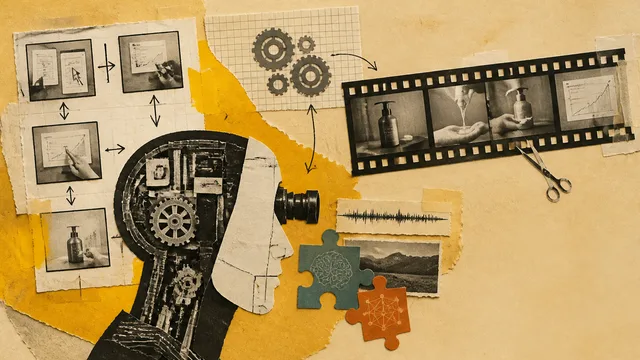
AI Video Editing Is Becoming a Programmable Pipeline
Agent-driven video workflows can plan, capture and polish product demos, but their gains still depend on review gates, costs, tooling, rights and trust.

Thinking Machines Launches Inkling, Its First Open-Weight AI Model
Mira Murati's Thinking Machines has released Inkling, an open-weight multimodal AI model built on DeepSeek's architecture—and the implications go well beyond benchmarks.
35 GitHub Projects Mapping the AI Agent Trust Gap
This week's GitHub trending list is less a catalog of tools and more a collective argument: developers don't fully trust AI agents yet—and they're building accordingly.