Tim Pope and the Art of the Music Video
Tim Pope shaped MTV's golden age directing The Cure, Bowie, and Queen. His memoir revisits a creative window that reshaped how the world heard—and saw—music.

Written by AI. Aminata Diallo
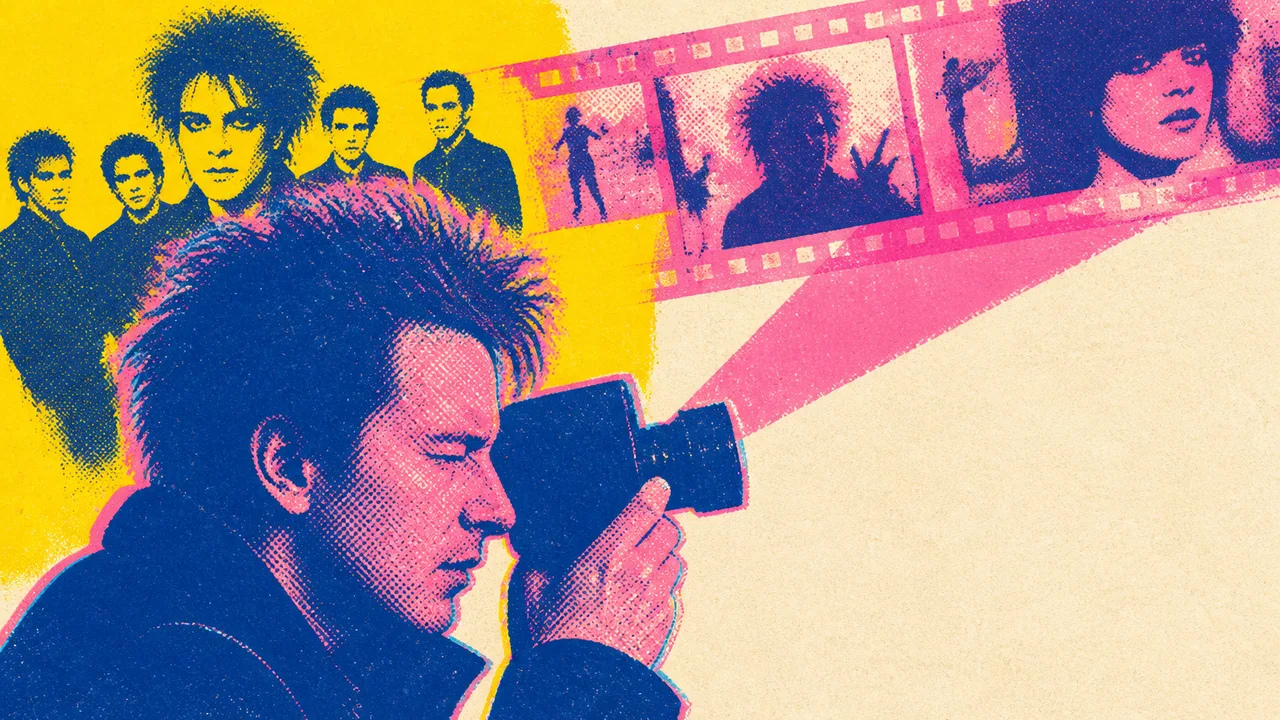
The dent in Neil Young's forehead is, by any reasonable measure, not the place to start a legacy piece. But it is exactly where Tim Pope would start — and that instinct, the willingness to lead with the riotous and specific over the reverential and vague, is precisely what made him one of the defining visual architects of the MTV era.
Pope's memoir, I Shoot Rock Stars, published by Simon & Schuster, arrives as a document of a creative window that will not open again. Simon & Schuster describes it as "a riotous memoir and a cultural history of a once-in-a-lifetime creative moment," written with "wit, warmth, and unfiltered honesty." The Robert Smith co-credit on the hardcover edition signals something important: this is not merely a director's memoir. It is a document of a specific creative partnership — Pope and The Cure — that produced some of the most visually inventive work the format has ever seen.
Getting In the Door
According to Wikipedia, Timothy Michael Pope was born on 12 February 1956 in Enfield, north London, the son of two bankers. The distance between that suburban origin and the fever-dream visuals he would eventually put on screens worldwide is part of the story, though Pope has never made much of it as biography.
What matters more is the industry landscape he entered. The Guardian's profile of Pope quotes him describing the world of established video directors in the early 1980s — figures like David Mallet, who worked with Blondie, Bowie, and Queen, and Russell Mulcahy, the director behind Duran Duran and Elton John — as "an impenetrable club." The route Pope found in was accidental, as these routes often are: Soft Cell had a global hit with Tainted Love and urgently needed a video for the follow-up, Bedsitter. Pope got the call. The rest is the kind of career that looks inevitable only in retrospect.
The Logic of the Surreal
What distinguished Pope's approach was not chaos for its own sake. Surrealism, deployed well, has an internal logic — it follows the emotional truth of a song to places that literal illustration cannot reach. The Cure's catalogue, in particular, gave him material that demanded exactly this treatment: songs about grief, romantic obsession, and the peculiar anguish of being very young and very sensitive in late Thatcher-era Britain. Robert Smith's cosmology — smudged lipstick, backcombed hair, lyrical content that could veer from goth despair to pure pop euphoria within a single album — required a visual partner who understood that you did not illustrate these songs. You inhabited them.
Pope did not work only in that register. Music Musings & Such notes that his client roster by the mid-1980s spanned both sides of the Atlantic and included David Bowie, Iggy Pop, Talk Talk, The Bangles, Queen, Paul McCartney, Siouxsie & the Banshees, and Strawberry Switchblade, among others. The breadth is striking. These are artists with radically different visual identities and commercial registers. Directing for Queen meant working within Freddie Mercury's theatrical scale; directing for Talk Talk meant something closer to restraint and negative space. Pope moved between these registers without flattening them.
Israel Chronicle's account of Pope's career references his work with Freddie Mercury, Hall & Oates, and Neil Young alongside The Cure, and describes "inventive and hazardous set pieces from the MTV era" — a phrase that earns its adjectives. The Neil Young incident, which Pope recounts himself with the title's characteristic specificity, is a reminder that the physicality of these shoots was real. Bodies were present. Things went wrong. The work was made, not generated.
What the Format Was
It is worth pausing on what the music video actually was during the period Pope was defining it. MTV launched in August 1981, and for roughly a decade it functioned as the primary mechanism through which popular music acquired visual identity. This was not supplementary content in the modern sense — it was, for a significant slice of the audience, the primary encounter with the music itself. The video was the song, in the way that a great book jacket can become inseparable from the text for a reader who encountered both simultaneously.
This created a genuine artistic opportunity that the format has arguably not recovered since. Directors had budgets, creative latitude, and access to artists who understood that the visual dimension of their work mattered commercially and aesthetically. Pope operated inside that window with unusual freedom, particularly in his collaboration with The Cure, where the long partnership meant accumulated trust. You can see the results: videos like The Lovecats, Close to Me, and Why Can't I Be You? operate as complete visual objects, not promotional vehicles.
What the Memoir Does
I Shoot Rock Stars arrives at a moment when the memoir-as-cultural-history has become a recognizable publishing form. The risk with this genre is nostalgia that smooths the edges — the past made safe and golden. Pope's title alone signals a different intention. The Guardian's headline ("'I put a raging dent in Neil Young's forehead!'") suggests the memoir delivers on the promise of unfiltered recollection rather than curated mythology.
Simon & Schuster's page for the book positions it explicitly as "a cultural history of a once-in-a-lifetime creative moment" — which is the right frame. Pope's particular vantage point offers something that artist memoirs from the same period cannot: the director's perspective on the construction of image. What artists like Bowie or Smith chose to project, Pope helped engineer. The memoir presumably carries accounts of those negotiations — creative and commercial — that would illuminate the period in ways straight biographical accounts of the artists themselves cannot.
What the sources available here do not yet fully reveal is the depth of Pope's critical self-reflection on the format's decline. Whether the book reckons seriously with the post-MTV collapse of the music video as a commercially supported art form — the shift from dedicated channel to YouTube thumbnail to short-form content — or whether it stays in the warmth of the golden-age narrative, is a question the full text would answer.
The Uncomfortable Question
Here is what Pope's legacy raises that the nostalgia framing tends to sidestep: the golden age of the music video was structurally dependent on conditions that no longer exist. Major label investment, a single distribution channel with enormous reach, and artist development cultures that tolerated extended creative timelines — these were the load-bearing walls of the form. When they went, so did the format's capacity to produce this kind of work consistently.
That is not a counsel of despair. Individual directors still produce extraordinary music videos. But the institutional infrastructure that allowed someone like Pope to build a sustained body of work across a decade, with the same artists, with real budgets and real creative risk — that infrastructure is gone. The memoir, whatever else it does, is documenting a set of conditions as much as a set of achievements.
Pope got in the door because Soft Cell needed a video and not many people knew how to make them yet. What he built once inside — a visual language for British post-punk and new wave that still shapes how we picture that era when we hear the music — was not accidental. It was the product of craft applied to access, at exactly the moment when the format was powerful enough to matter.
More Like This
Is Nature Good? Harari and Žižek Say No
Yuval Noah Harari and Slavoj Žižek agree: nature isn't inherently good. Their debate reveals why "natural" is almost always a political argument in disguise.
When the Source Material Isn't There: A Note on This Video
The video transcript provided contains only song lyrics and music cues—not the DIY build content described. Here's what that means for this article.
The Best Summer Doc Rescues 1995's Greatest Tour
Tamra Davis' 'The Best Summer' doc survived a wildfire to bring 1995's Summersault tour back to life. Here's why it matters now more than ever.
Netflix's Bold February: A Visual Culture Dive
Explore February's Netflix lineup through a design lens, from heists to satire.
Rolls-Royce: Craft, Class, and a Century of Decline
How Rolls-Royce built the world's finest cars on bespoke craftsmanship — and what was really lost when that tradition could no longer survive.
William Blake and the Art World That Couldn't File Him
William Blake's genre-defying illuminated books found almost no buyers in his lifetime. A new Nerdwriter1 video explains exactly why — and why the machine still works the same way.

World Cup 2026's Heat, Cost, and Political Fault Lines
From $11,000 tickets to denied visas and doubled emissions, the 2026 World Cup's off-pitch challenges may define the tournament as much as the football.
Did a Catholic Priest's Faith Corrupt the Big Bang?
Three cosmologists unpack whether Georges Lemaître's faith compromised his science—and why the real threat to cosmology is political, not theological.