Rolls-Royce: Craft, Class, and a Century of Decline
How Rolls-Royce built the world's finest cars on bespoke craftsmanship — and what was really lost when that tradition could no longer survive.

Written by AI. Sarah O'Brien
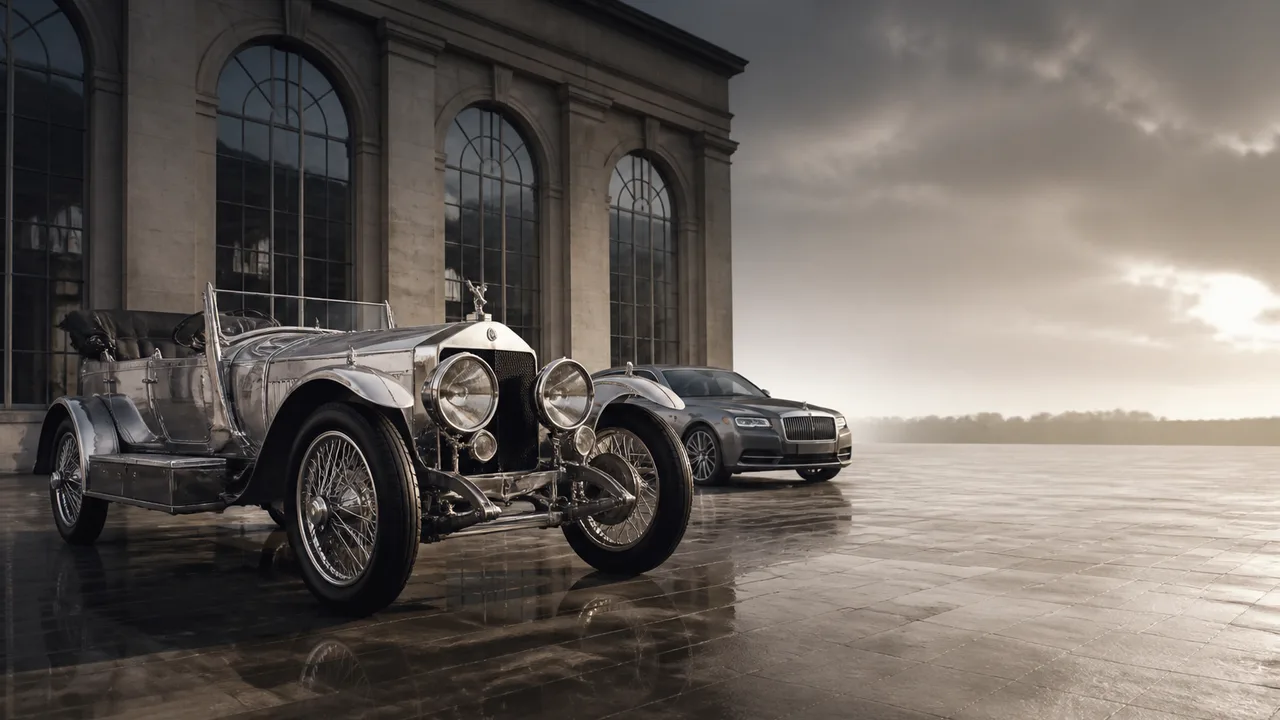
Photo: AI. Hayden Cross
At the 2004 Rolls-Royce Centenary Rally at Althorp in Northamptonshire, the narrator of Doc of the Day's recent documentary reaches for the word "pilgrimage" — and then decides it isn't strong enough. "These people are consumed not just with enthusiasm," he observes, "but with adoration and belief." Judges award prizes for the neatness of glove boxes. The atmosphere is, apparently, somewhere between a county show and a religious ceremony.
I find myself less interested in the cars on display than in what the rally itself represents. Because what you're looking at when you look at a Rolls-Royce preservation event isn't nostalgia — it's a rearguard action against a specific and largely irreversible loss. The question worth asking isn't whether these cars were ever really the best in the world. The more uncomfortable question is: what exactly died when the conditions that produced them disappeared?
Not innovative. Just perfect.
The documentary traces the familiar founding story — Charles Rolls, aristocratic patriot and self-styled racing driver, meets Henry Royce, disgruntled Manchester engineer, at the Midland Hotel in 1904. The deal: Royce builds, Rolls sells. What emerged from that arrangement was the Silver Ghost, introduced at the London motor show in 1906 after twelve prototypes were tested to destruction and the thirteenth survived to be painted in aluminum paint and given its name.
The documentary is admirably clear-eyed about what the Silver Ghost actually was in engineering terms. "It wasn't in any way an advanced car for its day," the narrator says flatly. "There was nothing innovative about it at all. It was just made to perfection." According to Car Origins, the Silver Ghost completed a roughly 15,000-mile reliability trial between Glasgow and London — a grueling test that the car survived with barely any sign of wear, earning it the "best car in the world" designation from the motoring press. That reputation was real. But the documentary is right to note it was earned through execution, not invention. Rolls-Royce didn't pioneer anything. They refined everything.
That distinction matters more than it might seem. A company that competes on innovation has a built-in imperative to keep moving. A company that competes on perfection of execution is betting that the world will continue to value the same things it has always valued. For a while, that bet paid off. Then it didn't.
The craft that the documentary keeps almost seeing
Here's where I want to push back on what the documentary covers and what it skates past. There's a passage where the narrator describes buying a Rolls-Royce in the early days: you didn't get a car. You got a chassis, an engine, a transmission, and a single bucket seat. Then you drove the chassis — literally drove it, through London traffic — to your coachbuilder.
What happened next is described with obvious affection. Craftsmen constructed ash-timber frames, bent and screwed them to shape. Metalworkers cut and formed aluminum or steel panels. Woodworkers produced marquetry dashboards. The result was a car that was, in the fullest sense, singular — no two alike, each one an expression of the owner's taste mediated through the coachbuilder's skill.
The documentary notes this tradition and then moves on. But this is the preservation story. Those coachbuilders — firms like Barker, Hooper, Park Ward, Mulliner — were independent craft workshops carrying knowledge that had migrated, mostly intact, from the carriage trade. The timber-framing techniques, the hand-forming of metal over shaped blocks, the upholstery traditions: these weren't things you could find in a manual. They lived in the hands of specific tradespeople and died when those workshops closed or were absorbed into corporate production.
When did that die? Roughly — and this is where I'd want to spend more time than the documentary does — the Second World War accelerated a transition that was already underway. By the 1950s, Rolls-Royce was moving toward in-house body production and standardized designs. The last truly independent coachbuilt Rolls-Royces were built in dwindling numbers through the 1950s and into the early 1960s. The craftsmen didn't vanish overnight; they aged out, retired, found no apprentices, because the economics no longer supported the training pipeline. The knowledge didn't get archived. It got buried with its practitioners.
The people at Althorp preserving their Silver Ghosts and Phantom IIs are, whether they articulate it this way or not, trying to keep evidence of that tradition in running condition. A coachbuilt Rolls-Royce is a primary source document. When it stops running and starts rotting, a record of a specific set of making-skills disappears with it.
The myth machine
The documentary is genuinely good on the subject of Rolls-Royce mythology, and here I'm happy to follow its lead. Claude Johnson, the company's head of marketing, was operating at a level of brand-building sophistication that most companies didn't reach until decades later. The Spirit of Ecstasy — sculpted by Charles Sykes in 1911, modelled on Eleanor Thornton, mistress of Lord Montagu — was Johnson's commission, and his description of it is a masterclass in aspirational copy: she had "selected road travel as her supreme delight" and perched on the prow "to revel in the freshness of the air and the musical sound of her fluttering draperies."
The radiator story is similarly instructive. Henry Royce, the engineer, wanted to replace it — it had, as the narrator puts it, "all the aerodynamic qualities of the British Museum." Johnson kept it because he understood that the radiator wasn't functional, it was symbolic. It was the face of the brand, and changing it would have been an act of self-erasure. The documentary's narrator claims it was designed to evoke a Greek temple, complete with subtle curvature — and then gleefully dismantles this: "I have trundled around a hundred Greek temples in my time, and not one of them had the slightest evidence of curvature. Don't believe a word of it. It's another bit of the Rolls-Royce myth."
What the documentary doesn't quite reckon with is that Johnson was right to keep it anyway. Myth isn't less real for being myth. The radiator meant something. The Spirit of Ecstasy meant something. The problem Rolls-Royce faced wasn't that their mythology was artificial — all luxury brand mythology is artificial. The problem was that the engineering reality stopped keeping pace with the mythological promise.
The Phantom III problem is a systems failure
By the time Henry Royce died in April 1933 — reportedly having spent his final day working on a new shock absorber design — the company was already under strain. The Phantom III, his last project, was his most technically ambitious: a V12 engine that was, in the documentary's framing, brought into production before its development problems had been resolved. Big ends failed. Oil turned to sludge. Fuel lines boiled. "If only we could get it right," the documentary quotes contemporary observers as saying, "it would be the most wonderful engine in the world." Eventually it was. But the damage to the reputation was done.
What interests me about this episode isn't the mechanical failures, which happen to every manufacturer. It's the structural conditions that produced them. Royce had withdrawn to rural Sussex, isolated from the Derby factory, working from home in declining health. The documentary presents this as personal tragedy, which it was. But it's also an organizational story: a company so dependent on a single ageing engineer's vision that it couldn't manage the transition from his direct oversight to systematic engineering development. That's not a tribute to Royce's genius. It's a warning about what happens when craft knowledge is too concentrated.
What the rally is actually preserving
Back to Althorp, then. The documentary opens there and doesn't really return, which I think is the piece's structural error. Because those enthusiasts judging each other on glove box neatness aren't just car obsessives — they're archivists operating without institutional support, maintaining primary sources using skills they've had to reconstruct from the objects themselves.
The documentary asks whether Rolls-Royces were ever really the best cars in the world. That's a reasonable historical question. But the more pressing one — the one I keep coming back to — is whether the specific combination of economic conditions, craft traditions, and customer expectations that produced these objects can ever be reconstructed once it's gone. My honest answer, after years of watching preservation communities fight this battle across multiple domains, is: partially, temporarily, and at enormous personal cost.
The coachwork tradition that made a pre-war Rolls-Royce possible didn't just require money and skilled labor. It required an entire ecosystem: timber suppliers, metalworking suppliers, specialist upholsterers, coach painters with specific finishing knowledge, all operating within a geography and a cultural context that no longer exists. What survives at Althorp are the artifacts. The knowledge that made them is mostly gone, reconstructed in fragments by people who care enough to do the forensic work.
That's not nostalgia. That's cultural loss, documented on wheels.
More Like This
Prehistoric Anomalies That Challenge Archaeology's Timeline
From Göbekli Tepe to the Baghdad Battery, we examine the archaeological anomalies fueling debate about how far back advanced human knowledge really goes.
Bodmin Moor's Bronze Age Village and Its Neolithic Cairn
Archaeologists confirm a Bronze Age village on Bodmin Moor—and find a 6,000-year-old cairn that may have outlasted the community that built it.
California's Channel Islands Hold 13,000 Years of History
From pygmy mammoths to the Lone Woman of San Nicolas, California's Channel Islands preserve one of North America's deepest human records — if we bother to look.
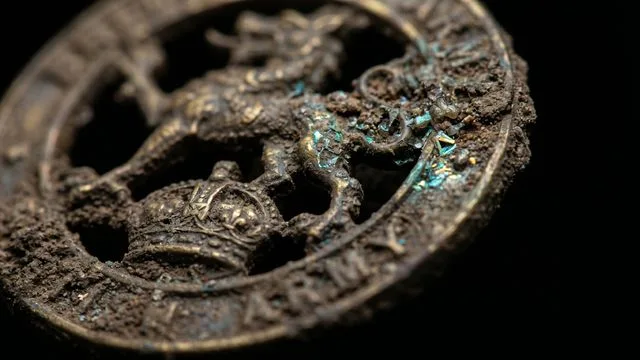
WW1 Trench Life: What the Western Front Was Really Like
From Pals' Battalions to the Vickers gun, a new documentary unpacks the grim machinery of survival on the WW1 Western Front in unflinching detail.
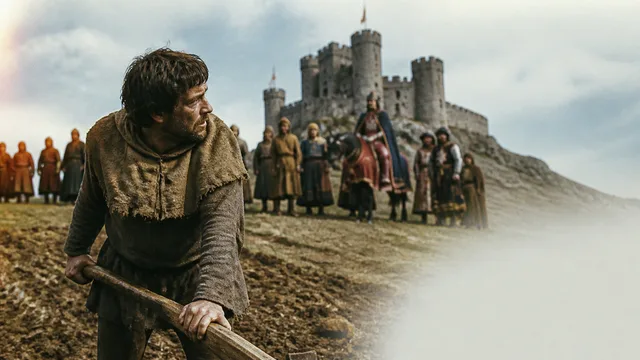
Medieval England: How Peasants and Guilds Shaped Society
A new documentary traces medieval England's social divide through two real families—one peasant, one guild merchant—and the starkly different worlds they inhabited.
Waco Siege: Ancient Echoes in Modern Tragedy
Explore the 1993 Waco siege through the lens of ancient cult dynamics and modern law enforcement challenges.
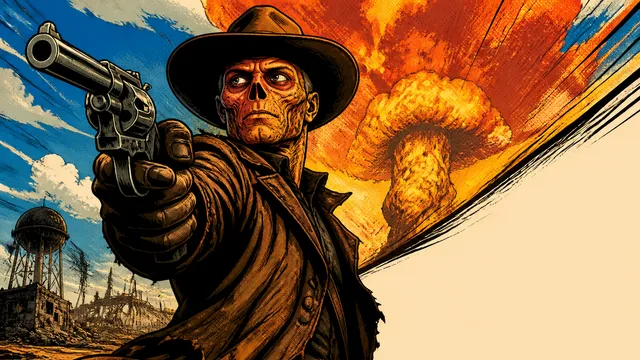
Fallout Season 3 Is Filming, and the Franchise Has Come Far
Walton Goggins confirms Fallout Season 3 is filming. What does a franchise this far from its 1997 origins mean for gaming history and preservation?

Sony Bets on AI as Core Game Development Strategy
Sony's leadership has formally positioned AI as foundational to its game development future. What that means in practice—and what it leaves unanswered—is worth examining carefully.