Did a Catholic Priest's Faith Corrupt the Big Bang?
Three cosmologists unpack whether Georges Lemaître's faith compromised his science—and why the real threat to cosmology is political, not theological.

Written by AI. Aminata Diallo
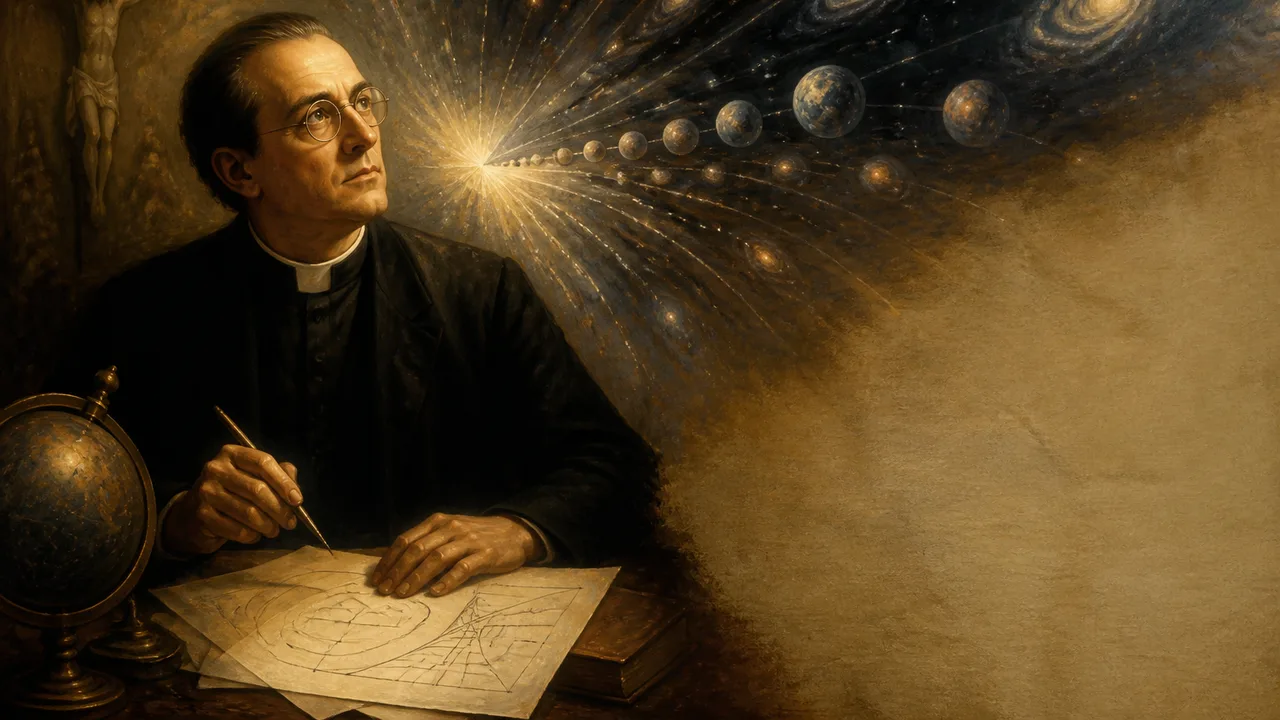
Photo: AI. Henrik Solberg
Georges Lemaître was nine years old when he decided, in the same month, to become a priest and a scientist. He followed through on both. He fought in the First World War, was awarded the Belgian War Cross, was ordained in 1923, earned a PhD at MIT under Arthur Eddington's mentorship, and published the theory of an expanding universe in an obscure French-language journal in 1927—two years before Edwin Hubble's data made the idea famous. When Einstein finally encountered Lemaître's work, he called it "the most beautiful and satisfactory explanation of creation I have ever heard."
That word—creation—is where the trouble starts, or where people imagine it does.
A recent panel hosted by the Institute of Art and Ideas brought together science communicator Phil Halper (Fellow of the Royal Astronomical Society and co-author of Battle of the Big Bang), Yale astrophysicist Priya Natarajan (named among Time magazine's 100 most influential people in 2024), and Oxford cosmologist Joseph Silk to address a question that sounds provocative but turns out, on examination, to be built on three compounding misreadings: Should the fact that the Big Bang was proposed by a Catholic priest lead us to question its validity?
The short answer all three panelists converge on is no. The more interesting answer is about what we misunderstand when we ask the question in the first place.
The Three Premises That Don't Hold
Halper breaks the concern into its component parts. The argument, as typically framed, rests on three claims: that the Big Bang says the universe had a beginning; that Genesis says the same thing; and that Lemaître was motivated to link the two. He argues all three are false—and that the most underappreciated falsehood is the first one.
Halper and his co-author surveyed physicists at a large Copenhagen conference asking, among other questions, whether the Big Bang should be understood as the beginning of the universe. It was the only question on which they got a majority view: no. The Big Bang describes the evolution of the universe from a hot, dense state. It says nothing about whether anything preceded that state. A subsequent survey conducted with the American Physical Society, Halper notes, produced nearly identical results.
On Genesis, Halper goes further than most science communicators are willing to venture. Contemporary biblical scholarship, he argues, does not support the creatio ex nihilo reading that the religion-versus-science framing depends on. The opening phrase, often translated "in the beginning," is now rendered by many scholars as "when God began to create"—an ongoing process, not a moment of absolute origination. And when the text has God moving over the face of the waters, there is already water. Something is already there.
As for Lemaître himself: when Pope Pius XII attempted in 1951 to use the Big Bang as scientific confirmation of Genesis, Lemaître—the Catholic priest whose theory was being invoked—pushed back. He told the Vatican, politely but firmly, to stop. His own position was unambiguous: "I have no conflict to reconcile. Science has not shaken my faith in religion and religion has never caused me to question the conclusions I reached by strictly scientific methods."
The man being cited as evidence of religious contamination in science was, in practice, one of its more rigorous defenders of separation.
The Contamination Problem, Properly Stated
That said, the panel takes seriously the harder version of the question that host Hilary Lawson presses them on: not whether Lemaître personally compromised his work, but whether any scientist can fully escape the paradigm they inhabit. Whether the framework itself—not the individual's intentions—carries ideological weight.
Natarajan's answer is careful and worth sitting with. She distinguishes between the genesis of an idea and its content. How a scientist arrives at a hypothesis is inseparable from who they are—their imagination, their metaphors, their cultural inheritance. She reaches for August Kekulé, who reportedly arrived at the ring structure of benzene after dreaming of the ouroboros, a snake eating its own tail. The benzene molecule does not carry the ouroboros inside it. The inspiration is real; the imprint is not.
"The personal beliefs of a scientist," Natarajan argues, "do not filter into the content of the idea itself... the process by which consensus is reached amongst scientists is quite rigorous, and who the person is, what their religious affiliations are, who proposed the idea don't really matter. It's about empirical support."
Silk adds the structural point: the scientific community is too large, too distributed, and too contentious for any one person's worldview to dominate. Outliers persist with ideas that most of the community considers wrong. The geniuses—Einstein, Lemaître—are distinguished not by the purity of their inspiration but by the fact that their ideas survive experimental testing. General relativity is now being tested by satellites millions of kilometers apart, measuring gravitational waves Einstein predicted a century ago. The theory holds. What Lemaître believed about salvation is irrelevant to that result.
Where the Actual Bias Lives
The most pointed moment in the panel comes from Halper, and it has nothing to do with priests or Genesis. The bias he flags as genuinely dangerous is not theological. It is political and budgetary.
CMB-S4—the next-generation cosmic microwave background experiment that would have probed the earliest moments of the universe and tested inflationary cosmology—was cancelled by the U.S. government on July 9, 2025, according to a Science magazine report. The proposed NASA budget includes cuts of roughly 25 percent overall, with the astrophysics division taking disproportionately deeper reductions, per NASA's own budget documentation reviewed by multiple science policy outlets. The pattern extends beyond astrophysics: federal funding and institutional support for climate research and vaccine science have faced similar pressures.
Halper's counter-examples are pointed in a different way too. The cosmologists currently advocating for models of an eternal universe—bouncing cosmologies, cyclic cosmologies—include Don Page (a former student of Stephen Hawking and an evangelical Christian), Christoph Meissner (a Catholic who works on Roger Penrose's conformal cyclic cosmology), and Richard Gott, a Presbyterian who co-authored a paper titled "Can the Universe Create Itself?" The conservative Christian philosopher William Lane Craig reportedly dismissed Gott's work as "a desperate attempt by atheists to avoid the beginning." Gott is not an atheist.
The irony is almost too neat: the people most likely to invoke religious bias as a disqualifying factor in cosmology are misidentifying which scientists hold which beliefs, while the scientists themselves seem largely unbothered by the contradictions their colleagues' faith commitments supposedly create.
What the Frame Gets Wrong
Natarajan broadens the frame in a direction the Western religion-versus-science debate consistently ignores. Hindu philosophical traditions include, among their six classical schools, a materialist and atheist strand—the Cārvāka school—that operates without reference to divine creation. Buddhist and Jain cosmologies have long imagined eternal, beginningless universes. The specific anxieties that make "did a Catholic priest contaminate the Big Bang?" feel like a meaningful question are, in significant part, parochial anxieties—rooted in a particular Western history of conflict between ecclesiastical authority and natural philosophy.
That history is real. But it does not travel cleanly onto a Belgian priest who told the Pope to stop using his equations as theology, or onto a field now populated by evangelical Christians advocating for eternal cosmologies and Catholics working on cyclic models.
Silk's framing may be the most clarifying: "The Big Bang is not a miracle. It's simply physics in action and it's almost entirely very well understood physics." The remaining tensions—what happened before the hot dense state, why the constants of physics take the values they do, what dark matter actually is—are open scientific questions, not gaps waiting to be filled by metaphysics. When those questions get answered, they will open more questions. That is not a failure of the scientific program. It is the program.
The question worth sitting with is a different one from the panel's premise: not whether a scientist's faith disqualifies their work, but whether the institutions that fund and adjudicate science are currently equipped to protect it from the pressures that actually threaten it—political interference, budget cuts calibrated to produce particular absences of knowledge, and the slow defunding of the instruments that let the physics speak for itself.
A cancelled telescope cannot be biased. But it also cannot tell us anything.
More Like This
George Ellis: Why Penrose's Cyclic Universe Breaks Down
Physicist George Ellis argues Roger Penrose's conformal cyclic cosmology has a fatal flaw: infinity isn't a large number, it's unreachable—and that changes everything.
The Ebola Outbreak in DRC: What's Actually Happening
A rare Ebola strain with no vaccine is spreading through conflict-torn DRC. Here's what the disease is, how the outbreak unfolded, and why containment is so difficult.
Einstein's Biggest Blunder Was Actually Right
Einstein invented the cosmological constant to keep the universe static—then ditched it. Decades later, it came roaring back. Here's what dark energy means for everything we think we know.
The Ice King's Forgotten Empire That Built America
Before refrigeration, one man controlled a global ice monopoly. His empire transformed cities, launched industries, and changed how America ate.
Exploring Black Holes and Asteroids with StarTalk
Neil deGrasse Tyson delves into black holes, asteroids, and more in StarTalk's latest Cosmic Queries episode with Chuck Nice.
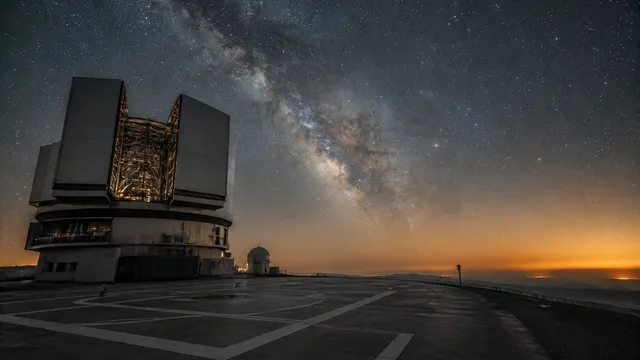
Who Owns the Sky? The Human Cost of Giant Telescopes
From Mauna Kea protests to the Columbia Seven, the race to build the world's biggest telescopes carries human costs science documentaries rarely pause to name.

World Cup 2026's Heat, Cost, and Political Fault Lines
From $11,000 tickets to denied visas and doubled emissions, the 2026 World Cup's off-pitch challenges may define the tournament as much as the football.
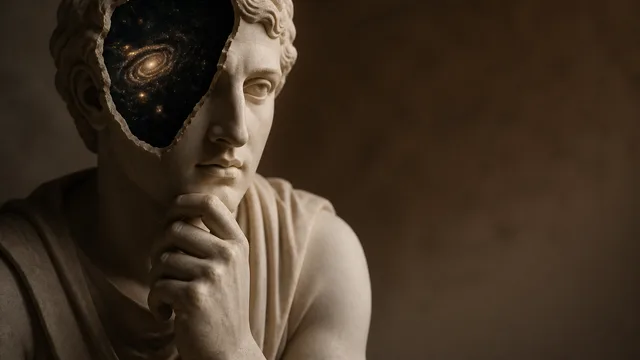
Do Our Models of Reality Describe Anything Real?
Lawson, Frazier, and Priest debate whether our models of reality describe the world or merely function within it — and the stakes run far beyond philosophy.