Three Ways to Think About Integrals
DIBEOS breaks down integrals into three mental models—geometry, anti-derivatives, and accumulation—to help you actually understand calculus, not just survive it.

Written by AI. Ellis Redmond
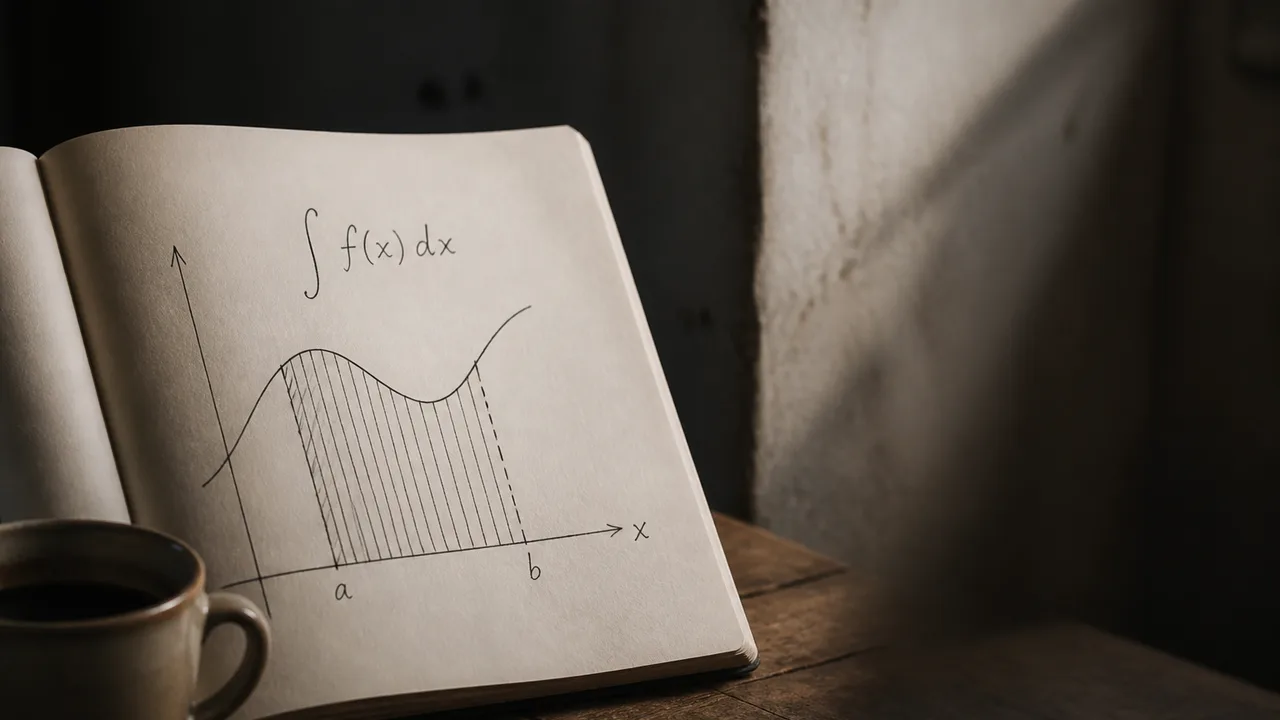
Photo: AI. Renzo Vargas
Most people learn calculus by learning to perform calculus. They memorize the power rule, grind through integration by parts, pass the exam, and walk away with no real sense of what they just did. The integral sign becomes a kind of incantation—you wave it over a function and a number comes out.
The DIBEOS channel has a different theory. In a recent video, the team makes the case that truly mastering integrals isn't about technique fluency—it's about holding three distinct mental models simultaneously, and understanding how they connect. It's an ambitious pedagogical claim, and honestly, it's worth taking seriously.
Level One: The Geometry Instinct
The first model is the one most of us start with. An integral is the area under a curve. Simple, visual, grounded in the physical world we can touch. The video earns its keep here by not just asserting this but showing why the definition works mechanically.
The argument runs like this: approximate the area under a curve by filling it with rectangles (this is the Riemann sum). A bad approximation at first—the rectangles poke out over the curve in ugly, uneven ways. But then apply a limit: shrink the width of each rectangle toward zero while simultaneously increasing their number toward infinity. What was a chunky discrete staircase smooths into a perfect continuous calculation. The summation symbol becomes the integral symbol. The Δx becomes dx. This is not hand-waving—it's the actual logical scaffolding of the definition.
What the video handles nicely is the dimensional ladder. A single integral measures something one-dimensional (arc length) or two-dimensional (area). A double integral handles surface area. A triple integral handles volume. And in principle, you can keep climbing into dimensions our brains can't picture—hypervols, in the video's terminology—following the same logic.
But then the video poses a genuinely good question: can every integral be interpreted as measuring some kind of physical space? Integrate gravitational acceleration over time. What "area" does that measure? Strictly speaking, none. What it gives you is a velocity—the speed gained by a stationary object after a period of time spent in freefall. The geometry interpretation, while useful, is not the whole story.
Level Two: The Navigator's Map
This is where the framing gets more interesting. In the video's second level, Sophia (one of the DIBEOS presenters) reframes the integral not as a shape-measuring tool but as a navigation device between mathematical spaces.
The clearest example is the chain of motion: displacement, velocity, acceleration. Differentiate displacement and you get velocity. Differentiate again and you get acceleration. Integration runs the same chain in reverse. The integral of acceleration gives you velocity; the integral of velocity gives you displacement. These aren't just algebraically related quantities—they're the same physical story told from different vantage points, and integration is the vehicle you use to move between them.
The video extends this chain in both directions for the sake of illustration. Above acceleration, differentiation gives you jerk—the rate of change of acceleration, which is why a sudden braking feels jarring. Differentiate jerk and you get snap, then crackle, then pop. (Yes, those are real terms in physics, and yes, the video leans into the joke.) In the other direction, integrating displacement produces a quantity the presenters call absement—a measure of how far from its origin an object is, and for how long. An object sitting 10 meters away from you for one second has an absement of 10 meter-seconds. If it stays there for ten seconds, the absement is 100 meter-seconds—even though the object hasn't moved at all.
These higher-order quantities don't come up often in everyday physics, as the video acknowledges—"most of the time motion can be described by position, velocity, and acceleration, so usually that's enough." But the point isn't to memorize the chain. The point is to see that differentiation and integration are operators that move you through a landscape of related functions. As the video puts it: "a derivative and an integral are operators that let us navigate between mathematical spaces."
The formal architecture behind this is the Fundamental Theorem of Calculus, which states that integrating a derivative gives you back the original function, evaluated at the endpoints of your interval. The video is careful to flag the constant of integration here: if differentiation destroys constants (because the derivative of any constant is zero), then integration can't fully recover them without additional information. An indefinite integral yields not one function but a whole family of them, offset from each other by some unknown constant c. Define the interval of integration, and c drops out—the specific area becomes deterministic.
Level Three: The Accumulation Machine
Both previous interpretations, the video argues, are actually expressions of the same underlying idea: accumulation. An integral collects infinitely many infinitesimally small contributions into a single global quantity. It turns local information—what's happening at this precise point—into global information: what's the total effect across the whole.
"At its core, an integral is an accumulation machine. It takes infinitely many infinitesimal contributions and combines them into one global quantity. It's a way of turning local information into global information."
In the geometry interpretation, you're accumulating tiny areas. In the anti-derivative interpretation, you're accumulating instantaneous rates of change. Same machinery, different inputs. The video connects this to sequences and series—a series accumulates a list of numbers by adding them; an integral accumulates uncountably many infinitesimal quantities by the same essential process. And just as some series diverge (the harmonic series being the classic example), some integrals diverge too—they don't settle to a finite value no matter how far you push the limit process.
The video's illustrations of accumulation are well-chosen. Electric charge: every tiny volume element of a charged object contributes a small amount of charge determined by local charge density; a triple integral accumulates all those contributions into total charge. Rocket fuel: a burn rate function tells you how many units of mass are consumed per unit of time at any given moment; integrate that rate over a time interval and you know how much fuel was consumed across a launch sequence. Probability: if you have a probability density function describing tomorrow's temperature, integrating it between two values gives you the probability that the temperature falls in that range.
Each example follows the same template: identify what's being accumulated, identify the variable of accumulation, and let the integral do the summing. The elegance is that once you see this structure, you can read any integral and understand what it's doing—not just what symbols it contains.
What the Video Gets Right (and What It Quietly Sidesteps)
The three-level framework is genuinely useful. Most calculus curricula treat these as separate topics rather than nested perspectives, which is why so many students can compute integrals without having any idea what they mean in a context they haven't seen before. Building the mental model layered—geometry first, then algebraic navigation, then the unifying principle of accumulation—is pedagogically sound.
What the framework doesn't fully address is the difficulty of getting there. The video acknowledges this implicitly: "almost every time students tell me that they want to learn advanced math or physics, we come to the same conclusion. They lack the fundamentals." But knowing you lack fundamentals and knowing how to build them are different problems. The three-level model tells you what understanding looks like from the outside. Actually developing it takes sustained contact with problems that resist the mechanical approach.
Technique matters too—the video mentions integration methods as a separate concern without unpacking them in depth. That's a reasonable editorial choice for a conceptual piece, but it's worth noting: being able to see what an integral means doesn't automatically make it solvable. The geometric, navigational, and accumulation frameworks tell you why you're doing the work. They don't do the work for you.
That said, knowing why might be the harder thing to teach. Calculus classrooms reliably produce people who can integrate. They less reliably produce people who, as the video puts it, "can look at expressions full of integrals and immediately understand what they're saying." The gap between those two things is exactly what DIBEOS is trying to close—and the three-level framework is a reasonable map of the terrain.
Whether you need the map before the methods, or the methods before the map, probably depends on how you learn. But there's an argument that most of us have been handed the methods first and the map never—and that might be worth fixing.
More Like This

Spotting Bad Dating Advice on Social Media
Discover how social media skews dating advice and learn to find reliable, evidence-based relationship guidance.

The Power of Starting Conversations with 'What'
Discover how asking 'what' instead of 'why' can transform communication and influence.
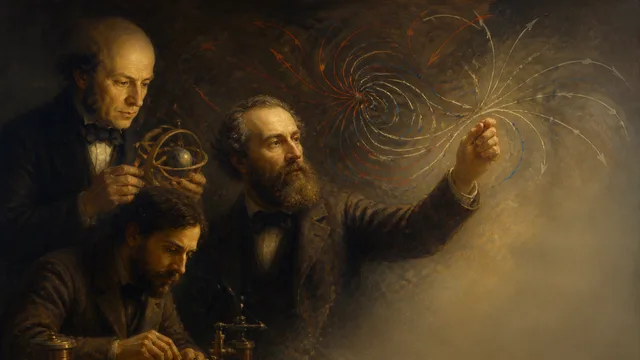
The Messy, Brilliant History of Divergence and Curl
How Hamilton's quaternion obsession, Maxwell's electromagnetism, and a self-taught telegraph operator gave us the vector calculus we use today.
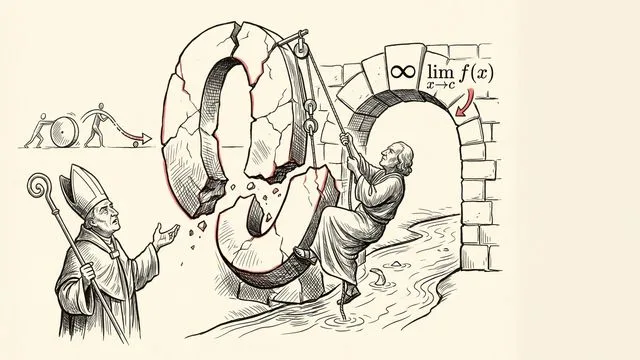
How Mathematics Finally Escaped Dividing by Zero
For 150 years, calculus worked perfectly on broken logic. Here's the fascinating story of how mathematicians finally fixed it—and what a bishop had to do with it.

Thoughtful Leadership: Stoute's Key Principles
Explore Steve Stoute's three principles of leadership: core values, embracing conflict, and fearlessness.
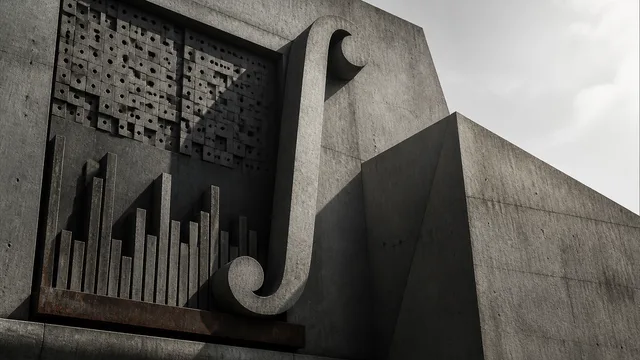
Lebesgue's Integral and the Limits of Riemann
How Dirichlet's impossible function exposed the limits of Riemann's integral—and forced a 26-year-old to rebuild calculus from scratch in 1902.

How to Stop Losing Time Without Realizing It
Not a time management overhaul—just a clearer look at where your hours actually go, and what's worth doing about it.

Healing After Betrayal: The Psychology of Shame and Recovery
Being scammed or betrayed triggers shame, not just anger. Here's what the psychology of betrayal recovery actually looks like—and why self-blame is the wrong starting point.