Tech Selloff Tests the Economics of AI Data Centers
A sharp tech selloff has put AI data centers under scrutiny. Investors now face questions about construction costs, political resistance and returns on spending.

Written by AI. Jonathan Park
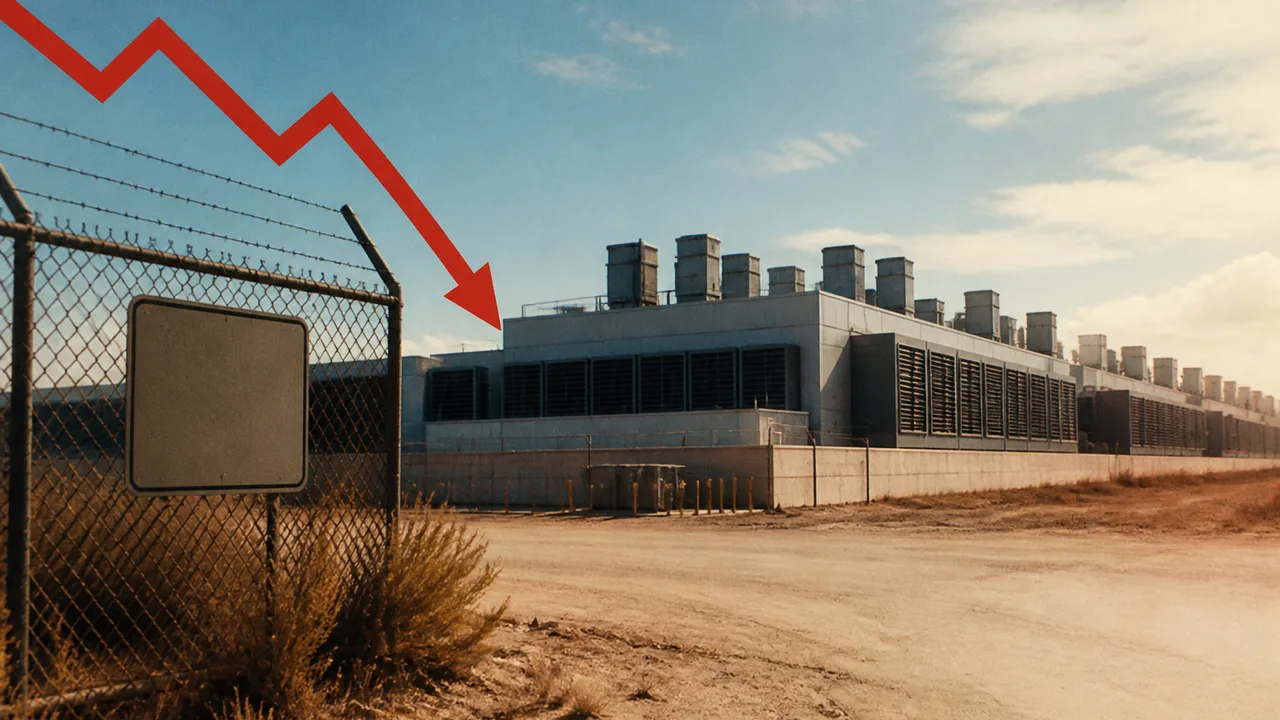
The Nasdaq fell more than 5% on Thursday as investors reacted to the prospect of tighter oversight of AI and data centers after the US midterm elections. Global technology shares also slid. The immediate loss hit portfolios; the larger question concerns projects that cannot be switched off or moved as easily as a stock can be sold.
Wall Street’s rout erased roughly $2.5 trillion in market value on Thursday. That figure describes a change in what investors would pay for shares, not $2.5 trillion of cash spent or lost by the companies. It does, however, raise the stakes for businesses financing years of construction in anticipation of future AI demand.
Two worries have converged. Investors are questioning how much revenue AI products will ultimately generate. They are also asking how quickly the data centers needed to run those products can be built, given their demands for electricity, land and equipment. US midterm results added to fears that political scrutiny could slow the buildout. A slower construction schedule can change the return on an investment even if customers still want the service.
The market move does not, by itself, show that AI usage has stalled, that a particular project has been blocked, or that a proposed restriction has become law. Those questions require company results and decisions from the authorities with power over individual projects. Share prices are reacting now because investors have to value those possibilities before the answers arrive.
A Growth Forecast Meets a Construction Schedule
The AI trade has linked several businesses with different economics. Software companies hope to sell AI features or subscriptions. Cloud providers and data-center operators supply computing capacity. Chipmakers and equipment suppliers sell what goes inside the buildings. Utilities may have to plan for the electricity those buildings consume. A forecast for AI adoption reaches each group through a different contract, construction schedule and bill.
For a company building a data center, the spending comes first. It needs land, a building, power access and computing equipment before it can earn a full return from the facility. If demand arrives later than forecast, the owner can face a longer wait to recover its costs. If power access or approvals arrive later, it may face a different problem: customers could be ready, but the capacity to serve them is delayed. Both scenarios can hurt projected returns, though they call for different responses from a business.
That is why a broad selloff can obscure as much as it reveals. A cloud provider with a large balance sheet, a supplier awaiting orders and a company dependent on one proposed site do not carry identical risks. Higher construction costs would affect them differently. So would customers choosing to spend less on AI. Investors need to separate the price paid for expected growth from evidence about the growth itself.
The scale of the commitment helps explain the sensitivity. Earlier AI spending analysis examined the capital-expenditure burden facing Amazon, Alphabet, Meta and Microsoft. Capital expenditure is the money a company puts into long-lived assets. A data center may serve customers for years, but a large upfront bill leaves less room for error in forecasts of when it will open, how heavily customers will use it and what they will pay.
Why Election Results Entered the Price
Thursday’s selling followed Democratic midterm gains and growing concern about political resistance to AI infrastructure. Victories by candidates critical of AI added to existing worries about the boom’s durability. For investors, an election result is a signal about possible decisions ahead. A decision on a data-center proposal is where that signal would acquire a cost and a timetable.
The strongest case for closer scrutiny starts with the physical demands of a data center. A project needs a site and substantial electricity. Local authorities and regulators have reason to examine how construction and power demand affect other users of land and infrastructure. Workers and customers may benefit from AI investment, while nearby communities and electricity users can encounter some of its costs. Approval is therefore a public decision, even when the financing is private.
A developer sees another side of the same process. If approvals become harder to secure or take longer, a planned facility could open later and cost more than expected. Those risks can make companies cautious about committing money before they know when power and construction will be available. Scrutiny could also favor businesses able to spread delays across many projects and finance the waiting period, an incumbent advantage that deserves attention alongside the prospect of slower building.
None of this requires treating every objection to a data center as an objection to AI. A community might support the technology’s uses and still question the terms of a local project. Conversely, investors might welcome rapid construction while questioning whether the eventual customers will pay enough to justify it. Those are separate judgments about who receives the benefits, who bears the costs and how soon the revenue arrives.
The Revenue Question Does Not Disappear
Construction risk is only half of the calculation. A fully built facility still needs customers willing to pay enough for computing capacity to cover its costs and generate a return. AI adoption could grow while spending per task falls. Cheaper computing might bring in more users, or it might limit the revenue earned from each one.
The reverse is possible, too. Strong demand might support continued investment even as approvals take longer. In that case, delays could restrict supply rather than reveal weak customer interest. This is one reason the same fall in a share price can be consistent with several stories: a smaller expected market, a slower route to serving that market, higher costs, or simply a lower price investors are willing to pay today for profits expected years from now.
Borrowing introduces another timetable. A company financing construction with debt owes interest whether a facility fills quickly or slowly. The credit-market question is who carries that obligation if projected revenue arrives late. Equity investors can mark down a growth forecast in an afternoon; lenders, builders and utilities may remain committed to contracts and plans drawn up before sentiment changed.
The next useful signals will come from places beyond the stock ticker. Company spending plans can show whether builders are slowing commitments. Customer revenue and use of existing capacity can indicate whether demand is keeping pace. Decisions on individual projects can show whether political concern is turning into longer timelines or higher costs. Suppliers and utilities may reveal whether a retreat in share prices is spreading through the buildout itself.
Thursday’s losses put a price on uncertainty. The harder accounting will happen at the point where an AI forecast meets a power connection, a construction deadline and a customer’s bill.
More Like This

High Mortgage Rates Stall Housing Market Recovery
Three in five homes listed since January remain unsold as mortgage rates above 6% freeze out buyers. Here's what the data reveals about who pays the price.

USMCA Won't Be Renewed: What Annual Reviews Mean
The Trump administration has blocked USMCA's 16-year renewal, opting for annual reviews. Here's what that means for trade, business, and North America.

Micron's AI Memory Boom Faces an Old Cycle Question
Micron's memory rally runs on AI data center demand and tight supply. Here is what would have to hold for the good times to last, and what to watch.
Big Tech's AI Capex Tab Is Coming Due
Amazon, Alphabet, Meta, and Microsoft burned $416B on AI infrastructure in 2025. Now the bond market is nervous, free cash flow is shrinking, and the bills are arriving.

South Korea's 2027 Budget Puts AI and Chips to the Test
South Korea proposes 820.9 trillion won in 2027 spending, including 21.3 trillion for AI and chips. The test is how public money delivers useful capacity.

Oracle’s Project Jupiter Notice Shifts AI Delay Risk
Oracle’s Project Jupiter notice shows how pipeline delays, local opposition and strained credit markets collide across the costly AI buildout.

When Founders Become the Ceiling on Their Own Growth
Founder-as-bottleneck is one of the most common and least discussed growth killers in startups. Here's what the pattern looks like, and why it's so hard to break.

Fed's Inflation Signals Are Pointing in Two Directions
Headline inflation stays stubbornly above the Fed's 2% target while trimmed mean indicators hit multi-year lows. What does Kevin Warsh do with that?