Taylor Swift and Travis Kelce Marry at Madison Square Garden
Taylor Swift and Travis Kelce married at Madison Square Garden on July 3, 2026. Here's what the moment meant—and why the internet lost its entire mind.

Written by AI. Jasmine Brooks

Photo: AI. Cosmo Vega
There's a particular kind of chaos that only Taylor Swift can generate — the kind where a BBC reporter gets driven off camera by a thunderstorm mid-live-shot, and somehow that feels completely appropriate. On July 3rd, 2026, per USA Today's live wedding recap, Taylor Swift and Travis Kelce officially got married inside Madison Square Garden, and the weather in New York apparently had opinions about it.
The ceremony itself, officiated by Adam Sandler and held under the MSG dome, was dressed in Christian Dior — both of them, according to Swift's longtime publicist. Jason Kelce served as Travis's best man. The guest list, by all accounts, was a full-scale Hollywood convergence: film stars, athletes, models, journalists, and international names including Hugh Grant representing, as BBC put it, "guests from across the pond." It was, by any reasonable measure, the kind of event that shuts down a Manhattan corridor — which is also literally what it did.
Outside the venue, fans who had gathered — some of them seemingly just passing by on their way to watch the World Cup — were confronted with signs confirming what many still couldn't believe. "We didn't think this was real," one fan told a BBC reporter on the scene. "So when we saw the sign, we're like, 'Wow, this is shocking.'" Another simply declared: "This is TNT. Taylor and Travis." The fandom has had a ship name for this relationship practically since day one, and now the ship has docked.
The Controlled Reveal and What It Says About Modern Celebrity
Here's the thing that keeps pulling at me about this wedding: it happened at Madison Square Garden. The most famous arena in America. One of the most recognizable buildings on earth. And somehow it still caught people off guard.
That tension — the deliberately public spectacle that somehow still feels like a secret being shared — is exactly the dynamic that Dr. Sarah Baker Bailey, an associate professor at Southern Connecticut State University who teaches a Taylor Swift-themed course on pop culture, fandom, and communication, laid out in BBC's live coverage. "The Travis interactions over the last two years of their relationship has been this very interesting mix of seeming incredibly intimate," she said, "but always still keeping us at arm's length with it."
She pointed to the engagement announcement, which NBC News reported landed on Instagram comparing the couple to a favorite English teacher and gym teacher — the kind of caption that reads like a text from your best friend, casual and inside-jokey, designed to feel personal rather than press-release formal. That's intentional image architecture. Travis has spoken about keeping the private parts of the relationship private, while making clear they won't hide their love for each other. The wedding follows the same logic: a venue that holds thousands, but details that trickled out slowly, on their terms.
This is the new celebrity playbook, and Swift has been one of its primary authors for over a decade.
The Social Media Thread That Made Them
Dr. Bailey's analysis on the social media dimension of Swift's career is worth sitting with, because it explains a lot about why this wedding hits differently than, say, a comparable Hollywood coupling. "Taylor at the start of her career was doing a lot of vlogging," Bailey noted. "That initially really let fans in on her day-to-day life." There's an infamous early video of Swift learning to drive — badly — that circulated during a time when that kind of unfiltered content was genuinely rare for a pop star at her level. She got on Tumblr when it mattered. She used Instagram through its own cultural arc. The platforms changed; the approach — make the fan feel like a confidant — stayed consistent.
Travis came at it from a different angle. His social media presence is more chaotic, more bro-coded, with old tweets that have resurfaced in "really funny ways," per Bailey. But the underlying mechanic is the same: digital media as a tool for cultivating what Bailey called "very deep, intimate personal connections" with people who will never actually meet you.
What's fascinating about the TNT pairing, culturally speaking, is that it activated two entirely separate fandoms that had been running their own parallel parasocial ecosystems — Swifties and Chiefs Kingdom — and merged them into something new. Pop music and professional football are both mass-spectacle industries built on loyalty, tribal identity, and emotional investment. The wedding at MSG is, in some sense, the logical endpoint of two years of those worlds colliding.
What Fans Were Actually Feeling
I keep coming back to those street interviews outside Madison Square Garden, because they're doing more work than they might appear to do.
"Shocked, surprised, happy for them," said one fan. Another pair had literally wandered over from a World Cup watch party and found themselves standing outside one of the most-discussed weddings in recent memory. That's not just a fun anecdote — it's a data point about how cultural saturation actually works. You don't have to be a Swiftie to get caught up in a Taylor Swift cultural moment in 2026. The event is large enough to pull in bystanders.
Dr. Bailey called Swift and Kelce "two uniquely American cultural phenomenons coming together" — pop music and sports, two of the most emotionally potent entertainment categories in the country, merging in one ceremony. The thunderstorm that chased BBC's reporter Floyd Kush off camera while it was all happening felt, honestly, like something out of a Reputation deep cut.
That's the other layer here: the symbolic weight that the Swiftie community has been assigning to this relationship almost since it began. Bailey noted, only half-jokingly, that Swift wrote on Reputation, "after the storm, something was born on the 4th of July" — and here was a thunderstorm rolling through New York on July 3rd, the day of the wedding. Whether you read that as coincidence or prophecy probably depends on your relationship to the fandom. The point is that the interpretive machinery was already built and running. The wedding gave it something massive to process.
The Question Celebrity Events Like This Actually Ask
What makes a moment like this worth analyzing beyond the spectacle itself is what it reveals about the infrastructure of modern celebrity — the deliberate cultivation of intimacy at scale, the management of public and private as distinct but interlocking brand assets, and the genuine emotional investment fans bring to relationships they've followed through social media, interviews, and paparazzi walks for years.
None of that is cynical, exactly. The feelings are real. The community built around shared investment in a celebrity relationship is real. The question that events like this surface, and never quite answer, is what happens to all of that feeling now that the story has reached a natural climax — and whether the next chapter can possibly carry the same charge as the anticipation that preceded it.
The wedding of Taylor Swift and Travis Kelce is, by every measure, the cultural event of the moment. What it becomes in the longer arc of both their careers, and in the memory of everyone who was watching — from the MSG dome to the rain-soaked streets outside — is still being written.
More Like This

This Dev Built an App to Win Arguments With His Wife
Trash Dev created 'Receipts'—an AI-coded app that documents relationship grievances. His wife made him delete it. Here's what happened.

Kane Parsons on the Backrooms Film and YouTube Filmmaking
Kane Parsons, described as 20 years old in his BBC Newsbeat interview, made a Backrooms feature film from a YouTube series. Here's what that path actually required.
Why Galactic Empires Are Doomed to Collapse
Explore why galactic empires in sci-fi often fall apart. Discover the challenges of leadership, communication, and governance.

Nashville, Waltons, and a World Cup Verdict
Nashville's sports boom, Lukas Walton's Bulls stake, the World Cup's record attendance, and Wimbledon's player labor standoff—the week's key sports business signals.
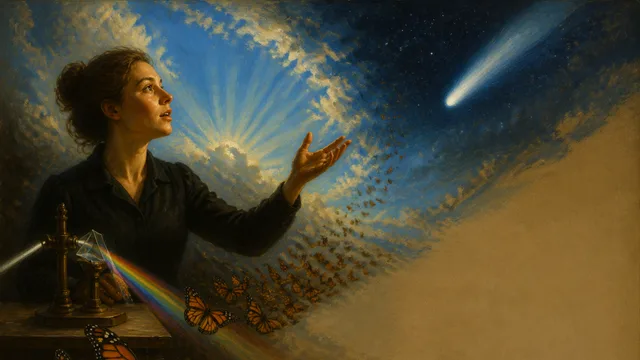
Lucy Rogers on Butterflies, Blue Skies, and Halley's Comet
Engineer Lucy Rogers delivers a Royal Institution talk connecting monarch butterfly migration, Tyndall's 1869 light experiment, and Halley's Comet in one sweeping look upward.
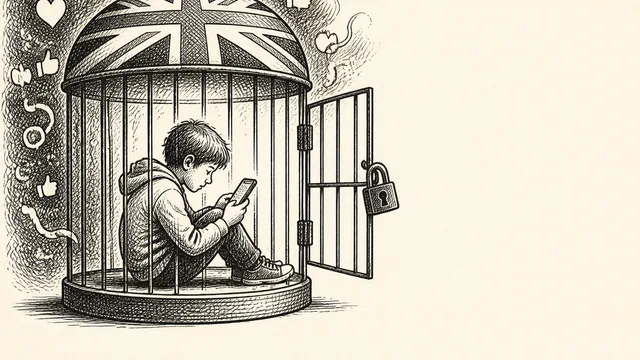
Should the UK Ban Social Media for Under-16s?
The UK may soon restrict social media access for under-16s. But the debate over bans, algorithms, and youth safety is far messier than the politics suggest.
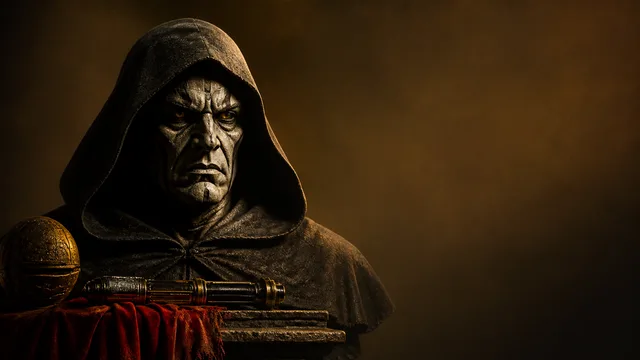
Merphy Napier Makes the Case for Darth Bane
BookTuber Merphy Napier reviews Darth Bane: Path of Destruction fresh off finishing it—and her unpolished enthusiasm is the whole argument.
Mastering the Art of Cinematic Wide Shots
Explore wide shots in film, where space tells the story and characters shine.