Solid-State Batteries: $20 Billion In, Nobody Wins Yet
Toyota, Volkswagen, CATL and BYD have poured $20 billion into solid-state batteries. The physics works. The manufacturing doesn't. Here's where things actually stand.

Written by AI. Mike Sullivan
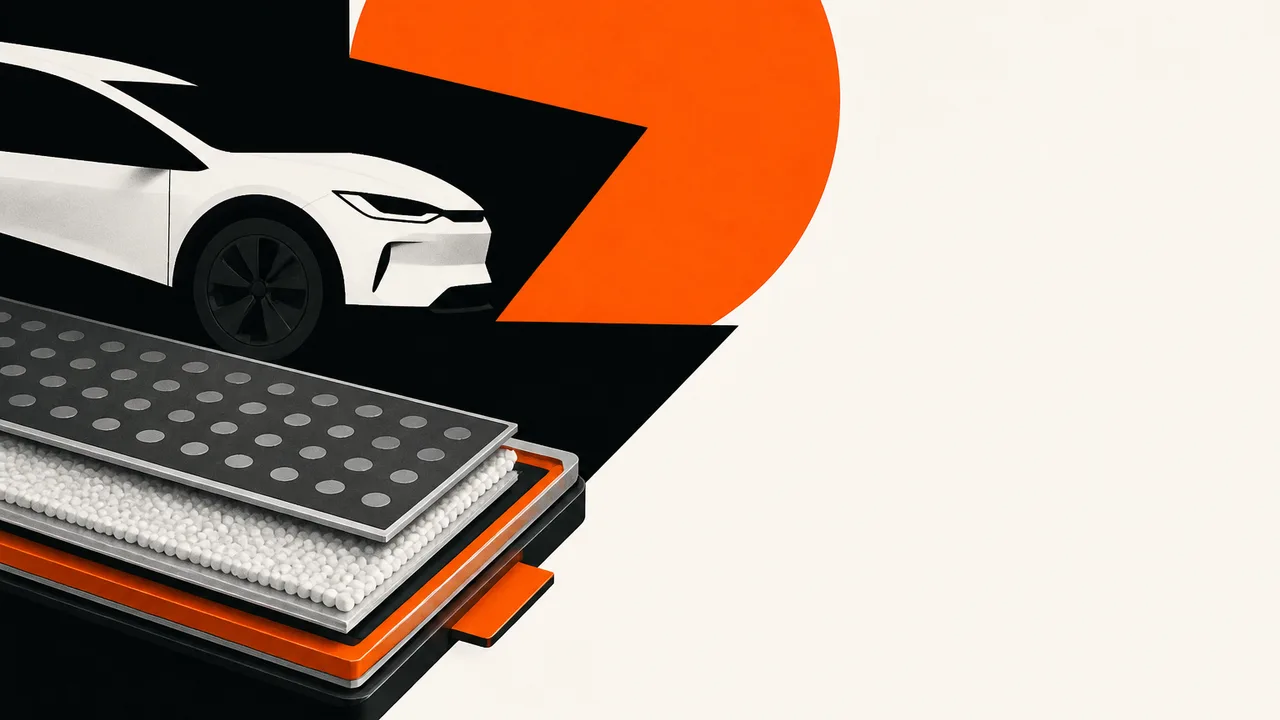
Photo: AI. Ondine Ferretti
In August 2025, a Mercedes-Benz EQS drove from Stuttgart to Malmö without stopping to charge. When it arrived in Sweden, it still had about 85 miles of range left in the pack. The car was running a solid-state battery, and it is, by any reasonable measure, an impressive demonstration of what this technology can do when everything goes right.
The trouble is getting everything to go right at a scale measured in millions of units rather than one carefully managed prototype.
That gap, between a demonstration drive and a production line, is where more than $20 billion in collective investment from Toyota, Volkswagen, Samsung SDI, CATL, and BYD currently sits. And as the IE Explains breakdown of the technology makes clear, not a single production car on the market today ships with a true all-solid-state cell.
What the technology is actually promising
The pitch for solid-state batteries is genuinely compelling, which is part of why the investment numbers are so large.
A conventional lithium-ion cell has four components: a cathode (typically a metal oxide), a graphite anode, a liquid electrolyte between them, and a thin plastic separator to keep the electrodes from touching. When you charge the battery, lithium ions travel through the liquid, pass through the separator, and slot into the graphite. When you draw power, they travel back. It works well. It's also been the dominant design for three decades.
Solid-state replaces both the liquid electrolyte and the separator with a single solid material that does both jobs: conducting lithium ions and physically separating the electrodes. That substitution unlocks a more significant change: you no longer need the graphite anode. You can use pure lithium metal instead, which stores the same energy in dramatically less mass and volume.
Today's best lithium-ion EV packs land somewhere between 250 and 300 watt-hours per kilogram. Solid-state designs are targeting 400 to 500. Roughly double. Battery packs are the heaviest single component in an electric car, often running 400 to 600 kilograms. Halving that weight cascades through the entire vehicle: smaller motors, lighter structure, improved handling, better efficiency.
Safety is another genuine advantage. The liquid electrolyte in a conventional cell is a flammable solvent. It's why EV fires are difficult to extinguish, why lithium batteries face shipping restrictions, and why manufacturers wrap packs in substantial fireproofing. A solid electrolyte removes much of that risk, along with the weight of the fireproofing itself.
Charging speed looks promising too. Toyota is publicly targeting 10 to 80 percent charge in roughly 10 minutes, and Samsung SDI has claimed 80 percent in nine.
Three problems that have kept this "five years away" for twenty years
The physics works. The manufacturing is where things get difficult, and there are three specific failure modes that have made solid-state batteries a perennial "almost there" technology.
Dendrites. Lithium metal doesn't plate down smoothly when it charges. It grows needle-like spikes, called dendrites, that can push through the electrolyte and short-circuit the cell. A solid electrolyte was supposed to block them physically. It turns out dendrites find the microscopic gaps between crystal grains in the solid material and grow through those instead. The problem didn't go away; it just changed shape.
Interface resistance. A liquid wets every surface it contacts, ensuring consistent ion flow across the entire electrode. A solid pressed against another solid only makes contact at the high points. Less contact means higher resistance, which means slower charging and wasted energy. Getting a solid electrolyte to maintain intimate, consistent contact with electrodes that are themselves changing chemically is an unsolved manufacturing challenge.
Volume change. Cells expand and contract as they charge and discharge. Liquid electrolyte absorbs this movement passively. Solid cells have to be held under constant mechanical pressure to maintain contact. The Mercedes demonstration pack reportedly addresses this with pneumatic actuators built into the assembly. That's an engineering solution, but it adds weight and complexity to a technology whose main selling point is reducing both.
Understanding why these problems are so persistent requires some appreciation of what EV battery manufacturing already demands at scale: rooms drier than the Sahara, tolerances measured in microns, and defect rates that must approach zero across millions of cells. Solid-state adds new constraints on top of an already demanding baseline.
Who's actually close, and what "close" means
There are three solid electrolyte chemistries in active development, and different companies have made different bets on which one will be manufacturable at scale.
Sulfide electrolytes conduct lithium ions as well as liquids, sometimes better. Toyota, Samsung SDI, and BYD are pursuing this path. The catch: sulfides react with atmospheric moisture and release hydrogen sulfide gas. Manufacturing requires facilities with extraordinary humidity controls. The Next Web has reported that some manufacturers view the dry-room requirements alone as a reason to push realistic timelines toward the end of the decade.
Oxide ceramics, the approach QuantumScape has built its design around, are stable and non-flammable. Ceramics are also brittle, and producing a thin, flawless ceramic sheet in industrial volumes is its own engineering problem. QuantumScape has lost hundreds of millions of dollars in a single quarter while working through it.
Polymer electrolytes are the easiest to manufacture on existing equipment, but most of them only conduct ions properly when warm, which means they require active heating in the battery pack.
Toyota holds the largest patent portfolio in this space, and has gone all-in on sulfides with a partner that broke ground on a full-scale electrolyte plant in early 2026. Japanese regulators approved Toyota's production plan in late 2025. Their first-generation target is around 1,000 km of range and approximately 450 watt-hours per kilogram, with a launch window of 2027 or 2028, likely in a Lexus first.
Factorial Energy, the Massachusetts company that built the battery for the Mercedes demonstration drive, also holds development deals with Stellantis, Hyundai, and Kia.
Then there's CATL, the largest battery manufacturer on Earth. CATL is running multiple chemistries in parallel, with sulfide pilot cells targeting 450 to 500 watt-hours per kilogram. But its chairman Robin Zeng has been notably blunt about the timeline. Per Digital Trends, Zeng has publicly called the technology "level four of nine" in terms of readiness, with real mass production no earlier than 2030. When the biggest battery maker on the planet voluntarily pours cold water on solid-state hype, it's worth taking that seriously.
The part that's already on the road
While the full solid-state story is still playing out in labs and pilot facilities, a transitional technology has quietly made it to market: semi-solid batteries. These designs retain five to twenty percent liquid electrolyte, which sidesteps enough of the dendrite and interface-resistance problems to be manufacturable now, while still pushing energy density higher than conventional lithium-ion.
Several Chinese manufacturers have already shipped vehicles with semi-solid cells, hitting energy densities in the 350 to 420 watt-hours per kilogram range. They can be produced on upgraded existing production lines, which removes the need for entirely new factory infrastructure.
The trade-off is cost. Semi-solid batteries currently run roughly three to five times more per watt-hour than conventional cells. That's not mass-market territory, but it's a real product on real roads, which is more than full solid-state can claim today.
The timeline problem, and the moving target
The IE Explains breakdown offers a realistic timeline: low-volume, premium-priced vehicles by 2027 or 2028; meaningful volume closer to 2030; cost parity with lithium-ion somewhere beyond that. The video is careful to flag that "those dates also need to be treated with heavy skepticism."
That skepticism is earned. Toyota's publicly stated targets have shifted from 2020, to 2023, to 2026, and now to 2028. Each revision has come with new engineering explanations, and each has been entirely plausible. The problem isn't that Toyota is being dishonest. The problem is that the manufacturing challenges are genuinely hard to predict until you're actually trying to solve them at scale.
And while solid-state has been running in place, lithium-ion hasn't. Lithium iron phosphate cells keep getting cheaper. Silicon anode cells keep pushing range higher and charging speeds faster. The technology solid-state is trying to displace is not standing still. That's worth holding in mind when evaluating any timeline that's now at least seven years old.
The physics of solid-state batteries works. The Mercedes drive proved that at the demonstration level. What remains is the less glamorous part: manufacturing this by the millions, at a cost that doesn't require a buyer to remortgage something. That problem has been five years away for a long time. The next few years will tell us whether the gap is finally closing, or just being rediscovered.
More Like This
Do You Really Need an $80 HDMI Cable? Maybe Not
Tech reviewer Adam tests a premium HDMI 2.1 cable. We examine what you're actually paying for and whether most users need it.

Can Unreal Engine 5 Run on a $500 MacBook? Sort Of.
Testing Unreal Engine 5.7 on the MacBook Neo reveals what happens when professional software meets budget hardware—and why friction matters.

PS6 May Ditch PS5's Liquid Metal Cooling System
A Sony patent points to vapor-based cooling for the PS6, signaling a possible retreat from the liquid metal system that dogged the PS5 at launch.

Water as Rocket Fuel: The Case for Electrolysis
Water electrolysis propulsion could reshape space travel. Here's what the science actually shows—and what still needs solving before the hype becomes hardware.
Building a $1,115 PC That Outperforms the Mac Mini M4
Tech Notice proves you can still build a powerful PC in 2026 despite RAM shortages—for less than Apple's Mac Mini M4 Pro costs.
Tesla's Terafactory: Inside a $119B Chip Manufacturing Bet
Tesla and SpaceX plan the largest factory ever built in Texas — a $119B chip fab targeting 1 terawatt of AI compute annually. Here's what the numbers actually mean.

Pokémon Go at Ten: AR's One Durable Success Story
Pokémon Go turns ten this week. A look at what it actually got right—and why the AR industry it was supposed to launch mostly didn't follow.
Surgeons Used Humanoid Robots to Operate on Pigs
Humanoid robots remotely controlled by surgeons removed gallbladders from live pigs. Here's what the milestone actually means—and what it doesn't.