Smart Rings That Read Your Sweat Are Coming
A new smart ring prototype reads glucose, ketones, and more from finger sweat. For athletes and diabetics alike, the stakes are real and so are the unanswered questions.

Written by AI. Jai Trivedi
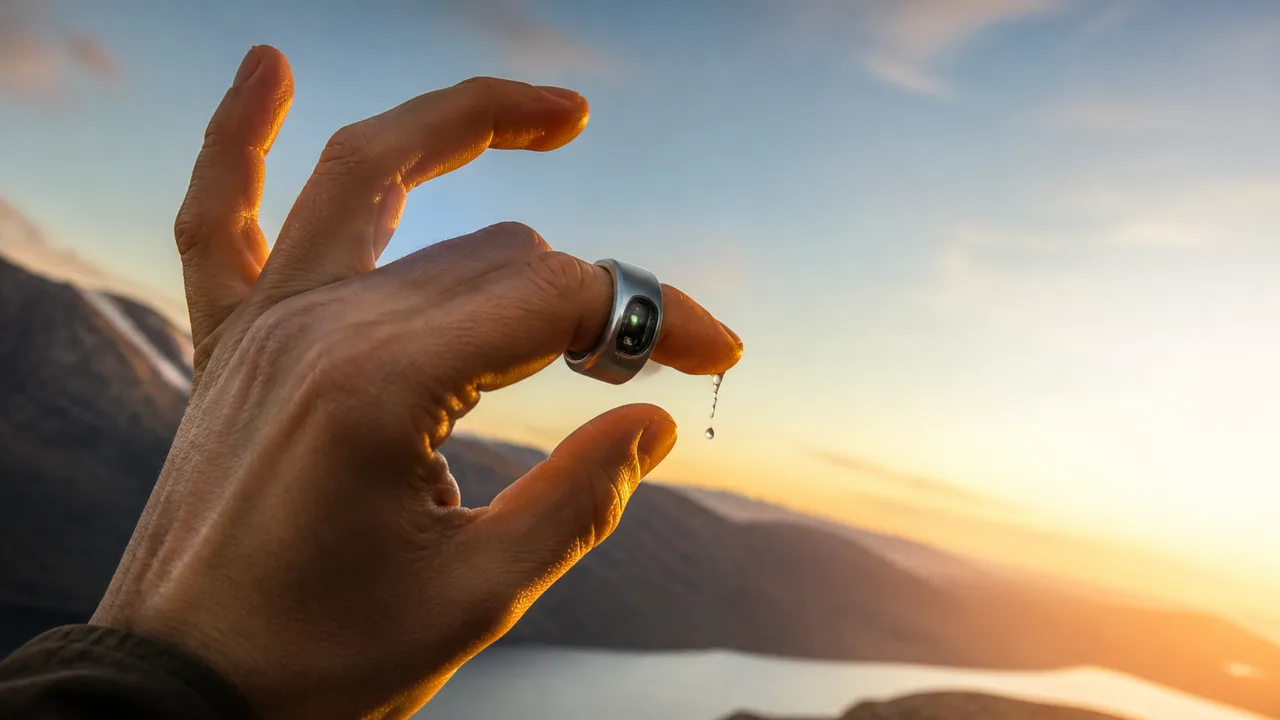
Pro sports locker rooms already look like a Best Buy wearables aisle. Oura rings on fingers, Whoop straps on wrists, continuous glucose monitors (CGMs) taped to arms. Elite endurance athletes have been tracking glucose and ketones for years because fuel state is performance state; knowing whether you're running on carbs or fat mid-race is not a curiosity, it's a competitive variable. The people most obsessed with this data right now are triathletes, Tour de France domestiques, and type 1 diabetics. They are not the same population, but they share the same core problem: getting accurate metabolic data without stabbing themselves constantly is genuinely difficult.
A new research prototype wants to solve that. According to Medical Xpress, scientists have built a smart ring that tracks glucose, ketones, and other biomarkers simultaneously by analyzing sweat from the skin on your finger. No needles. No adhesive patch on your arm. Just a ring doing chemistry on the moisture your body is already producing.
Android Authority and SciTechDaily both confirmed the device's multi-biomarker capability, noting that the ring can detect not just glucose and ketones but also alcohol levels. Gizmodo framed it as potentially the upgrade the smart ring category has been missing since Oura and its competitors built a market around heart rate and sleep without cracking metabolic chemistry. New Atlas positioned the device specifically in the context of diabetes management, where non-invasive glucose monitoring has been a kind of holy grail that the industry has chased for years without a clean solution.
What the ring actually does
The mechanism matters here. Current CGMs work by inserting a small filament under the skin to measure interstitial fluid glucose. They're impressive, they've changed lives, and they're still adhesive patches that require insertion. Smart rings from Oura and Samsung measure things like skin temperature, heart rate variability, and blood oxygen; metabolic chemistry has been out of reach because sweat-based sensing is analytically complex. Sweat composition varies with hydration, temperature, exercise intensity, and individual biology, and disentangling a clean glucose signal from that noise is not trivial.
The prototype appears to address that challenge with a multi-sensor array that reads several biomarkers at once, which helps calibrate the signal. The exact technical architecture is not fully detailed in the available sources, and this is still a research prototype, not a product. TechRepublic flagged explicitly that the device is in early-stage development and that clinical validation and regulatory review would be required before anything like this reaches consumers.
How long that takes is genuinely uncertain. The path from academic prototype to cleared medical device is long and contingent on trial outcomes. The research-to-shelf timeline for wearable health tech has historically stretched well beyond what the initial press cycle implies, and nothing in the current sourcing suggests this device has a launch date anywhere in sight.
Why performance culture is paying attention
Here's the thing about the Oura-and-Whoop generation: they normalized wearing health hardware as a lifestyle signal before the hardware even did anything medically meaningful. A ring or a strap became shorthand for "I take recovery seriously," which meant the aesthetic buy-in was already there. What the category has been missing is the metabolic layer.
Ketone tracking specifically is a big deal in endurance sports right now. Ketone esters became a thing in professional cycling and marathon running after research suggested they could provide an additional fuel source and accelerate recovery. Athletes who supplement with ketones want to know whether their levels are actually elevated or whether they just paid thirty dollars for an expensive drink. Right now, blood ketone meters require a finger prick. A ring that could give you that data passively, continuously, during training, would be a different product category entirely.
Glucose monitoring in non-diabetic athletes is also more mainstream than it was five years ago. Companies like Levels built an entire consumer business around strapping a CGM to healthy people who wanted to see how their diet and training affected blood sugar. The audience exists. The demand is documented. The question is whether sweat-based sensing can hit the accuracy bar that makes the data actionable rather than decorative.
The alcohol data point deserves its own paragraph
SciTechDaily noted that the ring can detect alcohol through sweat. That detail got buried in most coverage, but sit with it for a second.
A wearable that passively logs your alcohol intake, continuously, and syncs that data to an app, is not just a health tool. It is a surveillance device you wear voluntarily. The technology doesn't determine how that data gets used. The business model does.
Insurance companies have already shown interest in wearable data. Some health plans offer discounts for sharing fitness tracker data. The logical extension is straightforward, and not entirely comfortable: a device that knows your glucose trends, your ketone levels, and how much you drank last Tuesday is enormously valuable to anyone who prices health risk for a living. The question of who owns the data your ring generates, and what they're permitted to do with it, does not have a settled answer in the current regulatory environment.
TechRepublic raised data privacy and accuracy as the two critical unresolved questions facing this class of device. Those are the right questions. Accuracy is a solvable engineering problem; data governance is a policy and incentive problem, and it tends to get solved in favor of whoever funds the platform.
The accuracy gap is real and it matters differently for different users
For a healthy athlete using this ring to optimize training, a glucose reading that's fifteen percent off is annoying. For a type 1 diabetic making insulin dosing decisions, it's dangerous. New Atlas and Gizmodo both noted the potential benefits for people managing diabetes, which is where the stakes are highest. The FDA's accuracy standards for glucose monitors exist precisely because imprecision in that context has consequences. Any path to clinical use runs directly through that regulatory gate, and clearing it with sweat-based data will require the kind of large-scale validation studies that take time and money.
The sports performance market has a lower regulatory bar and a faster adoption cycle. That's probably where this technology shows up first if it reaches consumers at all, sold as an optimization tool rather than a medical device. Which is fine, but it also means the population that arguably needs it most (people managing chronic conditions) will be last in line.
The ring category needed this problem to exist
Oura is on its fourth hardware generation. Samsung entered the ring market. Smart rings have mainstream awareness now in a way they didn't three years ago. But the category has been running on the same core sensor stack (optical heart rate, temperature, accelerometer) while the software layer has gotten incrementally smarter. Adding real metabolic chemistry to a ring-form-factor would be a hardware step change, not an iteration.
Whether this particular prototype is the one that gets there, I genuinely can't say. The sourcing is consistent about what the device measures and honest about where it is in development, and the researchers deserve credit for publishing. But the graveyard of promising non-invasive glucose sensing startups is well documented. The biology is hard. The physics of sweat-based measurement has produced a lot of promising early results that didn't survive rigorous clinical testing.
What's different about the current moment is that the consumer infrastructure is already built. The wearable habits are set. The performance culture that would pay for this data is large and growing. If the science holds up, the market is waiting.
The ring that knows whether you're metabolically ready to train, and what you drank the night before, is a powerful object. The question is who it's powerful for.
More Like This

How a Mechanical Watch Stores Energy, Explained
Chronova Engineering's Mike machines watch barrels from scratch, revealing how mechanical watches store and release energy through coiled springs and clever design.

Can Unreal Engine 5 Run on a $500 MacBook? Sort Of.
Testing Unreal Engine 5.7 on the MacBook Neo reveals what happens when professional software meets budget hardware—and why friction matters.

Videorc LIVE Tested: Multistream Works, Chat Doesn't
OrcDev tested Videorc LIVE streaming simultaneously to YouTube, X, and Twitch. The broadcast worked. The comment aggregation didn't. Here's what that gap means.

Starlink Satellites Are Now Scanning Earth's Atmosphere
Kyoto University researchers repurposed 1,200 Starlink satellites as an accidental atmospheric scanner. Here's what that means for science—and who controls it.

Brain-Computer Interfaces Are Coming. Who Can Afford Them?
Brain chips can restore movement to paralyzed patients. But at $50,000 a surgery, the real question isn't who wins the tech race — it's who gets left out.

Apple's AI Glasses: A Display-Free Bet on Siri
Apple's rumored glasses, reportedly coming in 2027, won't have a screen. Here's what they will do—and why the privacy question is the one Apple can't dodge.

England Ends Norway's World Cup Run, Haaland Silenced
England beat Norway 2-1 in extra time to reach the 2026 World Cup semifinals. Bellingham scored the winner. Here's what the money story actually looks like.

How Hard Is Soccer Fitness, Really?
Vox sent a producer to train with Brooklyn FC. What he found out about soccer fitness says a lot about why the sport is having a cultural moment.