Ritchie Torres Bill Puts Digital Game Ownership to the Test
Rep. Ritchie Torres wants digital game buyers to own what they purchase. His proposal raises hard questions about shutdowns, resale and games that need servers.

Written by AI. Jordan Mercer
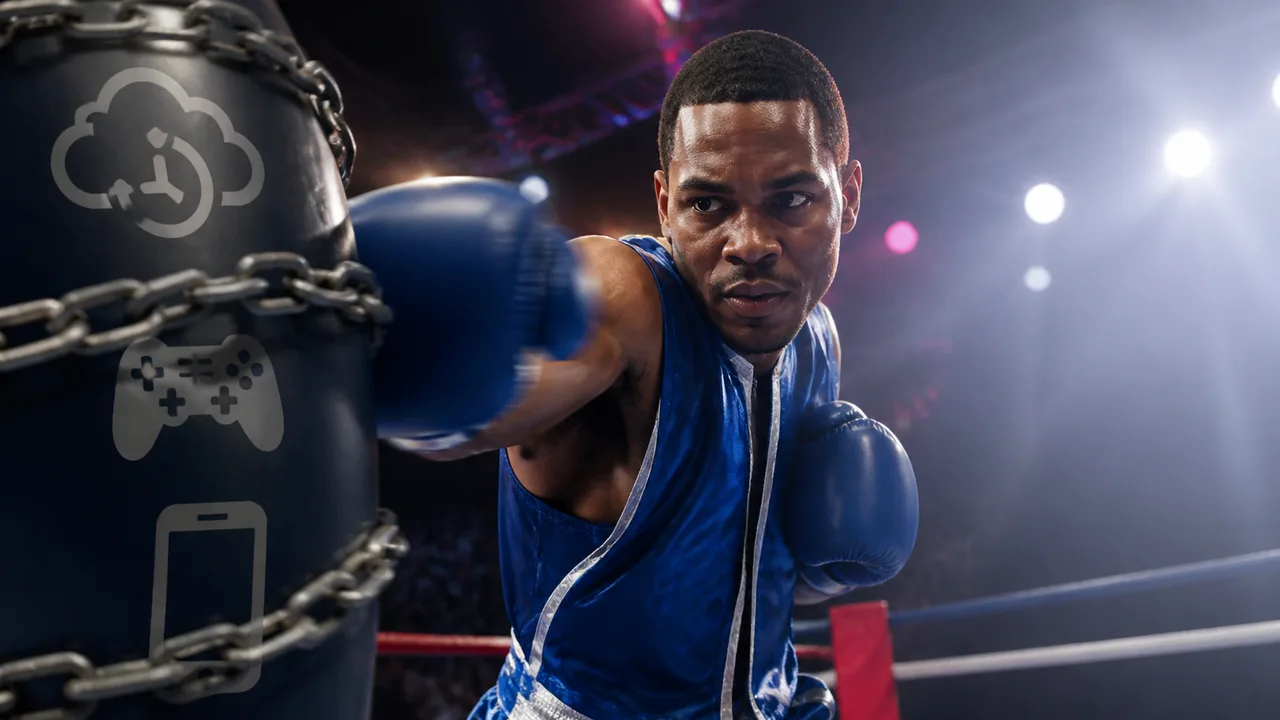
Representative Ritchie Torres has introduced legislation aimed at giving buyers ownership of digital games, rather than a license to access them. That sounds like a straightforward fix for anyone who has paid for a game and then wondered whether the “purchase” button promised more than the terms of service did. Congress now has to confront a messier question: what, exactly, should a player be able to keep?
Torres has put the consumer argument plainly: “When you pay for a game, you should own it,” quoted by PC Gamer. It’s a strong line because storefront language already teaches players to think that way. A price appears beside a game, the buyer pays it, and the game joins a library. The license terms governing that transaction rarely get the same visual treatment as the checkout button.
The proposal moves that complaint into a venue with more power than a support ticket. It does not, by its introduction, turn every digital purchase into the equivalent of a cartridge you can lend to a friend. The announced push leaves the practical test for lawmakers: which rights would ownership convey, who would have to honor them, and what happens when a game’s code cannot function without a company running the rest of it?
What Would a Buyer Actually Own?
“Ownership” can describe several different powers that players often bundle together. You might want to download and keep the game you paid for. You might want to install it again after replacing your phone or computer. You might expect it to launch without a publisher’s permission, continue working after a store delists it, or be transferable to another person. A rule delivering one of those outcomes would not automatically deliver the others.
Start with the simplest case: a game that can run on a player’s device once its files are installed. If continued play still requires an account check, then the game’s ability to run and the buyer’s ability to access it can separate. An ownership rule could target that check, future downloads, or the language used at checkout. Each choice gives the buyer a different level of security.
Resale introduces another question. A physical game can move from one player’s shelf to another’s. For a digital copy, a transfer system would need to remove the seller’s access while granting the buyer’s. If lawmakers want digital resale, they would need to say so and give that right a way to work. Promising ownership while leaving transfers untouched could still improve a buyer’s ability to keep playing, even if it disappoints people who expect the full used-game experience.
Players also need a clear account of who owes them what. A publisher may decide when support ends; a storefront may control the download button; an account system may decide whether an installed copy opens. A right that reaches only one of those gates could leave the others standing. Enforcement would be equally consequential: a buyer needs some way to challenge a loss of access, rather than a new sentence to quote at customer support.
A Shutdown is a Different Puzzle
The hardest version of this debate lives on a server. An online game may rely on matchmaking, player accounts, shared worlds or other systems operating outside the copy on a customer’s device. The proposal would address whether publishers must keep games functional after support ends. That ambition reaches further than changing the word license on a receipt.
Keeping a game functional could mean several things. A publisher could keep operating its servers, provide a limited offline mode, or make it possible for someone else to host the services players need. Those approaches carry different costs and offer different results. An offline mode might preserve a campaign but lose the competitive game built around human opponents. A community-run server might preserve matches while changing the moderation and security arrangements players relied on.
Requiring a publisher to operate a live service forever would also raise an obvious practical problem: infrastructure and staff cost money after sales slow down. Developers have legitimate reasons to patch security flaws, retire unsupported systems and negotiate time-limited rights for material inside a game. It does mean that a workable rule must specify what a company has to provide at the end of support, and when that obligation begins.
Licensed music, characters or other content add another complication. A company may be able to preserve the game’s code while lacking permission to keep distributing every asset in it. An ownership policy could treat an existing buyer’s installed copy differently from a fresh download years later. Players would experience those choices in concrete terms: whether the game launches, whether missing material changes it, and whether a new device means losing access for good.
Mobile Players Have More than One Gatekeeper
On a phone, the path from payment to play often runs through an app store account, an operating system, a publisher login and the game’s own servers. A title can fail at any one of those stops. That makes mobile a useful stress test for the bill’s central promise: ownership has to survive the systems between a player and the game, not simply appear in a storefront’s vocabulary.
Consider a paid mobile game removed from its store. A player who already installed it might still be able to launch it. A player who upgrades to a new phone could need a fresh download. Even if the app remains accessible, an operating-system change could prevent an older build from running. Preserving downloads, removing access checks and maintaining compatibility are separate jobs. A law focused on publisher shutdowns would not necessarily solve a store or device problem.
Free-to-play games expose another wrinkle. Many players spend money inside games whose basic download costs nothing. They may pay for characters, cosmetics or other items tied to an account and an operating service. If a proposal protects only the purchase of a complete game, it could leave those transactions outside its reach. If it covers in-game purchases, lawmakers would have to define what a buyer keeps when the game that gives an item its use shuts down. An outfit without a game to wear it in is a poor trophy case.
These questions extend beyond mobile, of course. They’re simply harder to ignore on a platform where storefront access, device changes and online accounts are routine parts of play. A rule drafted around a single downloadable file could miss much of what players now buy.
Torres’s proposal gives lawmakers a chance to make the transaction match its promise, but the useful measure will be concrete: can a buyer keep playing after a delisting, a support cutoff or a device replacement, and who is responsible when they cannot? For players, ownership is the answer to a less abstract question: when the company stops opening the door, do you still have a way into your game?
More Like This
Mole Is a PC Horror Game Mobile Devs Should Study
Jacksepticeye's nearly 3-hour Mole playthrough reveals a psychological horror game built around grief, cassette tapes, and Soviet-era dread.
Ubisoft Proposes RedLynx Closure and Singapore Job Cuts
Ubisoft plans to close Trials studio RedLynx and cut 70 roles in Singapore. A previous mobile pivot and the studios’ changing assignments help explain the contrast.
Diablo IV: Lord of Hatred Expansion Review
Explore Diablo IV's Lord of Hatred expansion. New classes, zones, and a thrilling campaign await.
Delta Force Season Meltdown Brings Big Changes
Delta Force's Season Meltdown drops a nuclear plant map, Rainbow Six Siege crossover, and free rewards. Here's what VanossGaming's run actually shows you.
Xbox Workers Push Back as 1,600 More Jobs Loom
Xbox workers are organizing across six studio locations as 1,600 more jobs hang in the balance. Here's what the unions are demanding—and what it means for gaming.
Xbox Cuts 3,200 Jobs and Guts Its Best Studios
Xbox's 'Great Reset' means 3,200 layoffs, five studios gone, and id Software decimated. Here's what actually happened and what it means.