Ricky Gervais' Alley Cats: Bittersweet or Just Broken?
Netflix's Alley Cats divides critics sharply. We examine what the sound and voice direction reveal about why the tonal experiment works—or doesn't.

Written by AI. Patricia "Pat" Hadley

Listen to how Ricky Gervais performs in The Office for a moment—not what he's saying, but the acoustic texture of it. The mockumentary format creates a specific kind of sonic intimacy: slightly compressed room ambience, the naturalistic bleed of office noise, a delivery style that leans into awkward silences because the space around the words is engineered to hold them. His comedy has always been entangled with the sonic environment it lives in. Which makes Alley Cats, his new Netflix animated series, a genuinely interesting production question: what happens to that voice when you strip out the room?
Animation voice recording is a categorically different craft from live-action performance. Actors typically record in isolation—no scene partners, no physical set, no live audience providing the feedback loop that shapes timing in real time. For someone whose comedic DNA is built on reactive naturalism, on the slight catch of embarrassment or the held breath before a punchline lands, that isolation is a meaningful variable. Whether Alley Cats accounts for that variable adequately is something the available reviews only glance at—but the critical fracture the show has produced suggests the answer may be no.
Gervais voices Gus, an overweight tabby navigating what the show frames as the philosophical desolation of street life. Variety found the show "surprisingly bittersweet," noting that Gervais "isn't overtly sentimental in depicting Gus' growing affection for his young, quite cutely drawn (her eyes are enormous) young charge; in fact, the story resolves on a fittingly bittersweet note for the overall tone." That's a substantive compliment. It describes tonal restraint—the kind of thing that requires precise calibration between the writing, the performance, and what the sound design is doing underneath both.
The Hollywood Reporter frames it as a show that "functions in two sharply distinct modes. The first is rude, crude shit-talking." That characterization of sharply distinct modes is worth pausing on, because in production terms, tonal duality is an engineering problem as much as a writing one. Music, sound design, and mixing are the tools that smooth transitions between registers—they signal to an audience that a shift is coming, or cushion the landing when it arrives. When those transitions feel jarring rather than deliberate, the question isn't just whether the writing earns the pivot; it's whether the sonic architecture is doing its half of the job. The THR description raises that question without answering it.
The Guardian ran two notices that, taken together, suggest the show's problems run deeper than tonal ambition. The first called it "lazy, dated and far too pleased with itself," describing animated cats that "banter tediously in a show that's determined to shock, but which leaves you checking your watch." The second, published six days later on August 7, softened slightly—acknowledging "[g]limmers of potential" while ultimately concluding that "not even the great voice cast or a cute kitten can save it from being lazy, crude and boring" (The Guardian). Two critics from the same outlet arriving at essentially the same verdict is a signal worth taking seriously.
The Independent went further: "Watching the abrasive, smug, and completely mirthless new Netflix cartoon from the British comedy titan, I found it genuinely impossible to tell" whether Gervais believes in the material himself.
That's the most pointed critique in the pile, and it connects back to the voice direction problem in a way I don't think is incidental. "Mirthless" is a specific word. It describes a delivery that isn't connecting—a performance that sounds like it's going through the motions rather than discovering something in the room. Live-action Gervais is combustible; the laugh that escapes before he can suppress it, the break in composure that reads as genuine, these are core to his appeal. They're also, almost by definition, things that don't survive a sterile isolation booth recording without a director actively working to recreate the conditions that produce them. Animation voice direction is a real craft. When it works—think of the best Pixar work, or the darker tones Nathan Lane and Ernie Sabella navigated in The Lion King—the isolation doesn't show. When it doesn't work, you get exactly what The Independent is describing: a performance that exists in technical space rather than emotional space.
This matters for the show's tonal ambition in a very direct way. The bittersweet register that Variety identified and credited—the emotional undertow beneath the crude surface comedy—requires the audience to believe the voice they're hearing actually feels something. Sentiment in animation is an audio problem as much as a writing problem. The score has to lean in. The mix has to leave enough silence around the moments that carry weight. The performance has to do work that dialogue alone cannot. If any of those elements are missing or miscalibrated, the pathos doesn't land; it just sits there looking self-conscious.
The critical split—Variety seeing genuine bittersweet texture, The Guardian and The Independent seeing a smug vacuum—may be describing the same show from different distances from that emotional frequency. Gervais has demonstrated, across After Life especially, that he can play grief and humor in close proximity without letting either cancel the other out. That work was built on sonic intimacy: close-miking, quiet performance, the silence treated as structural. Translating that to an animated format where the voice has to fill a drawn world rather than occupy a filmed one is a harder problem than it might appear, and I'd want to hear far more about how the production approached it before deciding whether the failure here is one of concept or execution.
What the reviews collectively suggest is a show where the ambition is legible but the infrastructure may not be holding it up. The crude register—The Hollywood Reporter's "rude, crude shit-talking"—probably records fine in isolation. That mode doesn't require much from the acoustic environment. It's the other mode, the one that's supposed to carry the weight, where the production craft either delivers or it doesn't.
Gervais built his reputation on formats that were inseparable from their sonic environments. Alley Cats asks him to perform emotional complexity in a medium that strips those environments away entirely. Whether that's a challenge the show was adequately prepared to meet is, based on the evidence available, an open question. The critics who found it working are describing a real effect; the majority who didn't are also describing a real effect. The interesting question isn't which camp is right—it's what specific production choices created those different experiences from the same source material.
That's a question worth asking of the team behind the show's sound. Somebody mixed this. Somebody scored it. Somebody directed those isolation booth sessions. Their decisions are sitting in every frame of the series, shaping whether Gus reads as genuinely melancholic or just miserably performed. Right now, the record on those choices is thin—and that might be the most telling detail of all.
More Like This

Authors' Mixed Verdict on Anthropic's $1.5B Copyright Ruling
Anthropic will pay $1.5B to hundreds of thousands of authors for copyright infringement. Why are so many of them uneasy about winning?

What Tolstoy Knew About Over-Processing
Tolstoy's War and Peace argues that every system kills the thing it tries to preserve. An audio engineer reads that and feels it in their bones.
Consciousness Transfer: Science Fiction or Reality?
Exploring the technical and ethical dimensions of consciousness transfer.

Star Wars: Visions – The Ninth Jedi, Reviewed
Production I.G.'s The Ninth Jedi expands Star Wars: Visions into a full anime series. Critics are split on whether it sticks the landing.

Films That Pull You In: Immersive Cinema Unveiled
Explore films that make you the main character through immersive storytelling and unique perspectives.
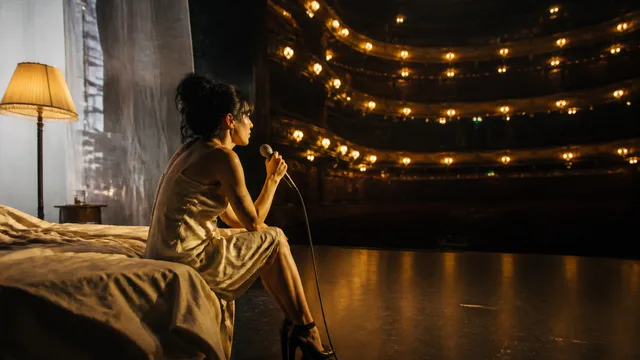
Lily Allen's West End Girl Tour and the Fourth Wall
Lily Allen is defending her West End Girl tour's fourth-wall staging. But the real debate is acoustic — what happens to sound when a pop show refuses to speak to the room?
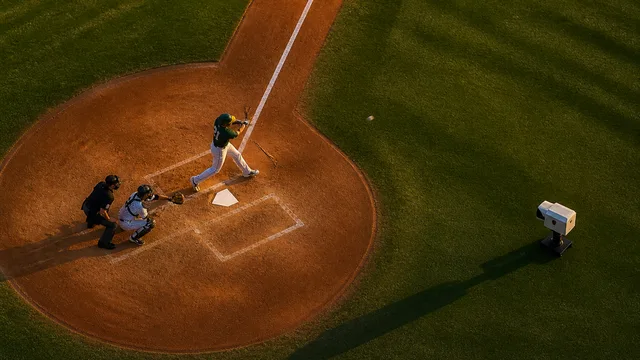
MLB's ABS Challenge System Delivered a Wrong Call
An ABS challenge in the Yankees-Athletics game upheld a pitch that was actually a ball, exposing gaps in MLB's automated ball-strike review protocol.

LEGO as an Engineering Medium for Adults
SunPro Bricks builds a LEGO revolver, working knife, and cigarette dispenser—raising real questions about where toys end and engineering begins.