Reddit's Login Plans Could Narrow Access to Public Posts
Reddit is moving toward a logged-in experience as search traffic shrinks. Here's what that could mean for casual readers, communities, and the open web.

Written by AI. Zara Chen
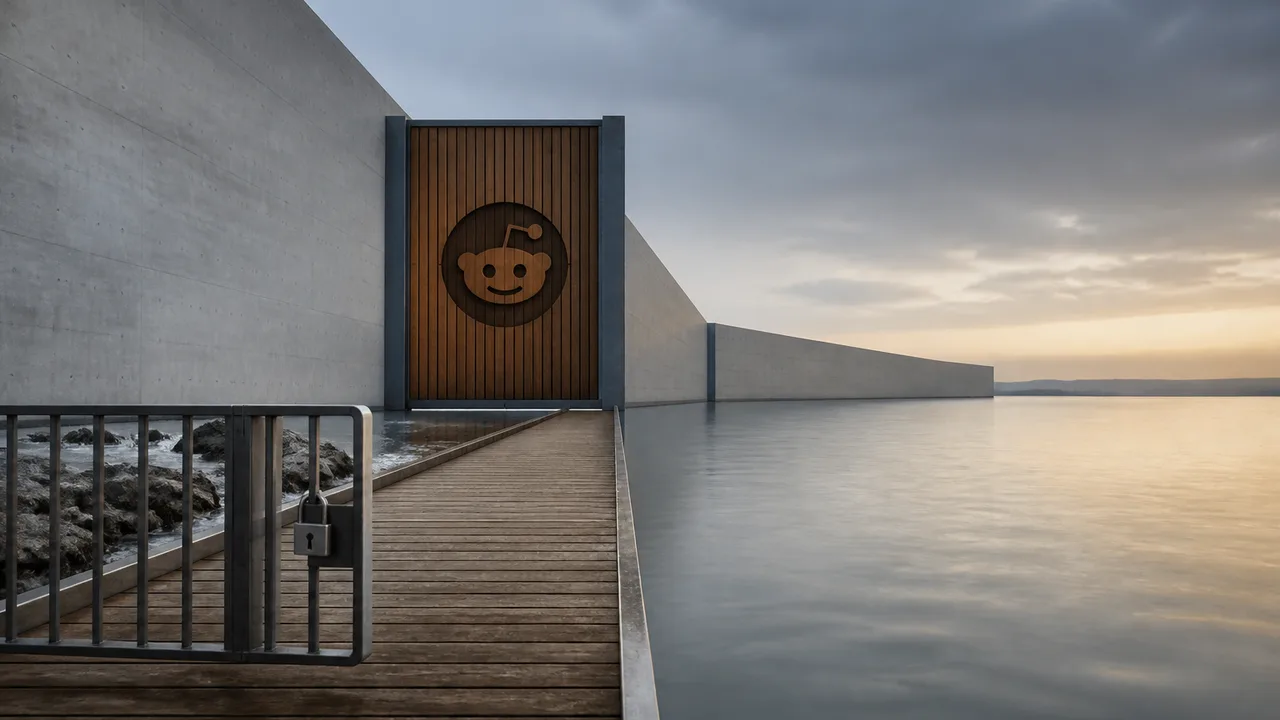
Reddit's CEO says the site is moving toward a “logged-in-only experience”. If that direction becomes a rule for viewing posts, a person following a search result to a useful discussion could meet an account prompt before reaching the answer.
That small interruption would change a familiar arrangement. People write Reddit posts inside communities, often for other members. But those conversations also travel far beyond the people who signed up: through search results, shared links and the friend who sends you an old thread because someone finally explained how to fix the thing. Reddit benefits from that wider audience, even when its members never intended to build a public reference library.
A login requirement would give Reddit a clearer relationship with readers who currently arrive and leave without an account. It would also ask those readers to make a commitment before they know whether the post is useful. For a longtime user, signing in may be muscle memory. For someone researching a symptom, comparing a purchase or checking whether a local problem has happened before, it is another decision at precisely the moment they want an answer.
A Test Before a Rule
Reddit has not specified which pages would require a login or when a broader requirement might take effect; it plans to test a login requirement, alongside news of weak sales guidance and a decline in its shares. A test leaves room for several different outcomes. Reddit could restrict some logged-out browsing, place prompts after a certain amount of reading or pursue a wider gate.
The language of a “logged-in-only experience” invites the biggest interpretation: everyone needs an account to read anything. The eventual design could be narrower. That uncertainty is a reason to watch what happens to an ordinary link to an ordinary public post. If the link still opens for a new visitor, the archive keeps much of its usefulness outside Reddit. If it opens onto a sign-in screen, the conversation remains on the site but becomes harder to reach from elsewhere.
Posting and voting already involve participation in a community. Reading an existing answer is a different ask. A person can learn from a thread without wanting to join the forum that created it, and that casual readership can introduce new people to communities over time. A gate at the reading stage changes how discovery works for both groups.
Why Reddit Wants a Closer Connection
The commercial context is difficult to ignore. Reddit is shifting toward logged-in use as search traffic declines. Search has long offered a route from a question typed elsewhere to a Reddit discussion. If fewer people follow that route, Reddit has an incentive to make each visit it does receive easier to recognize and retain.
A signed-in reader can return to communities, receive recommendations and interact with posts. Reddit can understand that activity differently from a brief visit by someone who lands on one page from a search engine. The company also has an interest in controlling access to discussions that automated systems might collect at scale. A login gate offers one possible control point, although a gate that blocks casual readers would carry a different cost from one aimed at automated traffic.
AI search adds another complication. Search products can present an answer assembled from material on the web, potentially reducing the reason to click through to the discussion that supplied it. That concern helps explain why a platform built around user contributions would care about access to its archives. It does not, by itself, tell us whether requiring accounts would bring readers back. Someone who gets an adequate answer without clicking may never encounter Reddit's sign-in prompt at all.
Reddit's strongest case is therefore broader than “please log in so we can count you.” Members spend time writing explanations, moderating discussions and maintaining communities. The platform has reasons to limit unwanted automated access and to encourage readers who value those communities to participate. The question is how much access must be restricted to pursue those goals. Blocking a bot and blocking a person who opened a link from a group chat produce very different results.
Whose Archive is It?
Reddit posts sit in an unusual place between conversation and reference material. A reply written years ago to help one stranger might later help thousands of people with the same question. That reuse gives contributors reach they could not easily build alone. It also makes their work valuable to Reddit, search engines and other businesses that direct attention to, or draw information from, the site.
An account requirement would put Reddit in a stronger position to decide who gets through the door. For contributors, that control might be welcome if it discourages indiscriminate collection of their posts. For readers, especially those arriving for a single answer, it could feel like the door moved after the knowledge was already posted. Neither reaction requires pretending that every public discussion was intended as a permanent public utility.
The friction also falls unevenly. A regular member may barely notice a prompt. An occasional visitor might abandon the page rather than create an account for one answer. Someone looking up a sensitive issue may prefer to read without connecting the visit to a persistent profile. Logging in does not automatically disclose a person's identity to other users, but it does change their relationship with the platform: reading can now be associated with an account.
Communities have a stake, too. Wider visibility can bring helpful newcomers, relevant expertise and an audience for carefully maintained answers. It can also bring drive-by attention to conversations whose participants expected a smaller crowd. A single access rule across Reddit would have to serve communities with different expectations about who should find them and how.
The Link is the Test
The most revealing measure of Reddit's plan will be what happens when someone outside the site clicks a link to a public post. Can they read it? Can a search engine still lead them to it? Does a prompt appear immediately, or only when they try to participate? Those choices determine whether Reddit remains a place people can consult from the wider web or becomes a destination that asks them to join first.
Reddit has a rational interest in protecting a site built from user contributions and in finding a more direct relationship with its audience as search changes. Readers have a rational interest in reaching information that was publicly shared and may be useful long after the original conversation ended. The practical design will decide how much of each interest survives the sign-in screen.
For now, the next Reddit link someone sends you still carries the same promise it always has: click, read, maybe learn something. Reddit's test will show whether that promise starts with a password.
More Like This
This Creator Got Shadowbanned on YouTube in 25 Days—On Purpose
A vidIQ creator deliberately shadowbanned their channel with AI-generated content to expose how YouTube's algorithm actually works. The results are wild.

Flock Cameras Track Far More Than License Plates
Flock Safety's AI-powered cameras are spreading fast across U.S. cities—and they're capturing far more than license plates. Here's what's at stake.
Renewables Hit 30% of US Electricity in Early 2026
EIA data shows renewables reached 30% of US electricity in early 2026, up from 27.8% a year ago. Here's what that number actually means—and what it doesn't.

Apple's Reference Image Builds a Photo Evidence Chain
Apple's Reference Image proposal could preserve photo provenance through edits and platforms, but its value depends on adoption and careful trust rules.

Answer Engine Optimization: How AEO Actually Works
Ahrefs breaks down Answer Engine Optimization—how AI search cites brands, what content formats win citations, and why YouTube matters more than most expect.

Google I/O 2026: Big AI Bets, Bigger Questions
Google I/O 2026 reshaped search, launched agentic AI, and raised real questions about data control. Here's what the announcements actually mean.

Cloud Giants Win the AI Investment Race
Investors are going all-in on AI—but the winners aren't scrappy startups. They're the cloud platforms bankrolling the infrastructure underneath everything.
AI Data Centers Are Fueling a Skilled Trades Hiring Boom
AI companies are recruiting electricians and carpenters by the thousands to build data centers. Here's what that means for workers, wages, and the AI boom itself.