Quantum Advantage Is a Trust Problem, Not Just a Speed Race
IBM researcher Minh Tran reframes quantum advantage as a trust-building exercise, not a finish line. Here's what that means for the field's credibility.

Written by AI. Priya Sharma

Photo: AI. Kasper Winter
Ask ten people in quantum computing what "quantum advantage" means, and you will get, by one IBM researcher's count, ten different answers. That's not a sign of intellectual disorder—it's a sign that the field is still negotiating the terms of its own success. What makes Minh Tran's lecture at the Qiskit Global Summer School worth examining is that he doesn't paper over this ambiguity. He leans into it, and arrives somewhere more honest than most of the headlines that cover this space.
Tran, a research scientist at IBM, opens by identifying three conditions most practitioners would agree on: quantum computers must solve problems beyond classical heuristics, their outputs must be trustworthy, and the problems must be useful. The third condition—utility—is almost taken for granted in industry communications. The second—trust—is where Tran spends his time, and it turns out to be the thorniest.
Complexity Is Solvable. Trust Is Harder.
The complexity question has a reasonably clear trajectory. Classical simulation methods each carry structural limitations that quantum hardware, as it improves, can eventually outrun. State-vector simulation hits a memory wall around 50 qubits; tensor networks falter when circuits generate deep entanglement; newer Pauli-path methods struggle when operators spread across too many terms. Quantum hardware, by contrast, is limited primarily by error rates—and those have been falling at IBM and elsewhere for several years running.
"Complexity is just a matter of time," Tran says plainly. The honest addendum is that "a matter of time" still has no fixed date attached to it. But the direction of travel is not seriously contested.
The trust question is different in kind. Once a quantum circuit runs deep enough that no classical method can verify it, you are left with a machine that produces an answer you cannot check. This is not a minor operational annoyance. It is a foundational epistemic problem—and it applies to classical computation too, just less often in ways that matter.
Three Windows Into Verification
Tran walks through three computational tasks, each offering a different vantage point on how verification can actually work.
Peak circuits involve sampling from a quantum circuit and observing that certain bit strings appear more often than others—the distribution is "peaked." Noise flattens that peak, making it indistinguishable from random output. A mitigation strategy Tran describes is majority voting: look at subsets of qubits, take the most common configuration, and reconstruct what the peaked bit string probably was. It's an active area of research, and he presents it as such—a promising direction, not a solved problem.
Ground state simulation is more tractable from a verification standpoint because it comes with a built-in quality metric: energy. If a quantum device proposes a candidate ground state, you can compute the energy of that state and compare. Lower energy means a better approximation. This comparability—the fact that quantum and classical proposals can be ranked on a shared scale—is what makes ground state problems relatively hospitable territory for demonstrating advantage. The framework of sample-based quantum diagonalization, where a quantum device generates candidate states that are then classically diagonalized in a subspace, has already shown results that outperform certain classical algorithms, according to Tran.
Observable estimation is where things get genuinely difficult. You evolve an initial state under some unitary—think of it as simulating the time evolution of a physical system—and measure an expectation value. The catch: if you already knew the answer, you wouldn't need to measure it. Classical methods diverge from each other at deep circuit depths, and quantum methods add another disagreeing voice. There is no ground truth to appeal to. "Every classical method that you have and the quantum method as well, they will give you different answers. So which one do we trust?"
Global Rescaling and the Evidence It Produces
In a specific experiment measuring what Tran calls operator OTOC—a quantity probing how quantum information scrambles under a unitary—he demonstrates a technique called global rescaling. The physical intuition is that noise uniformly dampens all signals by a factor that can be estimated at a known reference point (delta equal to zero, where theory predicts the signal should be exactly one). That factor is then applied to correct all other measurements.
The key word Tran uses is "heuristic." Global rescaling is not derived from a rigorous noise model. It assumes that noise affects all parts of the signal equally—an assumption that may hold in practice more often than the theory strictly guarantees. In a circuit of depth 72, running approximately 1,500 two-qubit gates across 56 qubits, the rescaled quantum signal disagreed with tensor network simulation. The natural reflex is to trust the classical simulation. Tran resists that reflex and instead mounts a three-part evidentiary case.
At shallower circuit depth (36 layers), the tensor network simulation's fidelity can be lower-bounded to near one—meaning it's verifiably exact. At that depth, the rescaled quantum signal and the tensor network agree closely. This tells you that global rescaling works correctly where it can be checked. When gate durations are deliberately increased to make the hardware noisier, the raw signal degrades but the rescaled signal stays stable—which is exactly what you'd expect if the method is genuinely noise-insensitive. And theoretical bounds on where the depth-72 signal should fall place the quantum result inside the predicted region while the tensor network result falls outside it.
The logical conclusion: at depth 72, the tensor network simulation is wrong. The quantum result is more credible—but not fully trusted. That distinction matters.
"My answer to that would be no. We still don't have quantum advantage. This is just a trust building exercise." The candor is notable. A researcher at IBM publicly declining to claim quantum advantage, even when the classical competitor appears to have failed, says something about where the evidentiary bar actually sits.
This connects to a broader challenge in the field—the difficulty of establishing when error mitigation techniques are sufficient to render outputs trustworthy, versus when only full fault tolerance will do.
The Advantage Tracker: Science by Open Ledger
The institutional response Tran advocates is an open, community-maintained database called the advantage tracker—a GitHub-hosted effort cataloguing candidate circuits for quantum advantage alongside all known classical solutions to those circuits. At the time of his lecture, it had received at least 50 submissions from organizations spanning industry and academia. Anyone can contribute: submit a circuit you believe resists classical simulation, or take a crack at one that's still unsolved.
The structure is worth noticing. Rather than letting quantum advantage claims accumulate in press releases and conference proceedings, the tracker creates a public, adversarial record. If someone claims a circuit is classically intractable, classical simulators can try to prove them wrong. If a quantum device produces a result, the community can attempt to reproduce or refute it. It is, in a modest way, science doing what science is supposed to do.
"Quantum advantage is not a destination. It's not a point where you can claim that we have quantum advantage. It is a journey of building trust on quantum computation."
That framing reorients the whole conversation. The question isn't whether a single experiment has crossed a line. It's whether an accumulating body of evidence—from different circuits, different methods, different institutions—is converging on the same answers. That kind of convergence is how physics accepted quantum mechanics itself, before any of the formal proofs were complete.
What's unresolved, and what Tran doesn't claim to resolve, is how much evidence is enough. Fifty percent of observers being persuaded, as he estimates his operator OTOC results might achieve, is not consensus. The threshold for scientific consensus is not defined, and in quantum computing it may have to be negotiated field by field, problem by problem. That negotiation is what the advantage tracker is actually facilitating—less a scoreboard than a structured argument, conducted in public, with the data visible to anyone who wants to look.
The open question sitting underneath all of this: when the quantum signal and every classical method disagree, and the quantum signal passes every available robustness check, at what point does continued skepticism stop being scientific caution and start being an unfalsifiable position?
More Like This
We've Been Teaching Heisenberg's Uncertainty Principle Wrong
The story we tell about Heisenberg's Uncertainty Principle is misleading. Professor Aephraim Steinberg explains what the textbooks got wrong—and what's right.
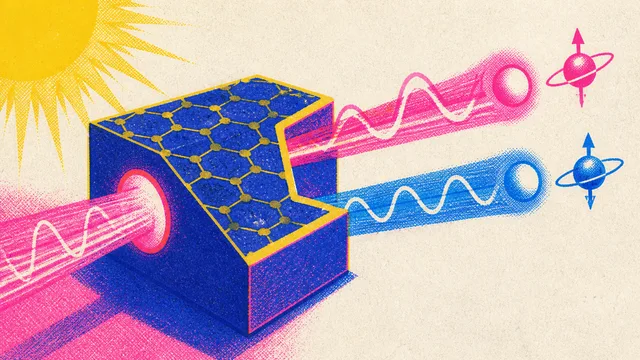
Room-Temperature Quantum Materials Are Here
LSU physicists built a quantum material that works at room temperature. Here's what that actually means for quantum computing, and why it matters right now.

The Quantum Fourier Transform Explained
Dr. Katie McCormick's Qiskit breakdown of the quantum Fourier transform reveals the strange mathematical object powering Shor's algorithm and quantum phase estimation.
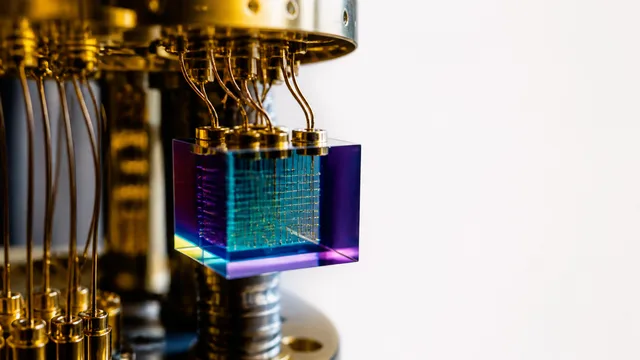
Shor's Algorithm and the Future of Encryption
Shor's algorithm can crack RSA encryption—in theory. Here's what it actually does, how close we are, and why the answer is more nuanced than headlines suggest.
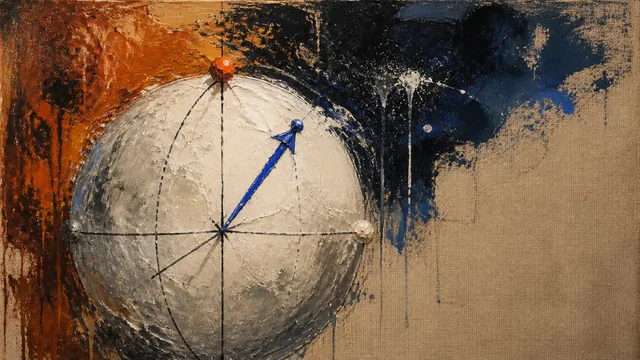
Quantum Mechanics as Computation: A Primer
IBM's Kevin Sung breaks down quantum vs. classical information using Qiskit—and why the math underlying quantum computing matters far beyond the lab.

Grover's Algorithm Explained with Quantum Minesweeper
Dr. Katie McCormick uses Minesweeper to explain Grover's algorithm — a quantum search method with real implications for cryptography and beyond.
The Quantum Twin Paradox and the Nature of Time
A new trapped-ion experiment may finally reveal whether time is a quantum property—bridging the long-standing gap between quantum mechanics and general relativity.

Nuclear Clocks Are Now Real — Here Is What That Means
Two independent teams built working nuclear clocks in 2026. Here's what the thorium-229 breakthrough actually achieved — and what it hasn't yet.