The Psychology Behind Intense Sports Fandom
What drives intense sports fandom? Research on identity, belonging, dopamine, and grief explains why devotion to a team runs far deeper than a game.

Written by AI. Samir Patel
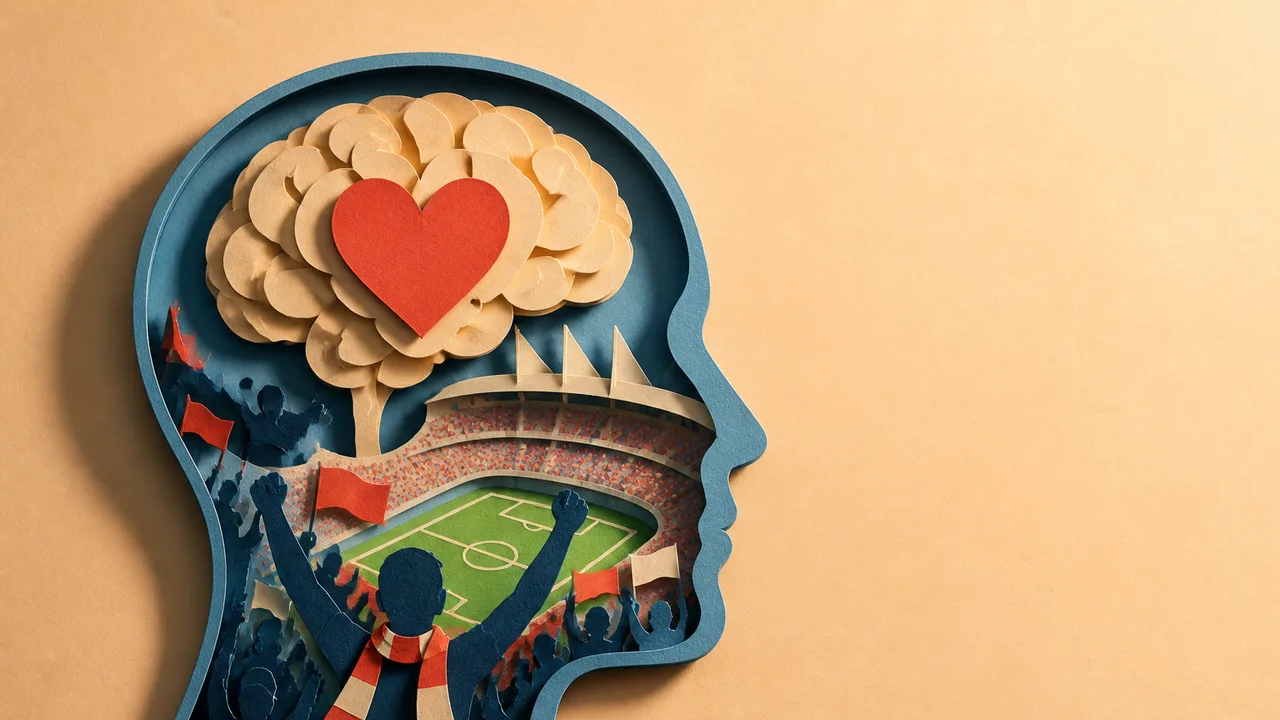
Photo: AI. Lila Bencher
There is a certain kind of person who is very easy to judge and very difficult to understand. They paint their face on a Saturday. They wear the name of someone they have never met across their back. And when their team loses, something in them genuinely breaks, not for an hour, but for days.
The standard read on this is dismissive: tribalism, escapism, a lack of perspective. A recent video from the YouTube channel Turn Wiser pushes back on that read, and pushes back hard. Working through nine psychological signs of intense sports devotion, it makes the case that what looks like obsession from the outside is often something far more sophisticated on the inside. The argument is largely grounded in real research, and it is worth sitting with, including the parts where the framing gets a little too tidy.
The identity is structural, not superficial
The foundation of the video's argument is Henri Tajfel's social identity theory, developed in the 1970s. Tajfel found that people don't just belong to groups; they derive a portion of their self-concept from those groups. The team's wins become personal wins. The team's losses land like personal failures. This is measurable, not metaphorical.
The video cites a 1976 study by Cialdini and colleagues that illustrated this vividly. After a university football victory, students were significantly more likely to wear team-identified clothing and use the pronoun "we" when describing the game. After a loss, they switched to "they." The victory got claimed; the defeat got distanced. Psychologists call this BIRGing (basking in reflected glory) and CORFing (cutting off reflected failure).
For the deeply devoted fan, though, the CORFing mechanism often doesn't engage. The identity fusion is too complete. Research published in the journal Physiology and Behavior, as cited in the video, found that male sports fans experienced significant testosterone decreases after watching their team lose, shifts comparable to those seen in men who had personally lost a competition. They didn't play. Their biology responded as though they had.
As the American Psychological Association has noted in a conversation with sports psychologist Daniel Wann, PhD, identifying with a local team provides access to a group, and through that group, a sense that "I'm not alone in the world." The identity comes first, and the belonging follows from it.
The case for fandom as genuine need-meeting
What makes the Turn Wiser video more interesting than most pop-psychology fare is that it doesn't stop at identity. It keeps asking: what else is this doing for people?
Several of the answers are genuinely compelling.
On emotional expression: the video argues that sports function as a rare, socially sanctioned container for raw emotion. Modern life demands composure at work, restraint in public, steadiness at home. The game provides a few hours where it is not just acceptable but expected to scream, cry, and embrace strangers. For people who lack regular outlets for emotional expression, the research on emotional regulation suggests this matters. Suppressed emotion accumulates; it has to go somewhere.
On clarity: Mihaly Csikszentmihalyi's research on flow states identified that one of the deepest sources of human satisfaction is the experience of clear goals and immediate feedback. Sports offer both. The ball either crossed the line or it didn't. Real life rarely provides that kind of structure. The video frames sports-watching not as escapism but as psychological restoration, a temporary visit to a world where things make sense, after which you return slightly better equipped for the version where they don't. That framing is worth considering.
On inherited loyalty: many fans didn't choose their team through any rational process. They were handed a jersey before they could talk. The video invokes the concept of intergenerational transmission from attachment theory, the idea that patterns of loyalty are absorbed like language, before deliberate choice is possible. For fans who have lost someone, the team can become the last thread connecting them to that person. "The honest answer," the video says, "if they could articulate it, would be: because this is how I stay close to someone I loved."
On the neuroscience: research published in the journal Neuron (cited by the video) found that dopamine activity peaks not when a reward is received but when a reward is uncertain. The brain is most engaged precisely when it doesn't know what will happen next. A close game isn't just more exciting than a blowout; it's neurochemically distinct. The video also references fMRI research suggesting that watching athletes activates the mirror neuron system, with the fan's motor cortex lighting up as if they themselves are moving. The spectator/participant distinction blurs at the neural level.
Where the argument deserves some friction
The video is persuasive in places where it probably shouldn't be quite so persuasive. It is, above all, a sympathetic account, and sympathy has a tendency to smooth over complications.
One thing worth naming: the video's framing treats intense fandom as essentially adaptive, a need-meeting mechanism that the outsider simply fails to appreciate. That's true for a lot of fans. It's not true for all of them. Charles Stevens, Psy.D., has written that when someone's happiness, self-worth, or relationships depend on their team's performance, it may signal an unhealthy attachment. Fandom can be both psychologically functional and, in some configurations, a problem. The video acknowledges this possibility only briefly, and earns some of the credit it gives itself by doing so.
The "sports as transcendence" sign, the ninth and final one, is where the video reaches hardest. Turn Wiser argues that intense collective sports moments activate the same neural regions associated with religious experience and meditative states, citing fMRI research. That parallel is genuinely interesting and genuinely contested. Neuroscience of transcendence is an active and messy field; the video presents it with more confidence than the research base quite supports. Worth flagging, even if the underlying intuition, that sports can produce experiences of self-dissolution and collective oneness that people find profound, maps onto what fans themselves describe.
The stress-inoculation framing for sports losses (the idea that experiencing manageable grief in a sports context builds resilience for larger real-world losses) is similarly plausible, but the video presents it as more established than the available evidence warrants. It's a reasonable hypothesis; call it that.
What holds up, and what it means
The strongest version of the argument in this video is not that sports fandom is always healthy or that it's equivalent to more traditional meaning-making structures. The strongest version is simpler: devotion to a team often meets real psychological needs, needs for belonging, emotional expression, clarity, and collective experience, that modern life does a poor job of meeting through other means.
As the Seattle Times has reported, a team can serve the same social function as church or family, fostering belonging, particularly when it begins to catch fire and pull a community into shared attention. Robert Putnam's diagnosis of declining social capital, his argument that Americans have become increasingly disconnected from the kinds of group membership that once structured daily life, gives that observation some structural weight. Sports fandom isn't a pathetic substitute for real connection. For many people, in the landscape we actually live in, it is real connection.
The caveat that matters: knowing why something works doesn't tell you whether the same need could be met in ways that produce more durable well-being. Sustained friendships, community involvement, creative practice, and yes, for some people, therapy, can offer what fandom offers, often with more reciprocity. Applied sport psychologists encourage fans to reflect on whether their emotional responses to games remain proportionate and whether fandom supplements or replaces other sources of connection in their lives. That's not a dismissal of fandom; it's a useful question to hold alongside the appreciation.
The person painting their face on a Saturday isn't broken. They're also not automatically thriving. They're human, doing what humans do: finding containers for the things that matter to them, in the structures that happen to be available. The question worth sitting with isn't whether their devotion is legitimate. It's what else, if anything, they might also want to build.
More Like This
When Feeling Stuck Is Actually Feeling Safe
The Art of Improvement argues comfort—not laziness—is what keeps people stuck. The idea is compelling. It's also worth examining carefully.
Understanding Emotion Regulation with Dr. Marc Brackett
Explore emotion regulation with Dr. Marc Brackett, focusing on practical strategies for emotional intelligence in personal and professional contexts.

How Sports Actually Bring People Together
Sports are celebrated as a universal unifier—but how does that actually work, and when does it fall short? We map the real science and the real limits.

The Hidden Cost of Reading People Too Well
High perceptiveness has real psychological costs—from social isolation to overthinking spirals. Here's what the neuroscience and lived experience actually say.
Rethinking Loneliness: A Signal, Not a Failure
Explore loneliness as a signal of unmet needs, not a failure. Discover its impact on health and how reframing it can benefit well-being.
Fan Data Strategy Is Reshaping Sports Revenue
How teams like the Minnesota Twins are building revenue engines beyond ticketing through data fluency, fan segmentation, and loyalty programs.
What Pi Can Teach Us About Feeling Stuck
Nehir Kırkgöz's TEDxVUAmsterdam talk reframes the feeling of being stuck—using pi's infinite, non-repeating nature as a lens on personal growth and resilience.
Discipline Is About Removing Options, Not Building Willpower
Mark Manson argues discipline has nothing to do with willpower—it's about eliminating choices. Here's what the research says, and what the theory leaves out.