Protect College Sports Act Delayed to September
The Senate pulled an all-nighter on the Protect College Sports Act, then left for vacation. Here's what the delay means for NIL, athletes, and college sports media.

Written by AI. Jai Trivedi
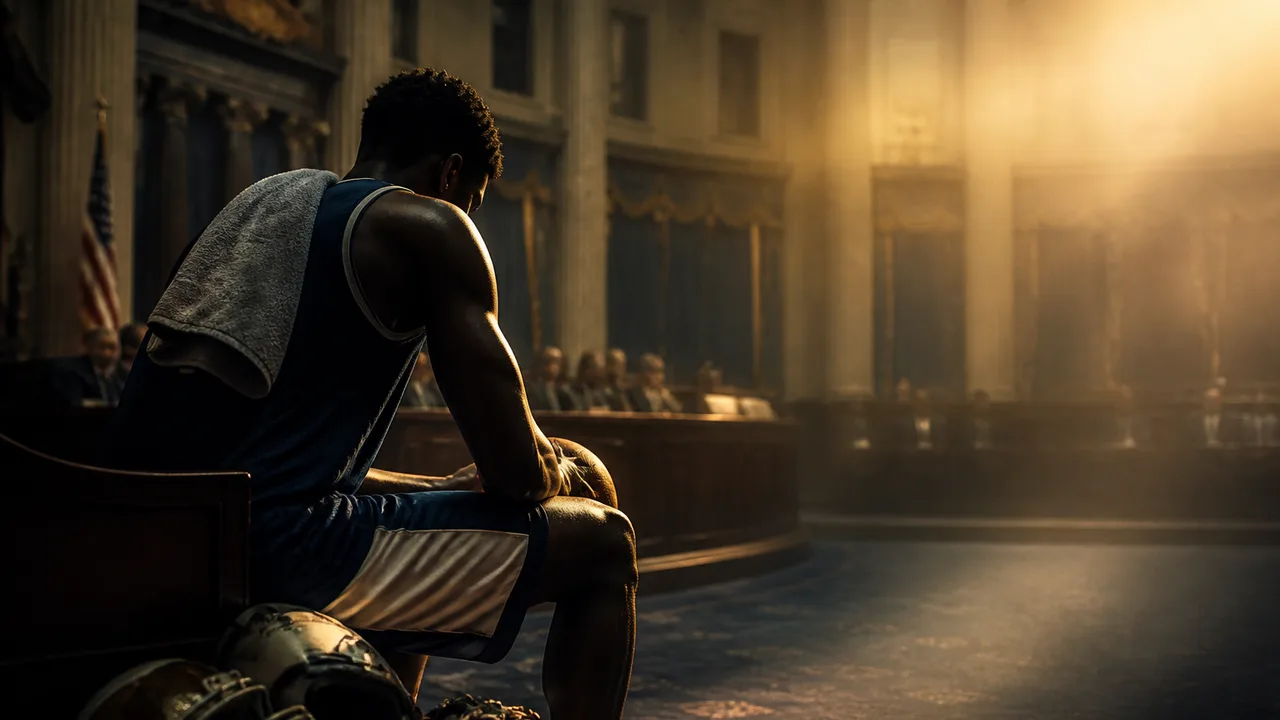
Senators stayed up all night on August 8th debating one of the most consequential pieces of sports legislation in a generation — and then walked out into the August heat, got in their cars, and went on a five-week vacation.
That's not a metaphor. That's just what happened.
The Protect College Sports Act, which had spent months accumulating support from power conferences and Senate leadership alike, failed to reach a floor vote during an all-night pre-recess session, according to ESPN. The Senate then adjourned for its annual summer break, setting the bill for a vote in September when the chamber returns, per Front Office Sports.
Here's what makes this particular delay worth paying attention to: it didn't happen because the bill lacked momentum. Senate Majority Leader John Thune filed cloture on August 5th. The Big Ten and SEC threw their support behind it in late July, according to USA Today. This was supposed to be the sprint to the finish. Instead, the sprint ended with senators hitting snooze.
What actually killed the night's momentum was the amendment pile-on. Per OutKick, senators filed amendments targeting conference realignment, women's sports, and NCAA liability — three of the gnarliest fault lines in the entire college sports argument. Any one of those is enough to blow up a coalition. All three landing in the same overnight session is basically a controlled demolition.
The ESPN GameDay signing ceremony pitch is the most 2026 thing imaginable
Before we get too deep into the policy weeds, let's sit with the most fascinatingly absurd detail of this whole saga.
While the bill was stalling on the Senate floor in the middle of the night, supporters were already floating a signing ceremony concept: President Trump putting pen to paper on the Protect College Sports Act on the set of ESPN's College GameDay, in front of a live crowd, during college football season. Awful Announcing flagged the pitch, and Yahoo Sports confirmed the quotes, with NOTUS reporting that bill supporters were explicit: they want Trump signing the bill on College GameDay in the fall.
Think about what that means for a second. We've fully crossed into territory where the signing ceremony is being pitched as a media property before the bill has even passed one chamber. The legislation as content. Policy as spectacle.
I cover the attention economy for a living, and I'll tell you — that instinct isn't crazy. College football GameDay draws millions of viewers. A presidential signing ceremony in that context is a massive earned media play, a visual that would live across every sports broadcast and social feed for days. The bill's proponents clearly understand that this fight isn't just happening in committee rooms; it's happening in the attention economy, too. Framing matters. Who's in the shot matters.
The irony is that the bill died in the pre-dawn hours of a Friday morning when the only people watching were insomniacs and congressional reporters. That gap between the 2am reality and the GameDay fantasy tells you something about where this legislation actually stands.
What the bill is actually trying to do
So what is the Protect College Sports Act? At its core, it's an attempt to create a federal standard for how college athletes can be compensated — specifically around Name, Image, and Likeness deals — and to establish clearer rules around athlete classification, conference realignment, and NCAA enforcement authority.
The reason a federal law has been on the table for a few years now is the state-patchwork problem. Right now, NIL rules vary by state. A college sophomore at a school in one state might be operating under a completely different set of rules than a teammate who's a resident of another state. If you're a 19-year-old who just signed a $40K NIL deal with a regional brand, that gap is not abstract — it affects your taxes, your contract terms, what you can and can't do with your own name. Athletes and their advisors have to navigate a genuinely incoherent map.
A federal standard would theoretically solve that. One set of rules, nationwide, superseding the state-by-state patchwork. The bill also reportedly addresses limits on athlete revenue sharing — the question of whether schools can directly share broadcast revenue with players — which is where the Big Ten's endorsement becomes very interesting.
The Big Ten just signed a massive multi-network broadcast deal split across Fox, CBS, and NBC, according to Marketing Dive. That deal is worth enormous money. The conference's support for a bill that regulates how much of that money flows to athletes isn't altruistic — it's strategic. Conferences want a federal ceiling on revenue-sharing obligations, not an open-ended liability that courts keep expanding. That's a key tension the bill's critics don't want papered over: the power conferences aren't championing athlete rights here; they're trying to cap them.
The amendment problem isn't going away
What blew up the overnight session was the amendments, and those fault lines are real.
Conference realignment is a genuine crisis in college sports — schools jumping conferences for media money, leaving behind rivalries and communities that built those programs for a century. Any federal intervention there steps directly on university autonomy and conference sovereignty. You can see why that's hard to keep out of a bill that's already trying to regulate athlete compensation.
Women's sports is the trickiest piece politically. Title IX already requires gender equity in college athletics. The Protect College Sports Act's critics have argued it could undermine those protections, while supporters say the bill explicitly preserves them. That dispute isn't going to resolve in a floor amendment fight at 2am — it needs committee work and actual legislative language that can withstand scrutiny.
NCAA liability is the third rail. The NCAA is already a defendant in multiple antitrust cases, and the question of whether federal legislation would shield it from future lawsuits is a live fight. Athlete advocacy groups are understandably skeptical of a bill that might close legal doors their members need.
Front Office Sports noted before the recess that these hurdles had been mounting for weeks — this wasn't a surprise ambush. The overnight session just made the unresolved conflicts undeniable.
September is a real deadline, not a polite fiction
Here's where the GameDay signing pitch starts to make more strategic sense. College football season opens in late August and is in full swing by September. The bill's window to matter culturally — to be signed during the moment when college sports has maximum national attention — is narrow. Miss September, and you're looking at a lame-duck-session bill that lands when nobody's paying attention.
Yahoo Sports confirmed the Senate has adjourned for its five-week recess. That's not a lot of runway. When the chamber comes back, it'll be walking into a packed fall calendar with a bill that still has unresolved fights over women's sports, realignment, and NCAA immunity.
The bill does have something it didn't have six months ago: a slot on the calendar, filed cloture, and the political backing of the two most powerful conferences in the sport. That's not nothing.
But the gap between the GameDay signing ceremony fantasy and the 2am amendment chaos is a pretty good map of the distance still to travel.
More Like This

College Sports' $20.5M Spending Cap Is Already Broken
Power 4 schools are blowing past the $20.5M rev-share cap through NIL stacking and frontloaded deals. Here's how the workarounds work—and what comes next.
NCAA Court Order Forces Athlete Eligibility Grandfather Clause
An Ohio judge ruled the NCAA's new age-based eligibility rules "arbitrary and capricious," ordering 24 athletes grandfathered in. What the ruling reveals about how the NCAA governs.
NHL Sets Revenue Record as NBA, NCAA Face Bigger Tests
NHL hits $7.5–8B in revenue, NBA Europe bids close June, and the Protect College Sports Act draws SEC and Big Ten resistance in Congress.
Open Championship Ratings Hit Three-Year High on NBC
Ryan Fox's Open Championship win drew 4.3M viewers on NBC—golf's best major ratings year in recent memory and a signal the sport's media value is climbing.

Packers Reject Lambeau Naming Rights Despite Financial Strain
The Packers won't sell Lambeau Field's naming rights—even after posting their first operating loss since 1990. Here's what that choice actually costs them.

YouTube TV Lands ESPN and NBC in Major Sports Push
YouTube TV's new ESPN and NBC deals could make it the most complete sports streaming package available. Here's what the deals actually mean for the industry.
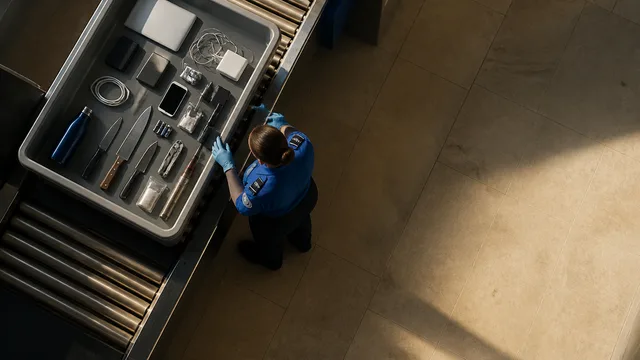
What TSA Confiscates at Airport Security in 2025
From dead electronics to cordless hair tools, TSA confiscates over a million items a year. Here's what triggers confiscation and how to keep your gear.

Antimatter Rockets: The Energy Economics of Interstellar Travel
Antimatter propulsion promises interstellar travel, but its staggering energy production costs reveal a deeper lesson about civilizational-scale infrastructure investment.