Permanent Daylight Saving Time Could Darken School Runs
Year-round daylight saving would bring later winter sunrises. School travel, sleep and evening light pull in different directions; local schedules shape the risk.

Written by AI. Samir Patel
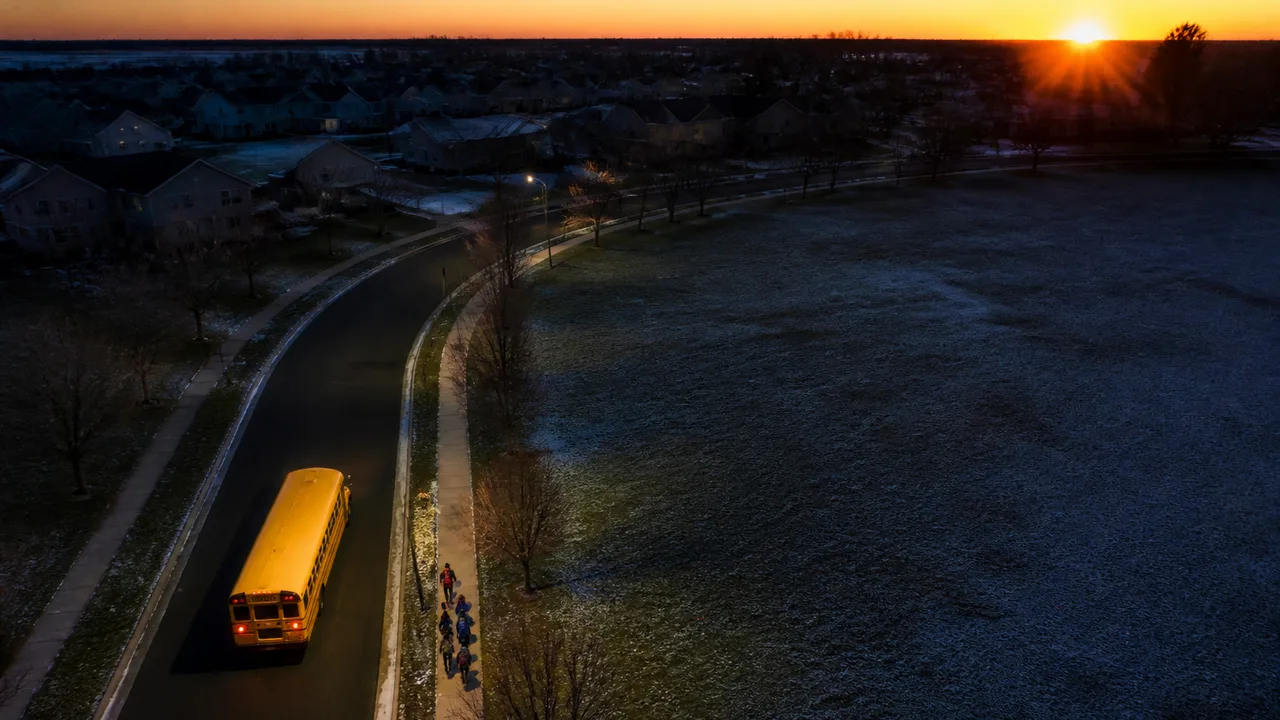
Under permanent daylight saving time, a winter sunrise that now appears at 7:30 a.m. would appear at 8:30 a.m. on the clock. The sun would set an hour later, too. That trade is central to the appeal of brighter evenings, but for a child heading to school before sunrise, the evening benefit arrives after the morning journey is over.
A recent estimate of a billion additional dark-morning school commutes puts that journey into the clock-change debate. A separate account estimates at least two billion additional dark school commutes across the United States. Those figures differ, so neither should be treated as a settled count. Both point to the same policy question: how many school trips would move from daylight into darkness if summer time stayed on the clock through winter?
A commute count measures repeated trips, not the number of children affected. One student can contribute many mornings to a national total. Darkness also does not make every trip equally hazardous. A child crossing an unlit road to reach a bus stop faces a different journey from one dropped at a school entrance, and a later-starting school may avoid much of the shift. Those differences determine what a national estimate means on an actual street.
Where the Morning Light Goes
Most Americans currently switch from daylight saving time back to standard time in autumn. Keeping daylight saving time year-round would retain the summer clock through winter. Relative to winter standard time, sunrise and sunset would each occur one hour later by the clock. A proposal for permanent standard time would make a different choice: earlier clock-time sunrises and sunsets throughout the year.
The winter commute is where that arithmetic meets a fixed appointment. Schools set arrival times, buses collect children before the first bell, and families plan work around both. If the clock changes but the bell does not, a student who previously reached a stop after sunrise might now get there before it. Moving the bell later could restore morning daylight for some students, while changing dismissal times, bus routes and caregivers’ schedules.
The effect varies across the country. Latitude changes the length of winter days. A community’s position within its time zone affects when sunrise appears on the clock. Then come decisions made much closer to home: whether the first bus arrives at 6:45 or 7:45, where the stop sits, and whether children walk along a road with sidewalks and lighting. A nationwide clock rule would land on thousands of local school schedules.
That makes the word “commute” unusually broad. It can include walking, cycling, waiting for a bus or riding in a car. Darkness might affect the walk to a stop even when most of a bus ride happens after sunrise. Counting trips before sunrise is a useful way to locate exposure, but it cannot by itself tell a district which crossing needs attention or how many crashes a clock policy would cause. Concerns about children’s traffic safety deserve examination at that more local level.
The Case for the Evening
People who want permanent daylight saving time have a straightforward argument: an extra hour of light by the evening clock can make it easier to use time after work or school. Families may prefer daylight for errands, outdoor activity or a trip home. Darkness has consequences on that side of the day as well, and winter evenings arrive early under standard time.
The policy choice therefore distributes daylight across different trips and different people. A child may gain a brighter journey home while losing light at the morning bus stop. An adult whose workday ends near sunset may value the evening hour far more than the morning one. A household with no flexible childcare may have little say over either trip. Asking who gets the light, and when they can use it, is more informative than asking whether daylight is good.
School transport complicates the comparison. A district can alter bell times, but one fleet may serve several schools in sequence. A later start for one group can ripple into another group’s pickup or dismissal. Families then have to absorb any gap between school hours and work hours. The freedom to rearrange a morning is unevenly distributed, as is the ability to drive a child when a bus stop feels unsafe.
Sleep Does Not Follow the Clock Alone
The morning-light question also reaches beyond traffic. Light helps set the body’s daily timing, and scientists have raised concerns about the darker mornings that permanent daylight saving time would bring. A later clock-time sunrise could change when students encounter daylight before class. It would not change how many hours a student needs to sleep, or make a demanding schedule disappear.
That is why school start times belong in the discussion. A later first bell could give some students more time in bed and more daylight on the way in, depending on when they actually wake and travel. It could also require new arrangements for transport, after-school care and jobs. A permanent clock setting and a school schedule should be evaluated together rather than treated as separate calendars.
The mental health stakes are easy to overstate if every dark bus stop becomes a prediction of harm. For a student who already struggles with an early morning, though, the routine matters: getting up, reaching a stop and arriving ready to learn all happen before the school day officially begins. Families need practical information about that routine, not a promise that changing the clock will fix sleep or a warning that darkness guarantees danger.
What a Local Decision Would Need
A useful school-level assessment would begin with actual pickup and arrival times against winter sunrise, then identify which stops require children to walk or cross roads in darkness. Street lighting, sidewalks and crossing arrangements would help distinguish a changed sunrise time from a changed travel risk. Districts could also examine what a later bell would do to bus sequencing and dismissal, and ask families whose work hours limit their options. Parents and caregivers who have concerns now can raise a particular stop or crossing with a school’s transportation office; they should not have to solve an unlit route on their own.
None of those checks decides the national clock question by itself. They do make the competing benefits visible: daylight after school, daylight before school, sleep schedules and the costs of adapting transportation. A government can set one clock for a vast area. The morning that follows will still arrive at a different time for each school bus.
More Like This

Breaking Free from Limiting Cognitive Scripts
Explore how cognitive scripts impact decision-making and learn strategies to break free from limiting patterns in life, career, and relationships.

Maladaptive Daydreaming: When Fantasy Becomes Escape
Maladaptive daydreaming is vivid, hours-long fantasy that disrupts real life. Here's what psychology knows—and doesn't—about this under-researched experience.

When Feeling Stuck Is Actually Feeling Safe
The Art of Improvement argues comfort—not laziness—is what keeps people stuck. The idea is compelling. It's also worth examining carefully.

When Teens Look Fine but Feel Invisible
Deniz Erdemir's TEDx talk on adolescent belonging reveals how social exclusion registers as physical pain—and what adults keep missing.
Circadian Depression: A Proposed Subtype Faces Key Tests
A study groups 23% of an Australian depression cohort by sleep and mood features. Can the proposed subtype predict clock disruption or better treatment?
Homeschooling Is a Family-System Decision, Movement Included
A family-systems look at homeschooling: evidence limits, curriculum marketing, services law, and the movement question most checklists forget to ask.

The Hidden Psychological Costs of High Intelligence
High IQ may raise your risk of anxiety, rumination, and burnout. Dr. K of HealthyGamerGG explains the gap between problem detection and problem-solving.
Why Traumatic Memories Feel Present, Not Past
New research explains why traumatic memories feel so immediate—and what that means for how PTSD is treated. A look at the brain science and its clinical limits.