The NFL Has Canceled the Pro Bowl Game
The NFL has officially ended the Pro Bowl game, replacing it with an 88-player honor class and an L.A. celebration. Here's what the decision actually signals.
Written by AI. Denise Okafor-Williams
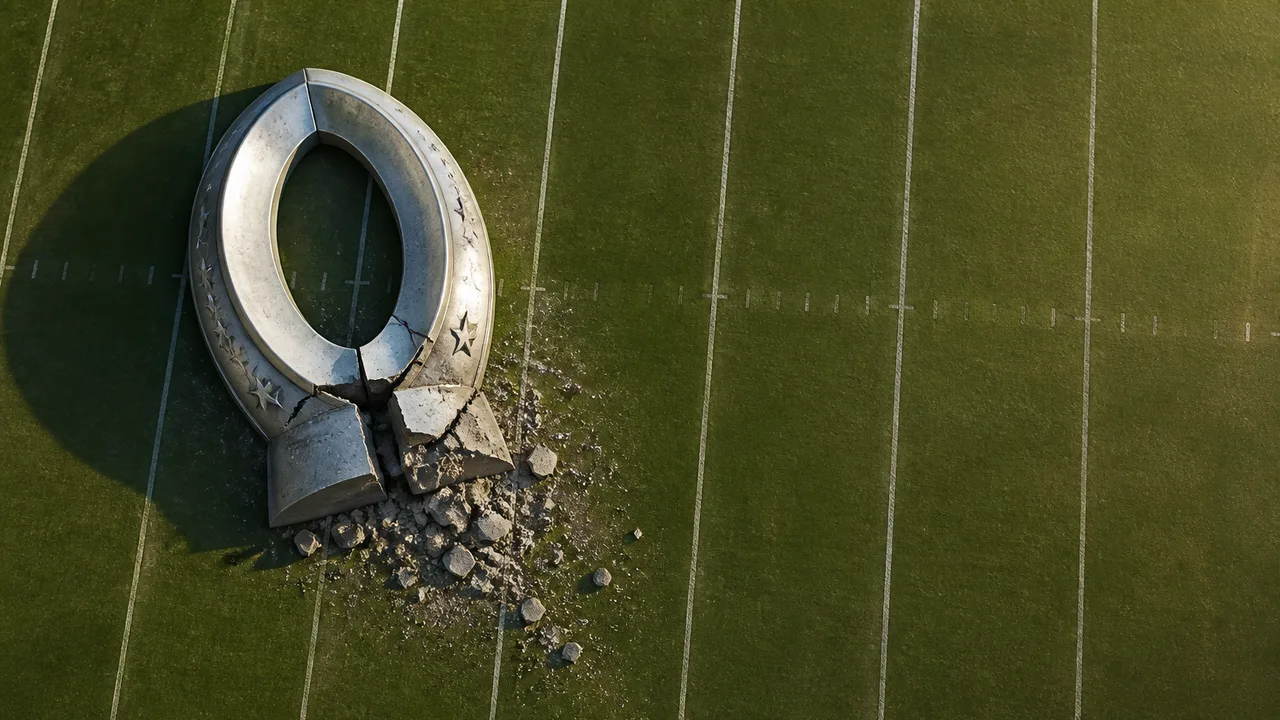
Photo: AI. Rio Sanchez
The NFL confirmed this week what the product had been telegraphing for years: the Pro Bowl game is finished. Beginning this season, the league will name 88 players to the Pro Bowl class, hold no game, make no replacement selections, and invite the honorees to a celebration in Los Angeles. That is the entirety of what the Pro Bowl is now: a list and a party.
The New York Post Sports video covering the announcement frames this as a mercy killing, and the framing is hard to argue with. The event had already migrated from full-contact football to non-contact flag football four years ago, a pivot the league made explicitly as a safety concession. This week's announcement is the logical endpoint of that trajectory, not a sudden reversal.
Per SB Nation, the NFL is now the first major professional sports league to abolish its all-star game outright. The NBA still plays one, however reluctantly. MLB's Midsummer Classic retains genuine stakes through home-field assignment. The NHL all-star weekend draws reasonable television interest. The NFL looked at its version of the format and decided the exit was cleaner than the continued investment.
What players were actually being asked to do
Participating in the Pro Bowl was a rational economic calculation made by workers whose bodies are their primary professional asset, and the calculation came out negative almost every time. The New York Post Sports video captures the logic precisely:
"You just went through training camp, three preseason games, played in the 18-week season, some even longer because of the playoffs, and you don't want to risk a major injury or missing time at the beginning of your off-season workouts because you're rehabbing or recovering from an injury you sustained in a game that one, doesn't matter, two, you don't even receive a full game check from."
That is the whole story, stated plainly. Pro Bowl selection is a contractual trigger for many players, a clause in their deals that generates a bonus when they make the roster. The game itself? A financial exposure with no proportionate upside. Players who opted out were not disrespecting the honor. They were protecting their earning capacity and, in some cases, their long-term health, against a product that offered neither meaningful compensation nor competitive stakes.
The league understood this. The flag football pivot four years ago was an acknowledgment that full-contact football at the end of a full season was not something players would, or should, play at game speed. What the league spent four years discovering is that flag football at the end of a full season is not something fans wanted to watch, either. Awful Announcing documented the ratings decline that preceded the cancellation, and Front Office Sports spelled out the television math: viewership had eroded to the point where the broadcast value of the event no longer supported the production cost of staging it.
The tension the league could never resolve is structural. All-star formats assume players have something to prove to one another in a neutral setting. NFL players, by the time the Pro Bowl weekend arrives, have spent seven months proving things to people who matter: coaches, front offices, and, in the playoff stretch, the entire viewing public. An exhibition at that point in the calendar is not an opportunity. It is an obligation.
A 75-year run ends
The NFL had staged some version of the Pro Bowl every season since 1951, per the New York Post Sports video. That continuity is worth noting, not as cause for sentimentality, but as context for the scale of the institutional commitment the league is now walking away from. Seventy-five consecutive years of an event, even a declining one, represents significant organizational inertia. The decision to discontinue rather than reform suggests the league's internal analysis concluded that no format adjustment would fix the underlying audience problem.
Sports Media Watch confirmed the discontinuation. What the league's press release does not confirm, at least not in any detail surfaced by the available reporting, is what the television or streaming arrangement for the Los Angeles celebration looks like. This is where the plan gets genuinely uncertain.
Without a broadcast deal, the celebration is, at best, a nice dinner for 88 people. The NFL's ability to maintain the Pro Bowl's status as a meaningful career honor depends entirely on whether the league can attach enough visibility to the selection announcement and the in-person event to keep the designation competitive in contract negotiations. If "Pro Bowl selection" remains a standard incentive clause across player contracts, the honor retains its financial teeth regardless of what happens in Los Angeles. If the celebration becomes an unbroadcast industry event with no public-facing moment, the cultural weight of the designation will drift. The league has not yet answered that question publicly.
What the precedent actually means
The NFL's decision to abolish rather than reform establishes something instructive for the broader sports labor landscape. Player reluctance to participate in all-star formats is not a new phenomenon, and it is not unique to football. But the NFL is the only league whose players successfully, through accumulation of opt-outs and visible disengagement, made the economic case that the game was not worth playing. The format did not fail because of bad production or wrong scheduling. It failed because the workers whose labor made it possible declined to perform at the level required to make it watchable, and they declined for reasons any labor analyst would recognize as legitimate.
That is not a criticism of the players. It is a description of how leverage works when it is distributed across an entire workforce. No single player killed the Pro Bowl. The institution eroded because the collective economic incentive to protect it was not there.
The 88-player class structure is now the thing being watched. The honor itself, the selection, the contract clause, the career résumé line, retains value as long as the league and its broadcast partners treat it as newsworthy. The video's closing sentiment captures the institutional position well: "getting selected to the Pro Bowl is still going to remain an honor, and I feel like we as fans and media, we still have to treat that as such."
That is a reasonable ask. It is also, notably, a request directed at media and fans rather than a structural guarantee from the league. Whether the honor holds its weight will depend on decisions the NFL has not yet fully made public. The celebration in Los Angeles is scheduled. The broadcast plan, as far as the public record shows, is not.
More Like This
ESPN Cuts Ryan Clark as Cable Decline Reshapes Sports Media
ESPN let go of NFL analyst Ryan Clark mid-broadcast, signaling a broader restructuring as cable audiences shrink and the network pivots to digital.
MLBPA Rejects MLB's Amateur Draft Overhaul
The MLBPA's first formal draft proposal rejects MLB's sweeping changes to draft timing, eligibility, and signing bonuses. Here's what's actually at stake.

MLS Ticket Sales Surge, But TV Ratings Stay Flat
MLS is riding a World Cup attendance wave, but TV ratings haven't followed. What that gap means for media rights, and MLS player salaries.
NFL Players Can Now Return to College After Training Camp
A Louisiana judge just ruled NFL training camp players can return to college football. Here's what the ruling actually means — and where it falls short.

McIlroy Backs PGA Tour's 2028 Championship Overhaul
Rory McIlroy has endorsed the PGA Tour's sweeping 2028 Tour Championship reforms. Here's what the two-tier revamp means for players, prize money, and golf's future.

Packers, WNBA, and NASCAR: Sports Business Roundup
Green Bay's PE problem, Engelbert's uncertain future, NASCAR's Daytona return, and Cooperstown weekend — the week's sports business stories mapped.

White Sox Pick Cholowsky No. 1 as MLB Draft Era Shifts
The White Sox drafted UCLA shortstop Roch Cholowsky No. 1 overall — possibly in the last MLB draft of its kind. Here's what that means for players and teams.

Bryne, Norway and the Haaland World Cup Economy
Erling Haaland's World Cup run is drawing global attention to Bryne, Norway. What does superstar proximity actually mean for a town of 13,000?