MLB's 154-Game Proposal Puts Monday TV in the Picture
MLB's 154-game proposal could create a Monday TV window and longer Division Series as national rights reset after 2028, but players oppose its salary-cap condition.

Written by AI. Jai Trivedi
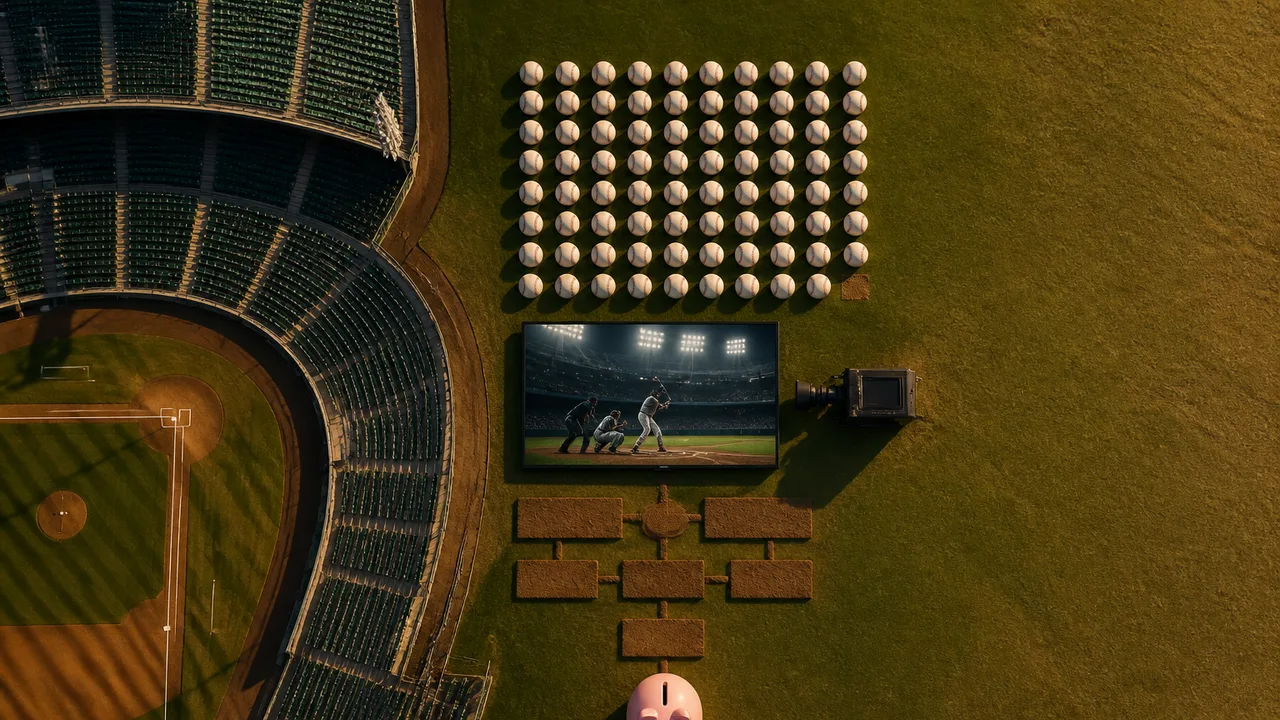
MLB owners want to cut the regular season from 162 games to 154, give most teams Mondays off and leave room for a national TV game when almost nobody else is playing. It’s a proposal to the players’ union, not an agreed schedule. But its design offers a look at what baseball might want to sell when its next national broadcast deals begin.
The owners also want to expand the Division Series from best-of-five to best-of-seven starting in 2029. Higher playoff seeds would get to choose their opponents in the Wild Card Series and Division Series starting in 2027. Those dates matter: MLB could change the playoff matchups before it changes the length of the season, if the parties agree.
There’s a much larger condition attached. The MLB Players Association says the league has made all its proposals contingent on players accepting a salary cap. The union says a cap would damage player rights and compensation. Until that dispute moves, the Monday showcase belongs on a negotiating sheet, not a TV schedule.
One Game on Monday, an Audience to Itself
Under the proposed Monday arrangement, most clubs would have the day off. One or two games could occupy an exclusive national broadcast window; teams playing Monday would instead get Thursday off. Holidays and selected special-event games would be exceptions.
That’s an unusual way to use an off day. A leaguewide pause could give players a more predictable break, as MLB says it intends. It could also clear competing baseball games out of the way for a broadcaster buying the Monday slot. Instead of asking viewers to find one game in the usual pile, MLB could point them toward a single event. The schedule itself would help make that event visible.
Think of the difference between owning one tile in an overflowing streaming menu and getting the whole screen. The comparison is about attention, not a promise of ratings. Fans might appreciate knowing where to find the featured game; fans whose local team plays on another night would still need whatever carries that game. Whether an exclusive Monday package improves access would depend on who buys it and how they distribute it.
The postseason proposal works on the other end of the calendar. A best-of-seven Division Series creates the possibility of more October games, although a series ending early would use fewer than its maximum. MLB spokesman Glen Caplin has argued that the longer round could mean fewer weekday afternoon postseason games and more chances to see top pitchers on a bigger stage. Selecting opponents could add a new TV-friendly moment before a series even begins. It would also make seeding decisions part of the show, provided the union accepts that separate change.
Together, those moves suggest a business test: can MLB give up some regular-season games per club while making a Monday slot and the Division Series more attractive to national buyers? The calendar explains why that question is plausible. It cannot answer how much broadcasters would pay, whether clubs would recover any lost local-game revenue or what players would receive in a deal.
Why the Cable-Era Math is Changing
Baseball’s long season has been useful to local television. A regional channel needs programming all summer, and a team playing nearly every day supplies it. Yet local media rights accounted for 23% of the average MLB team’s revenue in 2022 and 17% in 2025. That is a declining share, rather than proof that every club faces the same loss. Tickets remain a major revenue source, too, so fewer home dates would give teams another consideration beyond TV.
Meanwhile, MLB has added NBC and Netflix to its national broadcast lineup and sold ESPN distribution rights for out-of-market games. Its current national media-rights agreements expire after 2028, the season before owners want the shorter schedule and longer Division Series to begin. A recurring national window and a potentially larger October offering would give MLB different inventory to discuss in those negotiations.
The league might want that trade. A local rights deal sells the steady presence of one team in its market. A national window sells the chance to gather viewers around a chosen matchup at a chosen time. MLB can control that second pitch more directly if the rest of its teams are off. It’s a shift in how the league could package attention, even though the price of such a package remains an open question.
That reading leaves the player-health argument intact as an argument. MLB says a scheduled weekly off day would benefit players, and a predictable break could be valuable. A best-of-seven Division Series could add games for teams that advance to that round, depending on series length, while the Monday exception would move participating clubs’ break to Thursday. The effects on workload would depend on the full schedule and on which players reach October.
Baseball Has Changed Its Default Before
A 154-game season sounds like a vintage jersey pulled from storage, but the history is more useful than the nostalgia. The American and National Leagues adopted 154 games in 1904. The American League moved to 162 in 1961 as it expanded; the National League added eight games in 1962 when the Mets and Houston Colt .45s joined. The leagues did not make the switch in the same year.
Those changes accompanied expansion. Today’s proposal accompanies a different set of changes: the weakening share of local TV revenue, new national outlets and a rights reset after 2028. The parallel is limited to the calendar responding to a changing league. The timing of the 1961 and 1962 moves does not, by itself, tell us precisely why the owners then chose 162, or predict what a return to 154 would earn now.
It does puncture the idea that 162 is baseball’s natural setting. The game count has a history, and a schedule can serve different purposes as the league around it changes. In the expansion era, more teams arrived alongside more games. This time, owners are proposing fewer games per club alongside a clearer national TV window and a longer Division Series.
The players have a say in what that calendar costs. The union has said it will review the proposals and respond at the bargaining table, while rejecting the salary-cap condition attached to them. A broadcaster could eventually buy a Monday night with much of baseball to itself. First, MLB and its players would have to decide whether that night is worth the rest of the deal.
More Like This
MLB's 60-Game Clause Reshapes Lockout Leverage
A reported 60-game trigger could extend MLB's media deals through 2029, reshaping 2027 lockout leverage as local TV pressures divide club incentives today.

MLBPA's 2026 CBA Push: Rosters, Pay, and Data Power
The MLBPA's latest CBA proposal isn't just about roster sizes — it's about who controls player data, movement, and earning power in MLB's next era.

MLB Field of Dreams Game Returns After Four-Year Hiatus
The Field of Dreams Game returned to Dyersville, Iowa in 2026 after a four-year break. Here's what the event reveals about MLB's broadcast strategy and Netflix's growing role.

How Hard Is Soccer Fitness, Really?
Vox sent a producer to train with Brooklyn FC. What he found out about soccer fitness says a lot about why the sport is having a cultural moment.
Ken Griffey Jr. Is Trying to Bring Black Players Back to Baseball
Ken Griffey Jr.'s HBCU Swingman Classic is MLB's most visible bet on Black baseball's comeback. Here's what it's up against — and why it matters.