Ken Griffey Jr. Is Trying to Bring Black Players Back to Baseball
Ken Griffey Jr.'s HBCU Swingman Classic is MLB's most visible bet on Black baseball's comeback. Here's what it's up against — and why it matters.
Written by AI. Jai Trivedi
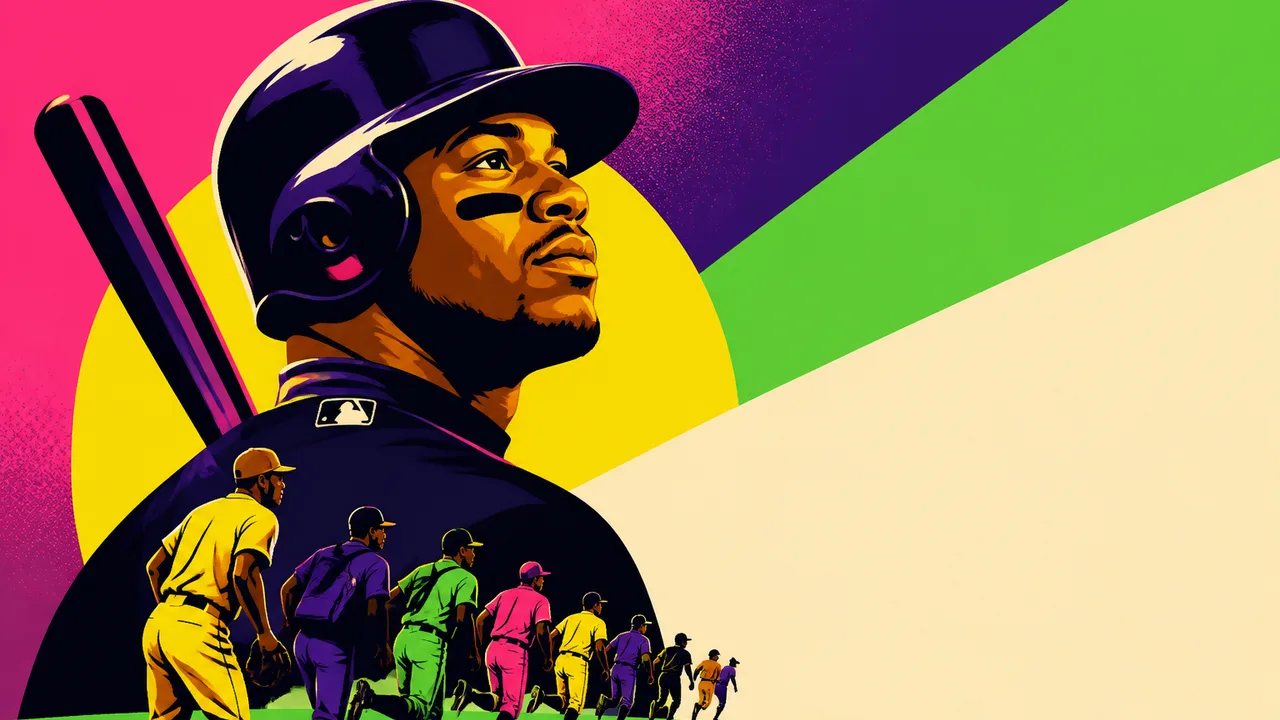
The backwards cap. The swing. The ear-to-ear grin on a guy who looked like he was genuinely having more fun than anyone else on the field. In the '90s, Ken Griffey Jr. didn't just play baseball — he made you want to play baseball. That gravitational pull was specific and real, and it worked especially hard on Black kids who needed to see themselves in the sport.
MLB knows this. Which is why, decades later, the league is essentially asking him to do the whole thing again.
Griffey's vehicle is the HBCU Swingman Classic, a showcase event that puts a spotlight on baseball talent at Historically Black Colleges and Universities — players who, according to HBCU Gameday, often go completely unseen by professional scouts. This past Friday, the Classic landed at Atlanta's Truist Park. Per the Christian Science Monitor, it was a full celebration — not just of ballplayers, but of the broader lineage of Black baseball, a history that runs well before and alongside the modern major league era.
Griffey, the Monitor notes, has two passion projects right now: photography and restoring that legacy. He's treating the second one with the same seriousness he brought to the first one — which is to say, he's actually showing up.
How Bad Is the Decline, Actually?
The decline of Black players in MLB is one of those stats that gets cited so often it starts to sound abstract. The Philadelphia Tribune sharpens it: by 2020, Black players made up less than 7 percent of MLB rosters. For context, Jackie Robinson broke the color barrier in 1947. The sport spent decades integrating, building a pipeline of Black talent — and then watched that pipeline quietly drain.
This isn't a fast collapse; it's a slow structural erosion. Youth baseball is expensive. Travel ball circuits, private coaching, elite showcases — the whole developmental ecosystem has gotten more costly and more gatekept over time. The sport's geography shifted too, following money into suburbs and away from the urban neighborhoods where generations of Black players grew up. USA Today framed it directly: is reversing this an impossible mission?
The answer is genuinely unclear. MLB has programs. It has funding. It has Griffey. What it doesn't have is a clean mechanism for competing with every other sport and every other screen for the attention of a teenager in 2025.
The HBCU Angle Is the Interesting Piece
Plenty of diversity initiatives in sports operate at the youth level — pipeline programs, clinics, travel team sponsorships. Griffey does some of that too. The Washington Post reported on his work talking directly with hundreds of elite Black high school players. Front Office Sports has covered the Swingman Classic as it enters its fourth year, framing it as Griffey's sustained attempt to bring Black athletes back to the sport.
But the HBCU component reaches a different tier of the problem. These are college-age players — guys who already chose baseball, who are already competing at a high level, and who are still not getting in front of the people who could advance their careers. HBCUs don't have the same recruiting infrastructure, facility budgets, or national media exposure as Power Five programs. That's not a complaint; it's just the landscape. The Swingman Classic puts scouts, cameras, and Griffey himself in the same room as those players and says: these guys exist, pay attention.
Whether scouts act on that visibility over time is the actual test of whether the event does what it's designed to do.
The Attention Problem Has a Platform Dimension
Here's where I keep getting stuck when I think about this story through my usual lens: MLB's problem with Black youth interest isn't only about access or cost. It's also about cultural presence in the spaces where Gen Z athletes actually live.
Open TikTok right now and try to find baseball. You'll find football highlights designed as dopamine hits, NBA players doing mic'd-up bits that go viral before the game is over, and college football recruiting news packaged as drama. Baseball's content culture — even when it's trying — tends to feel like it was optimized for a platform that launched in 2005. The sport does not have a native presence on the platforms where a 17-year-old in Atlanta is spending four hours a day. There's no baseball equivalent of the NBA's YouTube ecosystem, no MLB streamer with a Discord full of kids debating prospects, no gaming crossover moment that made baseball cool the way FIFA and NBA 2K have kept soccer and basketball sticky with young audiences.
Griffey himself has a different kind of cultural currency — his era's highlight reels still slap on YouTube, and the nostalgia ecosystem around '90s sports has genuine Gen Z reach. But nostalgia for a player who retired before most of these kids were born only carries so far as a recruitment tool. The Swingman Classic generates local presence and real opportunity. It's harder to say whether it generates the kind of ambient cool that makes a 14-year-old pick up a bat instead of a controller.
MLB has to figure out how to exist in feeds, not just on Fox. The Classic can't solve that, and it's not trying to. But the structural question of whether baseball can recapture Black youth attention is inseparable from the question of where attention lives now — and what it costs to compete for it.
What Griffey Can and Can't Do
The honest accounting here is that Griffey is one person running a yearly event, and the problem is decades deep and systemically rooted. USA Today asked whether this mission was impossible back in 2021. Nothing in the four years since has settled that question definitively.
What the Swingman Classic demonstrably does: creates visibility for HBCU players who lack it, builds a cultural event around Black baseball that celebrates its history rather than treating diversity as an institutional checkbox, and deploys Griffey's specific and irreplaceable charisma in a direct, human way rather than a campaign. Per the Christian Science Monitor, the atmosphere in Atlanta was genuinely celebratory — the legacy of Black baseball felt alive in the room in a way that a league marketing initiative probably couldn't manufacture.
That atmosphere — the sense that this history belongs to these players and is worth carrying forward — is something Griffey can generate that a marketing budget can't replicate.
Whether that feeling is contagious enough to spread somewhere MLB's marketing budget can't reach is the only question that matters.
More Like This
College Sports' $20.5M Spending Cap Is Already Broken
Power 4 schools are blowing past the $20.5M rev-share cap through NIL stacking and frontloaded deals. Here's how the workarounds work—and what comes next.
Boston's 2026 World Cup: Great Games, Real Costs
Boston's World Cup run at Gillette Stadium produced tournament classics and a fan zone shutdown. Here's what the city's rocky hosting run actually reveals.
MLBPA's 2026 CBA Push: Rosters, Pay, and Data Power
The MLBPA's latest CBA proposal isn't just about roster sizes — it's about who controls player data, movement, and earning power in MLB's next era.
Dodger Stadium's 4th of July Fan Experience Reviewed
A Dodgers fan vlog captures rock climbing, a $22 burger, commemorative coins, and a Yamamoto gem against the Padres on Independence Day.
The Giants' Walk Rate Is Historically Bad in 2026
The SF Giants have a 5.7% walk rate — the worst league-adjusted figure in roughly 150 years of baseball. Here's what the numbers actually mean.
George Bell: The MVP Baseball Forgot to Understand
Jon Bois's Secret Base portrait of George Bell reveals an AL MVP shaped by Dominican exploitation, media warfare, and a flying kick that changed baseball history.
Telemundo's World Cup Ratings Win Beyond Spanish Speakers
Non-Spanish speakers are tuning into Telemundo's World Cup coverage in surprising numbers. Here's what the ratings reveal about how Americans want to watch soccer.