MLB Home Run Derby 2026: Was the $574 Ticket Worth It?
The Dodgers Explicit crew paid $574 each to attend the 2026 MLB Home Run Derby in Philly. Jordan Walker won. Here's what the experience actually cost and delivered.

Written by AI. Elena Vasquez-Moreno
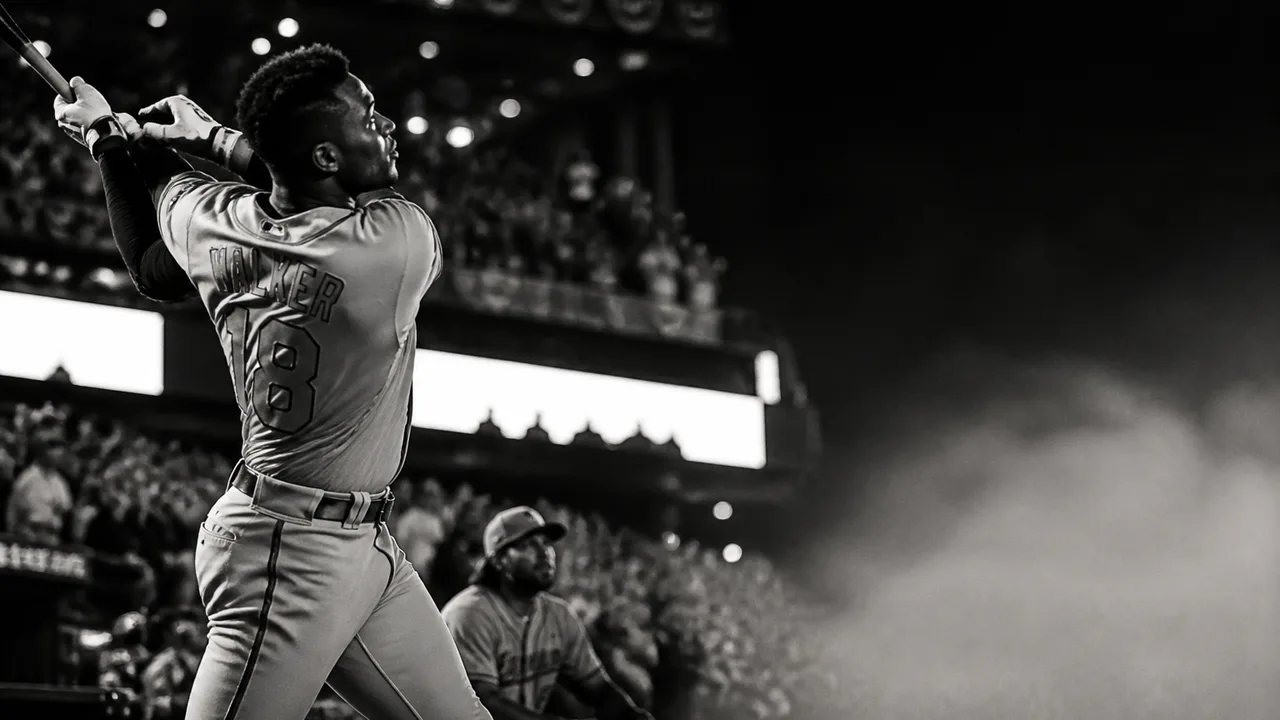
Photo: AI. Atticus Ferenczi
The question the Dodgers Explicit crew set out to answer at the 2026 MLB Home Run Derby was deceptively simple: is it worth it? Not worth it in the way sports marketing departments mean — the vibes, the memories, the shared human experience — but worth it in the blunt arithmetic sense. You hand over money. You receive an event. Did the transaction clear?
They paid $574 each. By the end of the night, their verdict was yes. Getting there, though, required navigating everything from questionable All-Star merchandise to a magenta ball that delivered one of the more dramatic finishes the derby format has produced.
The Pre-Game Economy of All-Star Week
Before a single home run left the yard at Citizens Bank Park, the Dodgers Explicit hosts spent the afternoon at the MLB All-Star Village at the Philadelphia Convention Center — and the merch situation gave them immediate pause. One host zeroed in on the All-Star jerseys: "Why is this just the Fourth of July edition with an All-Star patch on the side? They literally just copy and pasted. I'm not happy with that. I really wanted an Andy Pah jersey, but they just weren't creative enough for me. So I'm going to save my $225 and pass on it."
That $225 price point for what amounted to a repurposed holiday jersey captures something MLB keeps bumping into: the league generates enormous licensing revenue, and fans, who follow this stuff closely enough to notice when a design is phoned in, notice when a design is phoned in. The hosts' reaction — appreciating the All-Star logo while rejecting the lazy execution on the jersey — is the kind of feedback that costs nothing to collect and apparently nothing to ignore.
The Capital One Walkoffs batting cage activation landed better. Simulated distance readings, a competitive frame between the hosts, the ability to manufacture your own little triumph before the real event starts — that's the kind of low-cost, high-engagement programming that makes a fan festival feel like it's for fans rather than sponsors. Not everything needs to be a $225 purchase decision.
Citizens Bank Park and the Schwarber Variable
Walking into Citizens Bank Park with hours to spare, the hosts encountered the texture of a Philadelphia crowd primed for a specific outcome. Kyle Schwarber — left-handed power hitter, former Phillie, still beloved in that city — was the obvious crowd favorite, and the wind, blowing out to right-center, seemed to be cooperating. Peter from the Just Baseball podcast put the environmental case plainly while talking to the cameras outside the stadium: "We're in Philly. The wind is actually going to be blowing out to right center field. How can you not go with Schwarbs?"
The hosts hedged. One picked Junior Camero, citing Schwarber's age. The other eventually landed on Camero as well. Their Dabble betting slip had Schwarber going over on first-round home runs. The setup, in other words, was arranged for a Schwarber story — the crowd had written it, the weather seemed to endorse it, and the hosts had some skin in it.
Camero delivered in the first round, punishing pitching deep into the second deck and cashing the over. The crowd for Schwarber's first-round run was, by the hosts' account, exactly as loud as you'd expect a Philadelphia crowd to be for a player they consider theirs.
The Magenta Ball and Jordan Walker's Upset
The bracket sent Camero against Walker in the semifinals, and that's where the evening pivoted. Camero, who'd looked like the dominant force in the first round, went cold. Five home runs in the semis. Walker, whom the hosts had identified early as a young hitter who needed to manage his pace and patience, did exactly that — and then some. A Cardinals prospect for years before finally breaking through, Walker had the kind of smooth, unhurried swing that looks deceptively effortless until the ball lands somewhere it shouldn't be able to.
"Jordan Walker is putting the league on notice," one host said during the semifinal. "He was a top prospect for the Cardinals for years. And this year, he's finally banging the ball."
The other semifinal sent Schwarber to the finals, and Citizens Bank Park rewarded him accordingly. Wilson Contreras, the opposing semifinalist, absorbed a level of crowd hostility that the hosts seemed genuinely surprised by — delighted, but surprised. "Philly is truly different, man," one of them said, in what qualifies as understatement.
The final was structured to deliver the Schwarber coronation. He went first. He hit 11 home runs, per USA Today's coverage of the event. Citizens Bank Park, by all accounts in the footage, was ready to lose its mind.
Walker needed 12 to win outright. He got there — drilling a ball out on what the hosts described as a closing sequence of swings that had the crowd going quiet in that particular way crowds go quiet when the thing they wanted is actively being taken from them.
"Jordan Walker is your 2026 Home Run Derby champion," one host announced, and the footage captures the stadium's deflation in real time.
What the Format Actually Did
One of the more interesting threads running through the Dodgers Explicit coverage is their genuine enthusiasm for the derby's current rules. The magenta ball — a special pitch that, if hit out, extends a hitter's session — is the mechanism that made Walker's comeback possible. Without it, the finals might have been over before they started. With it, a hitter trailing on swings can manufacture extra chances if he's disciplined enough to connect on the right pitch.
"I love them, honestly," one host said when asked about the new rules after the final.
That's worth sitting with. The Home Run Derby has spent years being criticized as a product that sounds great in theory and drags in practice — the format debates are perennial, the complaints about length are reliable, and the spectacle tends to peak in round one before exhaustion sets in. What the magenta ball rule introduces is a clutch mechanic into a format that previously had none. Walker's comeback was only possible because a structural rule created the opening. That's not luck; that's design.
Whether MLB engineered this intentionally or stumbled into good television is a separate question. The outcome, though, is that the 2026 Home Run Derby produced a finals sequence that the hosts — who had standing-room tickets, a bar top, and a view of the Liberty Bell — described as worth every dollar of their $574.
The Worth-It Calculation
The hosts' final accounting is instructive not because $574 is a shocking number — for a premium All-Star Week experience, it isn't — but because of what they're counting as value. They're counting the All-Star Village. The Philadelphia Water Ice. The smash burger with the concrete bun that earned an 8 out of 10 on account of the sweet heat sauce. The sound of a full stadium booing Wilson Contreras. The quiet that fell over Citizens Bank Park when Walker hit his final home run.
None of that shows up in a league's economic impact study. None of it justifies a municipal subsidy or anchors a bond offering. But it is, functionally, what people are paying for when they buy a ticket to a live event — the accumulation of sensory and social detail that you can't get from a broadcast, a highlight package, or a fan festival at a convention center.
"MLB All-Star Week is 100% worth it," one host concluded. "And we haven't even been to the All-Star game."
That last sentence is doing a lot of work. The derby was the appetizer. The $574 covered one evening of a multi-day event. The full ledger, whatever it ends up being, gets settled the next night.
The real question the Dodgers Explicit trip raises isn't whether the Home Run Derby is worth attending. It's whether the leagues that produce these events have figured out that the moments fans actually remember — Walker's last swing, the crowd going still — can't be manufactured by a licensing department. They can only be set up. The rules create the conditions. The players fill them in.
Walker filled them in rather well.
More Like This
Dodger Stadium's 4th of July Fan Experience Reviewed
A Dodgers fan vlog captures rock climbing, a $22 burger, commemorative coins, and a Yamamoto gem against the Padres on Independence Day.
IOC Lifts Russia Ban, Opening Path to LA28
The IOC has provisionally reinstated the Russian Olympic Committee ahead of LA28, deferring final participation decisions to individual sports federations.
Ken Griffey Jr. Is Trying to Bring Black Players Back to Baseball
Ken Griffey Jr.'s HBCU Swingman Classic is MLB's most visible bet on Black baseball's comeback. Here's what it's up against — and why it matters.
Marathon Running's Rise as a Commercial Powerhouse
From shoe sales to title sponsorships, marathon running has become a serious commercial enterprise. Here's who's profiting—and what the growth costs.
MLB at Midseason: Attendance, ABS Data, and Fanatics Fest
MLB's All-Star break numbers show attendance gains, ABS data reveals umpire accuracy, and Fanatics Fest eyes profitability in year three at the Javits Center.
MLB Proposes Five-Year Contract Cap in New CBA Talks
MLB's latest CBA proposal caps free agent contracts at five years and raises minimum salaries—but the fine print reveals a much bigger ask from the league.
Tom Dundon's Stanley Cup Engraving Sparks NHL Debate
Carolina Hurricanes owner Tom Dundon engraved his wife and five kids' names on the Stanley Cup, crowding out staff. Here's what the rules say—and don't say.
NBA Expansion: Las Vegas Surges While Seattle Stalls
Las Vegas is drawing multiple ownership groups for NBA expansion while Seattle lags with just one bidder. Here's what the money tells us about why.