Mike Tomlin’s NBC Role Keeps Coaching Questions Alive
Mike Tomlin says he has not considered coaching again, though he expects questions soon. His NBC role keeps him visible, but no team or timetable has emerged.

Written by AI. Elena Vasquez-Moreno
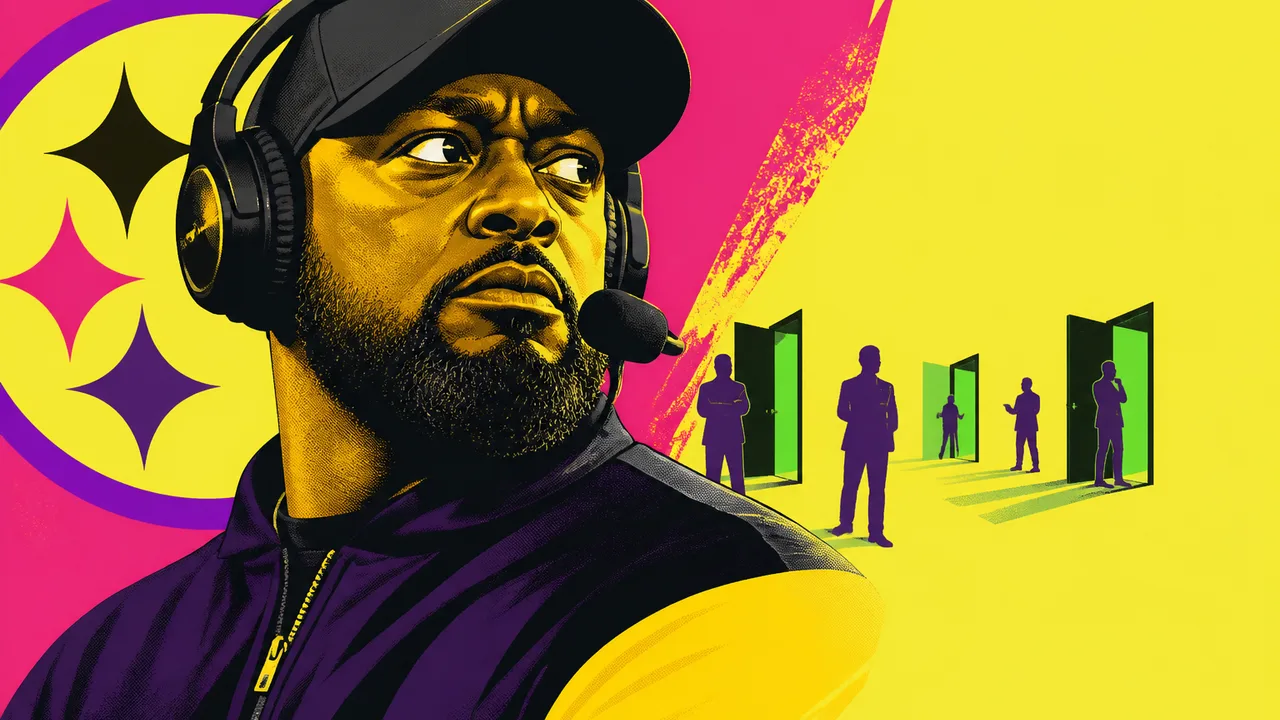
Mike Tomlin spent Wednesday answering questions about a job he says he has not considered taking. The former Pittsburgh Steelers coach, now working for NBC Sports, said he had not given “one iota of thought” to coaching again. He also expects the subject to surface soon. Tomlin named no team, timetable or negotiation.
That combination will keep the NFL rumor mill supplied for a while. A coach can enjoy broadcasting today and consider an offer later; Tomlin has made no promise about either outcome. But the distance between anticipating a question and pursuing a job is considerable. Teams making staffing decisions need an interested candidate, not an answer that leaves room for one to exist someday.
Tomlin put his position more plainly when asked about the future: “I’m sure that some of that’s going to come up in the not-too-distant future, but I’ll cross that bridge when I come to it,” he said. For now, he has said he is enjoying his NBC work.
Why a Broadcast Desk Attracts Coaching Questions
NBC offers Tomlin something an NFL sideline also provides: a place in the weekly football conversation. The work is different. An analyst explains decisions after the fact; a head coach owns the decisions before anyone knows how they will turn out. Yet regular appearances keep a former coach familiar to viewers and, potentially, to the people who hire coaches.
Visibility has a business value, even when nobody can attach a dollar figure to it. Teams searching for a head coach must sell the choice to players, staff, sponsors and fans. A recognizable candidate arrives with an established public profile. Television can preserve that profile while giving the candidate space to decide whether another NFL job is worth the demands that come with it.
Those same appearances create a recurring question for NBC. A broadcaster with Tomlin’s coaching background can bring the judgment of someone who has occupied the job under discussion. If his name appears whenever a vacancy opens, the network also has to plan coverage around the possibility that its analyst might eventually consider leaving. That is an ordinary staffing uncertainty, not a reported departure.
The arrangement can serve both parties while Tomlin remains in the role. NBC gets a prominent football voice; Tomlin gets work in the sport without committing to the daily responsibilities of running a team. The incentive to keep those options open requires no secret plan. It only requires a person who has not decided what he would do if a compelling opening appeared.
The Hiring Decision Has More than One Price
A coaching return would require more than a club deciding Tomlin looks good in its colors. The club would need an opening, a view of what it wants from its next coach and confidence that Tomlin wants the assignment. Tomlin would need to weigh the people running the franchise, the authority attached to the job and the resources available to build a staff. Compensation would belong in that discussion, but so would control over decisions that shape whether a coach can succeed.
Those terms can pull in different directions. A team might value a familiar name to steady its public image after a difficult stretch. A coach might value the freedom to choose assistants or influence the broader football operation. Neither side benefits from discovering after a hire that it meant something different by “control.” The headline number in a contract cannot settle disagreements about who decides the roster or how long a rebuilding effort will be allowed to run.
A broadcaster considering a return has another choice: staying put. That alternative can change the pace of a negotiation. Tomlin does not have to present himself as a candidate to maintain a public profile, and a team cannot assume that his presence on television amounts to an invitation to call. It would have to make a case for its opening on the merits.
The strongest argument for a possible return is straightforward. Tomlin knows the head-coaching job, remains closely connected to NFL discussion through NBC and has declined to rule out revisiting the question. None of that contradicts his statement that he has not thought about coaching again. Preferences can change when an opportunity becomes concrete. Treating that possibility as a likelihood, though, asks his answer to do work it cannot do.
Who Gains from an Open Question?
The uncertainty is useful to different people for different reasons. For viewers, it gives Tomlin’s analysis a second layer: every assessment of a struggling team may invite speculation about whether he would want to run it. For a team facing questions about its own coach, the mere presence of a famous former coach on television supplies an easy name for outsiders to discuss. For Tomlin, a refusal to forecast his future lets him concentrate on the job he has without closing off a choice he may never need to make.
That dynamic can also distort a hiring discussion. A club that actually needs a coach must evaluate candidates against its roster, decision-making structure and timetable. Speculation about Tomlin can crowd out those particulars because his name is easier to recognize than the less visible work of building a staff. It can make an analyst seem central to a search before anyone has said he wants to join it.
Tomlin’s comments leave room for a later conversation, and that is a fair reading of them. They also place his attention squarely on broadcasting now. The first development that would change the hiring picture would be Tomlin expressing interest in coaching again or credible reporting that connects him to an actual vacancy. Until then, NBC has an analyst, and NFL teams have a question they cannot answer by watching him on television.
More Like This
Stephen A. Smith Tests Sports Media's Political Reach
Stephen A. Smith's 2028 speculation shows how sports media can convert recurring attention into political capital, while creating new risks for ESPN and its audience.

Rays Stadium, US Open Records and Prediction Markets
The Rays finally got their votes. The US Open set a prize record. And prediction markets got a legal gut-punch. Here's what it all means financially.

How an MLB Lockout Could Expand the Bananas' Market
A possible MLB lockout could give the Savannah Bananas more attention, venue leverage and ticket demand, while testing whether fans stay after MLB returns.

Sports Media Executive Skills Are Being Redefined
Rick Alessandri of ZRG Partners breaks down what sports media executives need now: DTC fluency, data analytics, AI literacy, and a global footprint.

Paramount-WBD Deal Rewrites Sports Rights Leverage
Paramount's WBD settlement could unite CBS Sports and TNT Sports, concentrating media rights while putting MLB and NHL contracts under scrutiny.

Philip Rivers Nears NC State Coaching Job With Staff Stakes
Philip Rivers reportedly nears NC State's coaching job. The proposed hire raises questions about staff budgets, recruiting, player development and contract terms.

Fair Isaac Says Mortgage Pricing Is Shaping Housing Demand
Fair Isaac says mortgage pricing is doing real work in today's housing market. Here's what that means for buyers, lenders, and affordability in 2026.

US Open's $108M Prize Fund and the Cost of Staying No. 1
The US Open's record $108M prize pool and $800M renovation bet reveal how tennis's richest major is spending to stay dominant—and who's picking up the tab.