Fair Isaac Says Mortgage Pricing Is Shaping Housing Demand
Fair Isaac says mortgage pricing is doing real work in today's housing market. Here's what that means for buyers, lenders, and affordability in 2026.

Written by AI. Elena Vasquez-Moreno
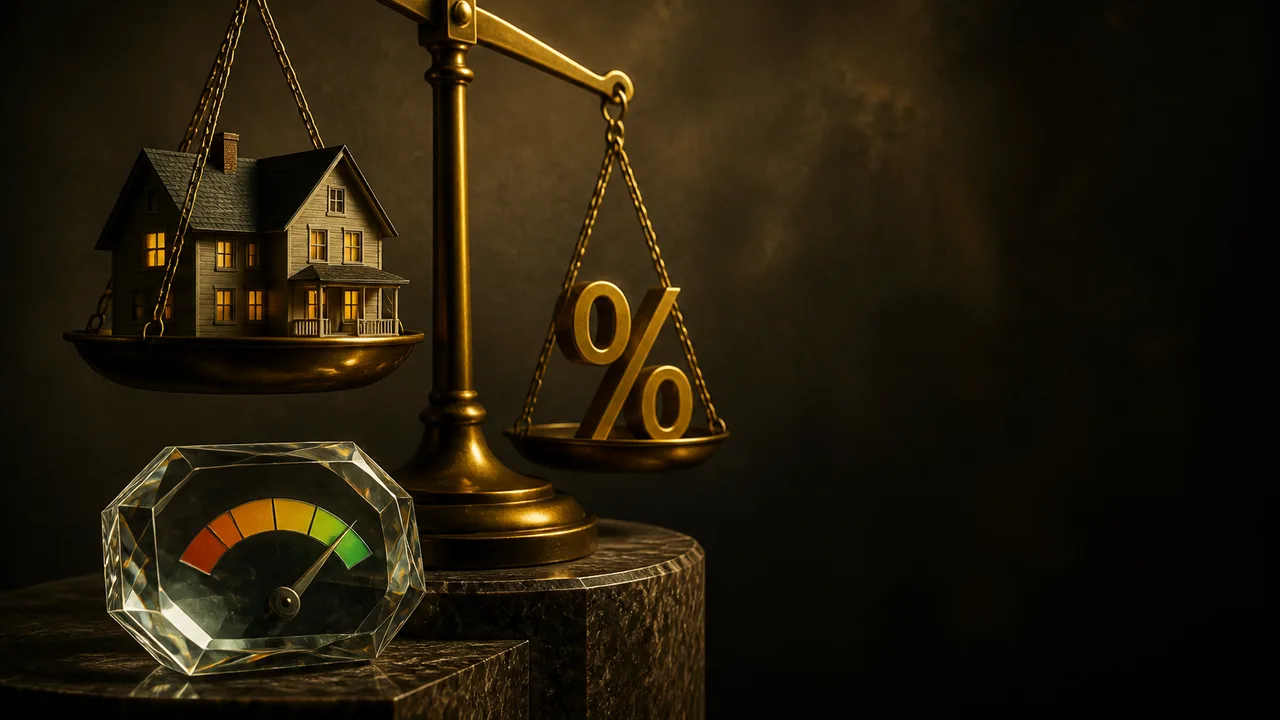
There is a particular kind of power that comes from sitting at the center of a market without technically being in it. Fair Isaac Corporation, the company behind the FICO score that lenders have used to sort creditworthy borrowers from risky ones for decades, occupies exactly that position in American housing finance. It does not originate loans. It does not set rates. But when Fair Isaac says that mortgage pricing is "doing the work" in today's market, the comment deserves more than a passing read.
According to Seeking Alpha, Fair Isaac's analysis frames the current mortgage pricing environment as a principal driver of housing market dynamics, a claim that sounds obvious until you unpack what "doing the work" actually means for a company whose revenue depends on lenders issuing credit.
What Fair Isaac Is Actually Saying
The polite translation of "mortgage pricing is doing the work" is this: rates are high enough that they are rationing demand so lenders do not have to. When money is cheap, credit standards become the load-bearing wall of the market. When money is expensive, the price of borrowing itself filters out the marginal buyer before any underwriter has to make a difficult call.
That is a structurally convenient posture for Fair Isaac. If the rate environment is already doing the risk-sorting, the company's product remains essential but the pressure on its scoring models to be the primary gatekeeper eases. The FICO score becomes more of a pricing input, a dial that adjusts the rate a qualified borrower pays, rather than a binary pass/fail mechanism at the front door.
Whether that reading is cynical or simply accurate depends on where you sit. From a lender's perspective, the logic holds. From a prospective buyer's perspective, what it describes is a market where affordability has been outsourced to the Federal Reserve.
The Affordability Trap, By the Numbers
To understand why Fair Isaac's framing matters, it helps to sit with where rates actually are and what they do to a monthly payment. The National Association of Realtors has tracked housing affordability for decades, and its Housing Affordability Index fell to some of the lowest readings on record during the rate spike that began in 2022. A household earning the median income could no longer qualify for a median-priced home under standard lending ratios. That is not a nuance problem; it is a structural one.
The Federal Reserve's rate decisions since then have kept 30-year fixed mortgage rates elevated relative to the pre-2022 baseline. Freddie Mac's Primary Mortgage Market Survey, which tracks weekly averages for conventional loan products, has consistently shown rates well above the sub-3% territory that defined the pandemic-era buying frenzy. The delta between then and now is not a rounding error. On a $400,000 loan, the difference between a 3% rate and a 7% rate is roughly $1,100 per month. That is a car payment, or two, depending on what you drive.
Fair Isaac's argument that pricing is "doing the work" is therefore not wrong so much as it is incomplete. Yes, elevated rates suppress demand. But suppressed demand is not the same thing as a healthy market. It is closer to a market that has swallowed an appetite suppressant and called itself fit.
The Lock-In Problem Nobody Wants to Talk About
One of the more underappreciated wrinkles in the current environment is what economists call the "rate lock-in effect." Homeowners who refinanced or purchased during the 2020-2021 rate trough are sitting on mortgages with rates that look like historical artifacts. Trading that loan for a new one at current rates, by selling and buying elsewhere, is effectively a self-imposed pay cut.
The result is a supply problem disguised as a demand problem. Existing homeowners are not listing. New buyers are priced out by rates. Builders are filling some of the gap, but not at the entry-level price points where first-time buyers actually need inventory. The market is not so much correcting as it is stuck, held in place by two opposing forces with no obvious release valve.
When Fair Isaac describes mortgage pricing as doing the work, it is describing a market in equilibrium in a narrow technical sense. What it is not describing, at least not explicitly, is whether that equilibrium is durable or what it costs the people locked out of it.
Fair Isaac's Stake in the Conversation
It would be negligent to discuss Fair Isaac's mortgage-market commentary without acknowledging the company's financial incentives. Fair Isaac generates a significant portion of its revenue from mortgage-related scoring inquiries. Every loan origination, every refinance application, every pre-qualification check represents a transaction in which a lender queries a FICO score and pays for the privilege.
When origination volume falls, as it does when rates rise and buyers pull back, that revenue line contracts. Fair Isaac's observation that pricing is "doing the work" comes from a company that has a real interest in lenders remaining confident enough in the broader market to keep originating loans, even at reduced volumes.
That does not make the observation wrong. Companies with financial stakes in a market are often better positioned than anyone to understand how it functions. But it is context that belongs in the conversation, not as a gotcha, but because understanding who is speaking and why is the first requirement of any useful analysis.
What Lenders Are Actually Doing With Risk
The more granular question Fair Isaac's framing opens up is how lenders are using FICO scores as a pricing instrument rather than just a qualification threshold. Risk-based pricing in mortgage lending is not new, but its sophistication has grown. A borrower with a 740 FICO and a 780 FICO may both qualify for the same loan, but they will not receive the same rate. The spread between those tiers, and how lenders calibrate it under different rate environments, is where Fair Isaac's scoring architecture becomes genuinely consequential for individual borrowers.
In a high-rate environment, that spread can feel punishing. A buyer who spent the last three years recovering their credit score to cross from "fair" to "good" might find themselves in a market where the absolute rate is still prohibitive regardless of which credit tier they land in. The credit score is doing exactly what it was designed to do; it is the market conditions around it that have changed the stakes.
Who Adapts and Who Waits
Real estate developers have been among the quickest to respond to the pricing environment, not by lowering prices in most markets but by buying down mortgage rates on new construction through builder incentive programs. KB Home, Lennar, and others have deployed what the industry calls "rate buydowns," using their own margins to subsidize a borrower's first few years of payments. It is a workaround, and a clever one, but it is also a signal that the builders themselves have internalized the idea that their product is not affordable at market rates without intervention.
Sellers of existing homes are in a harder spot. They cannot easily manufacture the same subsidy, and many are still anchored to peak valuations from 2021 and 2022. The gap between what sellers believe their homes are worth and what buyers can finance at current rates is where deals are dying.
Fair Isaac's analysis, to the extent the available reporting captures it fully, does not grapple directly with these granular market mechanics. What it offers is a high-level observation that pricing conditions are the dominant force in the current market. That is accurate. Whether it is sufficient depends on what question you are trying to answer.
If the question is whether lenders face acute credit risk right now, "mortgage pricing is doing the work" is a reassuring answer. If the question is whether the housing market is functioning well for the people who need it most, the answer requires a different conversation entirely, one that starts where Fair Isaac's framing ends.
More Like This
High Mortgage Rates Stall Housing Market Recovery
Three in five homes listed since January remain unsold as mortgage rates above 6% freeze out buyers. Here's what the data reveals about who pays the price.

How Baby Boomers Reshaped the American Economy
A look at the data behind generational wealth gaps, housing unaffordability, rising tuition, and tax policy shifts—and what they mean for younger Americans.

Six Levels of Landlord: From One Room to Owning the Street
From subletting a spare room to owning ground leases, here's how real estate wealth actually compounds — and who sits above even the biggest landlords.
Canada's Condo Market Is Collapsing—by Design
Toronto and Vancouver condo sales have cratered, developers are filing for protection, and the government is buying unsold units. What exactly is the plan here?

How the Bond Market Controls Your Mortgage and Savings
The bond market sets your mortgage rate and shapes your retirement—yet most people ignore it. Here's how it actually works, in dollars.

Millennial Homeownership: Delayed, Not Abandoned
Millennials face near-universal housing barriers in 2026, yet signs of market easing are emerging. Here's what the data actually shows about who gets left behind.

France's World Cup Exit Handed Sportsbooks a Windfall
France's 2026 World Cup elimination relieved sportsbooks of their biggest liability. Here's how public betting patterns turned one team's loss into the industry's gain.

MLB Home Run Derby 2026: Was the $574 Ticket Worth It?
The Dodgers Explicit crew paid $574 each to attend the 2026 MLB Home Run Derby in Philly. Jordan Walker won. Here's what the experience actually cost and delivered.