Mike Repole’s 1.5% Churchill Downs Stake Tests His Clout
Mike Repole says he bought one million Churchill Downs shares. His near-1.5% stake gives him a platform to push racing changes, but little voting power alone.

Written by AI. Denise Okafor-Williams
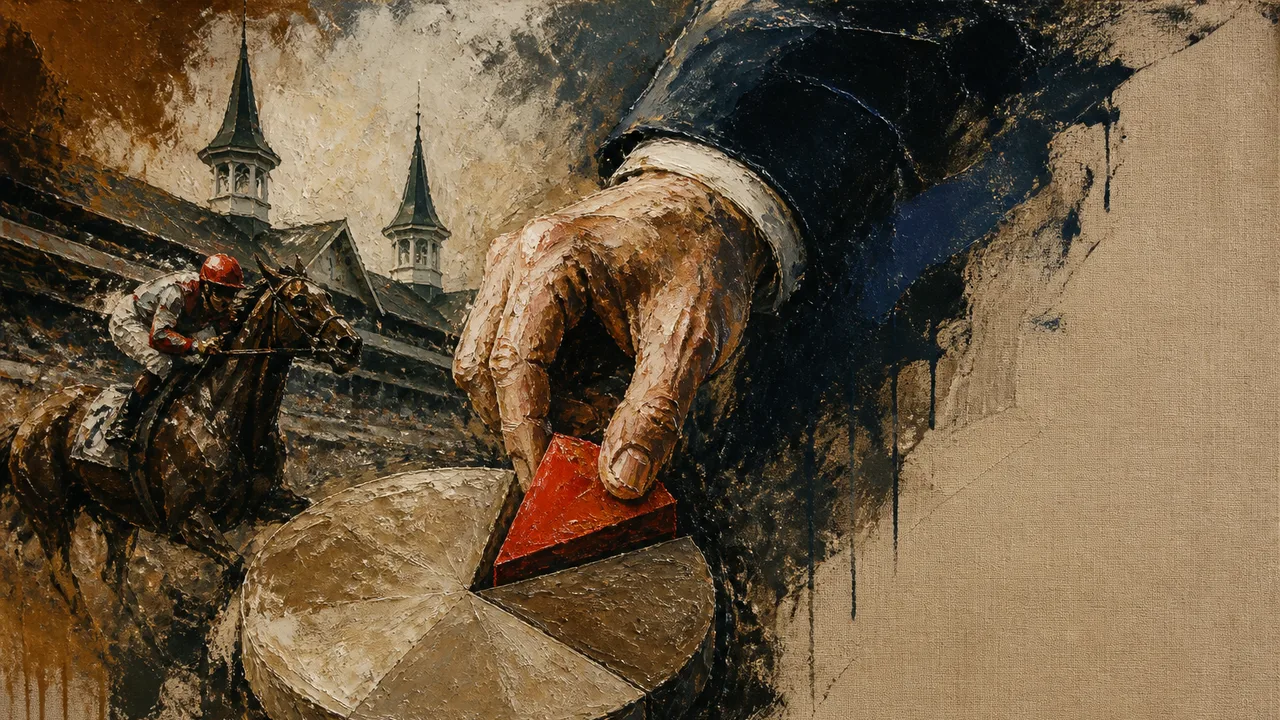
Mike Repole says he has bought one million shares of Churchill Downs Incorporated, a holding he puts at close to 1.5% of the company. The purchase gives a prominent Thoroughbred owner a financial stake in the business behind the Kentucky Derby as he pushes for change in horse racing. It also gives him a precise amount of voting power: a small fraction of the total.
The share count and approximate percentage came from a Repole Stable post on X. Repole, a billionaire entrepreneur and critic of racing’s traditional leadership, announced the purchase Thursday. His announcement, as reported, did not specify what he paid, how he acquired the shares, the changes he wants Churchill Downs to make or whether he intends to seek a board seat.
That leaves two related questions. Can Repole persuade a public company to act on his views about racing? And would the changes he wants for racing serve the interests of shareholders whose investment extends beyond the track?
A Shareholder with a Platform
Churchill Downs Incorporated is a Louisville-based gaming, racing and online wagering company. The Derby makes the company instantly recognizable, but Repole bought shares in the corporation. His investment exposes him to the business as a whole, while any vote attached to those shares concerns corporate decisions rather than the governance of every racing organization.
A holding of nearly 1.5% can get management’s attention, especially when the investor already has a public profile in the industry. It cannot, on its own, elect directors or require management to adopt a plan. Repole can make a case, seek discussions and try to persuade other owners of Churchill Downs stock. Their response would determine whether his stake becomes the beginning of a coalition or remains one investor’s position.
Shareholder support would depend on the proposal. An investor who believes changes to racing would strengthen Churchill Downs’ long-term business might welcome Repole’s involvement. Another might ask how a proposed change would affect costs, wagering activity or returns across the company’s operations. Neither position requires indifference to horse racing. Shareholders can value the Derby and still disagree over what Churchill Downs should spend, change or protect.
Repole faces a similar calculation. As a Thoroughbred owner, he participates in the sport whose future he wants to influence. As a shareholder, he has a financial interest in the company he is pressing. Those roles can reinforce each other if an improvement helps racing participants and the corporation. They can also produce competing priorities. A policy attractive to horse owners might impose costs on a track operator; a policy attractive to shareholders might leave horse owners unconvinced.
Who Gets a Say in Racing’s Economics?
The public-market route gives Repole something many racing participants lack: a direct claim on the company’s value and a vote proportionate to his shares. It does not make his preferences a proxy for everyone who works in or depends on the sport.
Owners, trainers, jockeys and stable workers encounter racing’s economics from different positions. Owners decide whether to commit money to horses. Trainers run operations that employ people. Jockeys work at the point where decisions about racing become physical risk. Stable workers perform daily labor that an owner’s announcement or a shareholder vote can easily leave out. A proposal to change racing’s business model would have to be judged by whom it rewards, whom it costs and who gets a voice in making it.
That question extends to Churchill Downs management. Executives answer to the corporation and its shareholders, while also running businesses connected to racing participants and wagering customers. Repole’s stake creates an opening for engagement, but management would have reason to demand specifics before treating a call for change as a business plan. What would the company do? What would it cost? How would anyone measure whether it worked?
The strongest case for Repole’s move is straightforward: someone with money invested in the sport has put money into a company with the capacity to make decisions about it. Buying shares aligns part of his financial interest with Churchill Downs’ future and gives him a way to address the people who oversee that future. Public criticism can draw attention; a shareholder can also ask management to explain its choices to an investor.
The limit is equally concrete. Churchill Downs’ shareholders bought into a gaming, racing and online wagering company, not a mandate to reorganize horse racing around one owner’s priorities. Repole will need to translate his ambitions into proposals that other investors can evaluate and, if necessary, support. His reputation may help secure an audience. The votes belong to the shares.
The Next Measure of Influence
Repole’s stake amid his push for change. From here, the consequential development would be a proposal specific enough for Churchill Downs and its other shareholders to assess. A request for a meeting, a public plan, additional share purchases or a move toward board representation would each signal a different level of commitment. None follows automatically from owning one million shares.
For racing participants outside the boardroom, the test would be more practical. If Repole asks Churchill Downs to change course, what happens to the people who race horses, care for them, run events and place wagers? A plan that identifies its beneficiaries and its costs would allow those groups to judge it on its terms. A general appeal to improve the sport leaves them guessing about whose finances improve.
Churchill Downs has its own choice to make. It can engage with Repole’s ideas if he develops them, defend its existing direction or propose a different path. Other shareholders can decide whether his goals match theirs. The one million shares buy Repole a place in that conversation. Turning 1.5% into influence will require him to convince people who own the other 98.5%.
More Like This

NFL and NFLPA Negotiate Flag Football at 2028 Olympics
The NFL and NFLPA are negotiating player participation in Olympic flag football. Here's what the labor dynamics and scheduling realities actually mean for athletes.

World Cup Knockout Ticket Prices Drop 39% on Resale Markets
World Cup knockout stage resale prices fell 39% from $2,040 to $1,245. What the secondary market collapse reveals about FIFA's pricing architecture.
USMNT Beats Bosnia, Advances Despite Balogun Red Card
The USMNT beat Bosnia 2-0 to reach the World Cup Round of 16, despite Folarin Balogun's controversial red card. Here's what it means on and off the field.

Chelsea Stake Sale Would Put Clearlake in Full Control
Chelsea's reported £950 million stake sale would give Clearlake full control, raising questions over spending, cash flow, stadium plans and exit timing.

White Sox Pick Cholowsky No. 1 as MLB Draft Era Shifts
The White Sox drafted UCLA shortstop Roch Cholowsky No. 1 overall — possibly in the last MLB draft of its kind. Here's what that means for players and teams.

Bryne, Norway and the Haaland World Cup Economy
Erling Haaland's World Cup run is drawing global attention to Bryne, Norway. What does superstar proximity actually mean for a town of 13,000?