Microsoft's Outlook Outage Exposed a Failover Trap
A July software defect, a Teams traffic shift and reduced capacity combined in November's Outlook outage. The recovery system then spread the failure further.

Written by AI. Mike Sullivan
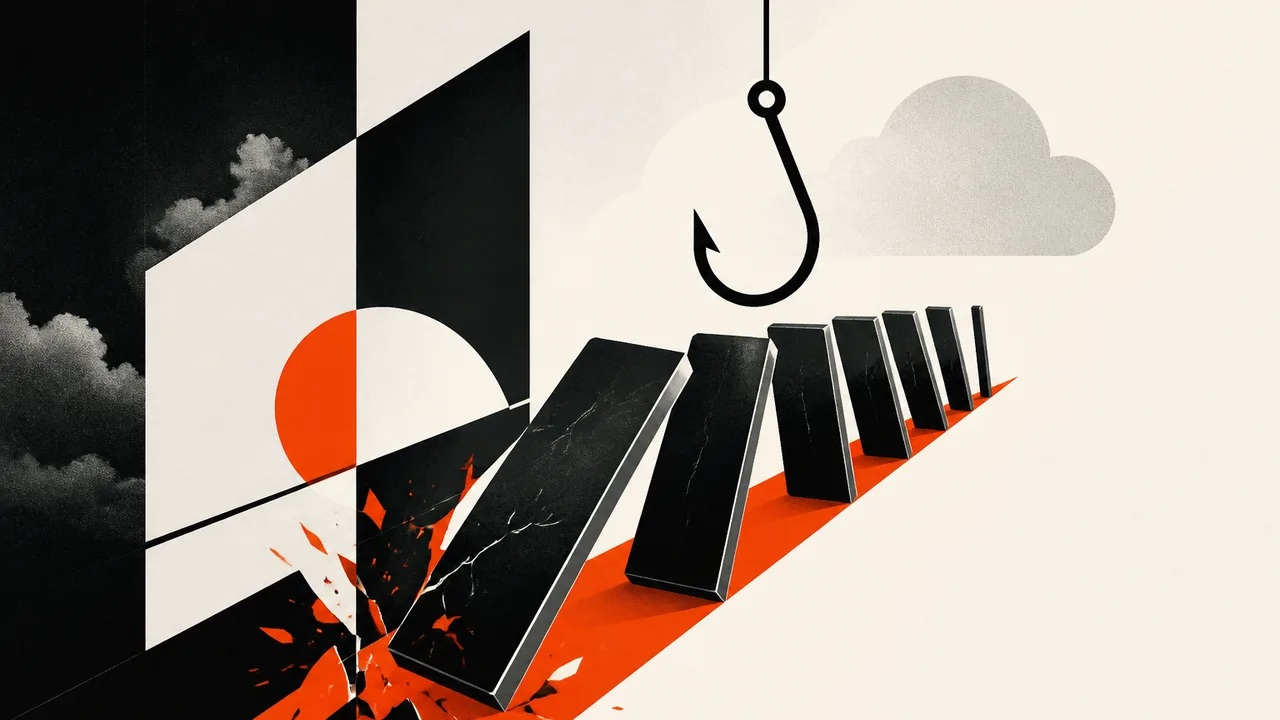
Microsoft’s November 12 outage cut off access to Outlook and Exchange Online mailboxes, then turned an ordinary recovery procedure into part of the problem. In the company’s preliminary account, traffic moved away from unresponsive gateway servers and onto healthy ones carrying the same dormant defect. The added load triggered the defect again. At the worst point, more than 80% of the servers in the affected Microsoft 365 networking gateway were unresponsive.
That is a more useful explanation than saying the cloud went down, although it is also less comforting. The gateway sits in front of email and other Microsoft 365 services. Its servers had passed a staged software rollout, and the flaw had lain dormant since July. A routine traffic shift, reduced capacity and a busy workday supplied the conditions that testing and the rollout had not exposed.
The July Change Met November’s Traffic
Microsoft introduced the defect in a July fix for its gateway servers. Under heavy load, software handling incoming connections could get stuck waiting on itself, exhausting processing power and memory. The defect was worse on newer machines with more cores. Microsoft’s load tests had focused on weaker hardware with fewer cores, while the deployed change ran for more than three months without an apparent problem.
That history explains the awkward timing. A clean rollout showed that the change worked under the conditions it encountered during rollout. It did not exercise the combination of hardware and traffic that arrived in November. Gradual deployment remains a sensible safeguard; it cannot reveal a load-sensitive defect unless the relevant load appears while someone is watching.
At 01:07 UTC on November 12, Teams traffic shifted onto the primary gateway that also supports Exchange Online. Microsoft called the move part of normal operations but has not explained what prompted it. Nearly 14% of gateway server capacity was already out of service because of an unrelated problem. Microsoft said it had sufficient capacity headroom under those conditions. As traffic rose during the US workday, the combined load pushed servers into the defective code path. The first connectivity alert came at 16:03 UTC.
The capacity figure needs careful handling. It describes servers out of service, not a measured 14% shortage of capacity to meet customer demand. Microsoft’s account says the gateway could have handled the reduced fleet on its own; the additional traffic exposed a software behavior that made the apparent headroom unreliable. That is the engineering trap: a capacity plan can look adequate until the machines counted as available stop behaving as expected under load.
Two Ways Out, with Different Results
When a server stopped responding, automated routing sent its traffic to another server. That server inherited more work and encountered the same defect. The failure spread through the fleet within two hours, while servers brought back online met a rush of waiting traffic and stopped responding again. Microsoft said its normal automated recovery was not designed to restore a fleet in such a broadly unresponsive state. Engineers eventually disabled some automatic rerouting and applied an update that reverted the defective change.
There is an important comparison inside this outage. Teams, OneDrive, SharePoint and Office apps could leave the affected gateway for a second, independent one; Teams chats and meetings mostly continued working. Exchange Online remained on the troubled path because it could not make that switch “for scale reasons,” Microsoft said. The alternative gateway demonstrated that failover could protect some services. Exchange’s scale limits what that result says about email: copying the same route across every service was not an option Microsoft said it had.
The comparison also separates two uses of the word failover. Moving a service to an independent gateway gave several apps another path. Moving requests among servers within the affected gateway sent additional work to machines with the same bug. An IT buyer hearing that a provider has failover might reasonably ask which of those paths their essential service can actually take. Redundancy in one part of a platform does not automatically extend to every product sold under its name.
The outage also crossed regional boundaries that were supposed to contain a failure. Microsoft attributes that spread to a separate issue but has not explained it in the preliminary account; a final report is due November 20. For now, the gateway’s load-sensitive bug explains how servers became unresponsive, while the regional-isolation problem remains an open part of how the disruption became global. Treating those as one known cause would make the chronology tidier than Microsoft has made it.
Recovery took time for another reason. The faulty change was months old, so a quick rollback was no longer straightforward. Engineers developed an update to return the code path to its previous state and applied it in groups. Microsoft says active disruption lasted nearly 24 hours, with delayed mail still being delivered after access returned. It says it has since rolled back the defective code, added capacity and monitoring, and limited how traffic can be redistributed. Those changes address parts of this failure chain; the regional boundary remains a question for the final account.
A Second Use for a Real Incident Number
The disruption gave attackers a ready-made story. Microsoft Threat Intelligence observed phishing emails posing as Microsoft 365 service notices. They cited EX1550543, the real Exchange Online incident identifier. Some messages detected on November 13 falsely warned that mail held during the outage would be deleted within 24 hours unless the recipient clicked a restoration link.
Microsoft said the activity was consistent with credential phishing, although it had not confirmed credential collection or malware delivery. It also said the outage itself was a technical issue unrelated to a cyberattack. The two events have different causes: the service failed through a software and traffic interaction, and attackers used the resulting confusion as a pretext. A correct incident number made the message look informed; it did not make the sender Microsoft.
Microsoft recommended checking service incidents through the Microsoft 365 admin center and examining suspicious links and user clicks. That advice has a practical counterpart to the gateway lesson. Recovery plans need to specify the path a service can take when its usual route fails; incident communications need a path users can check without trusting the urgent link in their inbox. On November 12, email’s alternate gateway was out of reach for scale reasons. On November 13, the inbox itself was being used to sell a fake way back in.
More Like This
How a Cut Backup Cable Disrupted Northeast Flights
A cut backup fiber and failed primary circuit disrupted Northeast flights. What the outage reveals about FAA redundancy, upgrades and traveler risk now.

ChatGPT, Claude, Grok and Gemini All Failed at Once
ChatGPT, Claude, Grok, and Gemini failed in the same window on September 3. What each company said, and didn't say, reveals how AI designs failure communication.

Microsoft's Brotli Patch Shows Why .NET Exposure Varies
Microsoft's emergency .NET fixes address a Brotli flaw also found in Node.js. See which decompression paths create risk and why each product needs its own update.

Windows SignDrop Flaw Tests the Rules of Disclosure
SignDrop reportedly lets local Windows users gain SYSTEM rights. Here is what that means for device owners, patch checks and the debate over public disclosure.

Solid-State Batteries: $20 Billion In, Nobody Wins Yet
Toyota, Volkswagen, CATL and BYD have poured $20 billion into solid-state batteries. The physics works. The manufacturing doesn't. Here's where things actually stand.

How Waterjet Cutters Use Garnet to Slice Through Steel
Waterjet cutters don't actually cut with water—garnet does the work. Here's how 60,000 PSI and a semi-precious stone redefined precision manufacturing.