ChatGPT, Claude, Grok and Gemini All Failed at Once
ChatGPT, Claude, Grok, and Gemini failed in the same window on September 3. What each company said, and didn't say, reveals how AI designs failure communication.

Written by AI. Leo Santana

On September 3, at roughly the same hour, OpenAI's status page logged "elevated error rates," Anthropic's Claude went dark, Grok kept failing, and Gemini went quiet without a word from Google. CNET, Gizmodo, and The Register all confirmed the overlap. Four of the most-used AI services, down together, within the same few-hour window.
That is the event. The more revealing story is in how each company handled the communication design around it.
The Status Page Is a Design Object
A status page has a specific job: tell affected users what is broken, when it broke, and what is being done. OpenAI's incident log (visible at status.openai.com) acknowledged the outage, labeled it "elevated error rates," and moved through resolution updates in a format borrowed from the SaaS incident-management playbook: timestamped entries, passive-voice descriptions of ongoing investigation, a final "resolved" marker. Functional. Sparse. Bureaucratic in the way that bureaucratic design signals: we have a process, and the process is running.
The design choice embedded in that format is a prioritization of procedure over explanation. You learn that something is wrong and then that it is fixed. You do not learn why. Wired ran a story headlined "Nobody Is Saying Why OpenAI and Anthropic Had Outages Today", which is itself a design observation about those incident logs. A status page that delivers the what but never the why is built to close tickets, not build trust.
The Compressed Apology
Anthropic's response tracked OpenAI's: acknowledge, resolve, move on. Both companies restored service relatively quickly, according to Slashdot. Neither gave a causal explanation.
This is a communication design pattern with a recognizable shape: the compressed apology. Acknowledge impact, avoid mechanism, signal resolution. It is structurally identical to the form letters airlines send when flights are delayed for reasons they would rather not discuss. The words change; the architecture of evasion stays the same.
The compressed apology works when users have no leverage and no expectation of a better answer. It stops working when the outage is large enough, frequent enough, or structurally significant enough that the absence of explanation becomes its own story. Thursday's outage cleared that threshold: Ars Technica flagged the overlap as unusual, and the simultaneous failure of four competing products in the same window is not a story a bare incident log resolves.
xAI's "Compute Partners": When the Evasion Is Almost Complete
The most informative communication of the day came from xAI, Elon Musk's AI company, which apologized for the Grok outage and acknowledged that the disruption affected other "compute partners," according to Engadget.
It confirms shared infrastructure without specifying who the partners are or what the infrastructure is. It places the source of the outage in xAI's compute layer rather than in Grok's application layer. And it opens the question of whether other services in the outage window ran on the same infrastructure, without answering it.
This is evasion design at a high level of craft. The phrase is specific enough to constitute partial disclosure (shared compute failed) while remaining vague enough to avoid confirming which other platforms were on that infrastructure. If ChatGPT and Claude were not on xAI compute, then the coincidence of their simultaneous outage requires a separate explanation. If they sat adjacent to it in some dependency chain, then "compute partners" is doing a great deal of diplomatic work for a two-word phrase. Neither OpenAI nor Anthropic has said anything that would clarify this. Wired's reporting confirms the silence.
Google's Silence as Aesthetic Choice
Google did not acknowledge the Gemini outage at all, according to Slashdot. Third-party monitoring registered the disruption. Google produced nothing.
Silence is a communication design choice. By producing no statement, Google left no artifact for reporters to quote, no timeline to scrutinize, no language to parse. The status page that stays green when the service is red is an active design decision about which audience to serve. The answer, when you keep the page green, is: only the audience that is not currently affected and therefore not checking.
This is a different design posture than OpenAI's compressed apology or xAI's "compute partners" phrasing. Those are designed to close the communication loop with minimal information. Google's approach on Thursday was to not open the loop at all. Whether that reflects Gemini's relative youth as a public product, a calculation that the outage was brief enough to ignore, or Google's corporate communication culture around AI is not clear from the public record. What is clear is the effect: third-party monitors tracked the disruption while the official channel showed nothing.
The Dependency Problem, Made Visible
Lifehacker covered the event primarily as a service alert, which is the correct orientation for its readership. But embedded in that coverage is the question the outage actually raises: when multiple services go down in the same window, what does "unrelated" mean?
The AI infrastructure stack draws on a limited set of cloud providers, GPU clusters, and networking dependencies. AWS, Google Cloud, Azure, and a small number of specialist providers underpin most of what runs. When four consumer-facing AI products go down in overlapping windows, the surface reading is coincidence. The structural question is whether their underlying dependencies overlap in ways that make coincidence less probable than it appears.
Futurism captured a user response that became a minor headline: "Finally I Can See the Sun!" The observation underneath the joke is accurate: enough of daily information work has migrated onto AI-assisted tools that a simultaneous multi-platform outage reads, at least partly, as forced disconnection. Four platforms go down and people notice the sky. That is the dependency problem rendered concrete.
The services that went dark were not experimental chatbots in any limited sense. They were infrastructure for legal research, software development, content operations, customer service, and clinical decision support across platforms that millions of businesses have built workflows around, based on the pattern of enterprise AI adoption visible in public reporting from 2024 and 2025.
What the Status Pages Don't Say
The companies involved in Thursday's outage operate under a shared rhetorical commitment. The compressed apologies and the green-when-red status page both reinforce that commitment by minimizing the apparent scale of failure.
The design of AI incident communication consistently prioritizes this narrative. Status pages show resolution, not causation. Corporate statements acknowledge impact without mechanism. "Compute partners" gestures at shared infrastructure without mapping it.
What would an honest status page look like? Probably something closer to what aviation uses after an incident: a formal record of what failed, when, why, and what changes prevent recurrence. Those reports are detailed because aviation decided the cost of opacity was higher than the cost of disclosure. AI companies are not there yet, and Thursday's four simultaneous outages did not force them there. The question is whether they will design their way to that standard before an outage is consequential enough to require it.
More Like This
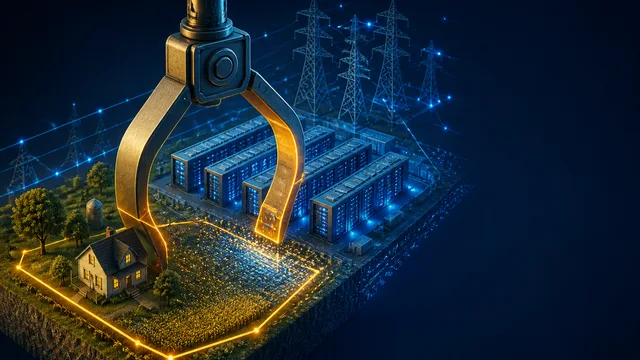
Eminent Domain Is Being Used to Build Data Centers
Power companies in Georgia and Pennsylvania are using eminent domain to seize private land for AI data center infrastructure. Here's what that actually means.

New York City's Underground Infrastructure Explained
From gravity-fed water tunnels to steam pipes and subway lines, NYC's underground is a century-deep tangle of engineering decisions—brilliant, broken, and still evolving.

The Next Generation of Windows Is Already Here
From squid-inspired liquid panes to transparent wood, new window technologies promise dramatic energy savings—but how close are they to your wall?
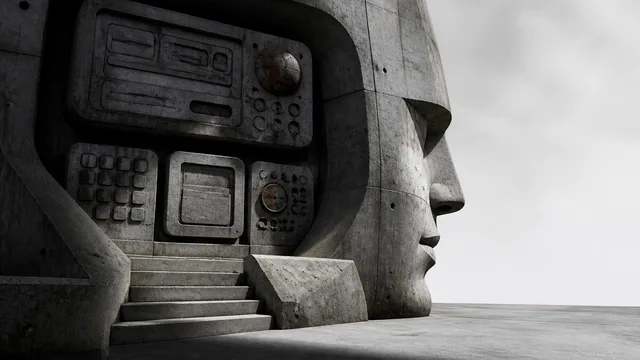
Designing GUIs for AI Agents: An Unsolved Problem
AI agents need interfaces humans can actually understand and control. The design choices made now will shape whether AI goes mainstream or stays a developer toy.

AI Agents Need Live Web Data, Not Bigger Models
LLMs freeze at training cutoff while the world keeps moving. Here's why real-time web data infrastructure matters more than model size for reliable AI.
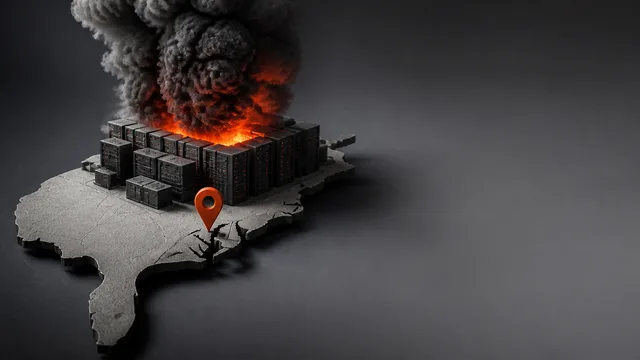
AWS US-East-1 Has Failed Six Times in 15 Years
Six AWS outages, one Virginia region, fifteen years. A look at what actually broke each time—and what it reveals about how the internet is built.

Route 66 and the Landscape of American Memory
Peter Adler's documentary on Route 66 reveals a road that stopped being infrastructure and became something stranger—a canvas for competing American mythologies.
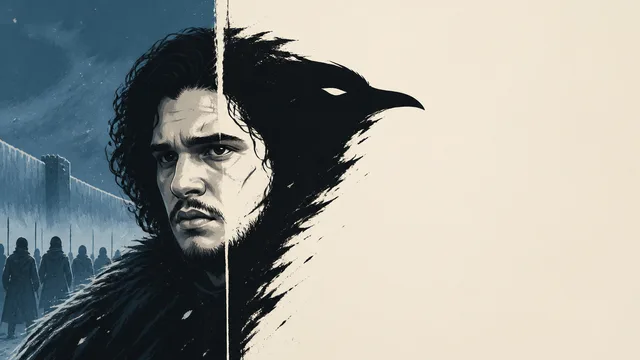
How HBO Turned Jon Snow Into a Logo
HBO's Game of Thrones didn't just simplify Jon Snow's character—it redesigned him into a merchandisable image. Here's what that visual shift cost the story.