Marriott Expands Its Indonesia Portfolio Across Three Cities
Marriott adds a Jakarta hotel and Bandung properties, with a Manado resort planned. Its three-city expansion raises questions about jobs, land and local benefit.

Written by AI. Kael Maddox
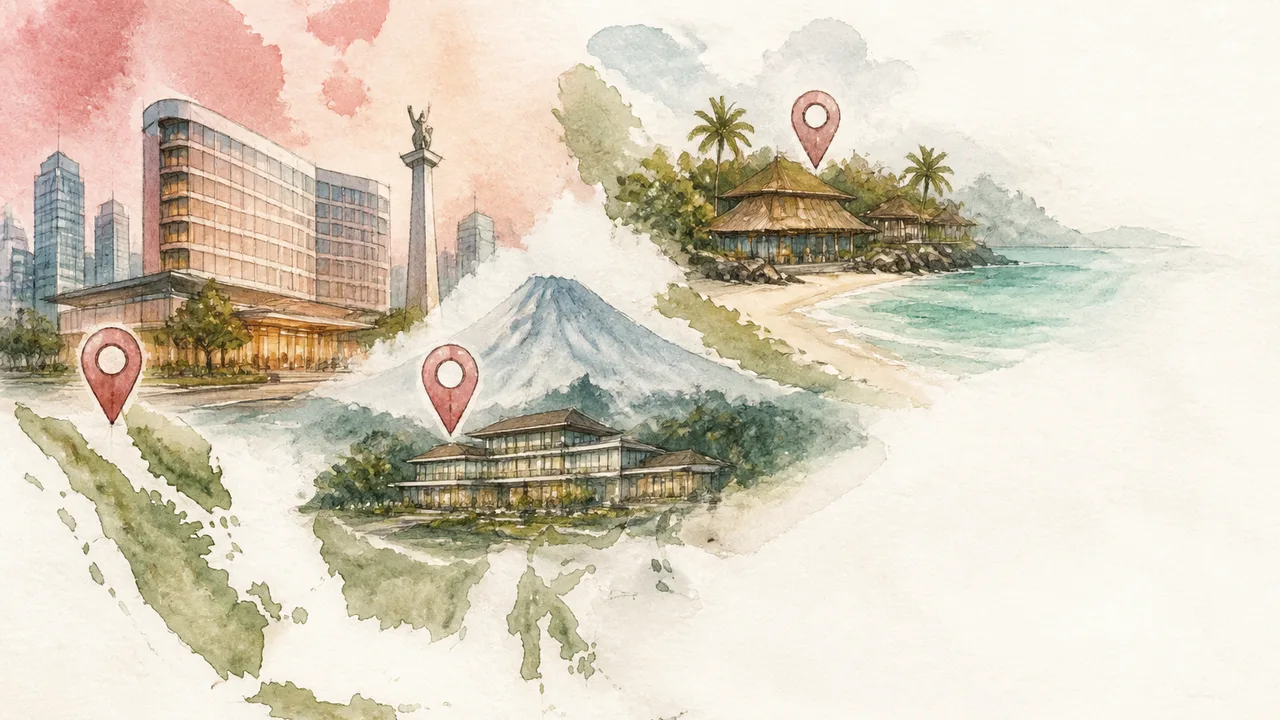
Marriott International is expanding in Jakarta and Bandung, with a resort planned for Manado. Those names sit on the same announcement, but they ask very different things of a hotel. Jakarta needs places where a guest can arrive late, work early and stay as long as the job requires. Bandung draws a different mix of trips. Manado puts a resort within reach of visitors who may have traveled for the landscapes and waters of North Sulawesi. The three-city expansion gives Marriott several ways to reach travelers in Indonesia, while placing each property in a different local economy.
The clearest piece of the plan is the new Jakarta Marriott Hotel Gelora, the Marriott Hotels brand’s first property in the capital. It has 203 rooms and suites, 35 serviced apartments, five dining venues and a spa. Opening dates for the Bandung properties and the Manado resort, along with employment projections, local sourcing commitments and environmental plans for the projects, have not been specified.
That leaves an unusual split in the story. Jakarta has a room count a traveler can picture. For Bandung and Manado, the practical questions begin earlier: what will be built, when will it open, and what will it require from the places around it?
One Jakarta Address, Two Lengths of Stay
The 35 serviced apartments at Jakarta Marriott Hotel Gelora are the most revealing detail in its inventory. A conventional hotel room works well for a short visit. An apartment is a different proposition for someone staying long enough to care about routine, storage and a little distance from the lobby. Taken together, the rooms and apartments give the property options for shorter and longer stays without requiring two separate addresses.
Five dining venues and a spa also make the Jakarta property more than a place to sleep. A guest with a tight schedule could eat and meet without planning another trip across the city. For the hotel, those facilities create reasons to spend beyond the room. For nearby businesses, the effect is harder to call: a full-service property can bring customers into an area, while also keeping some of their spending inside its own walls. Who benefits depends on how the hotel buys supplies, hires staff and connects guests with businesses outside the building.
The brand detail deserves care. Marriott International is the company expanding across the three cities; Marriott Hotels is the brand making its Jakarta debut at Gelora. Calling this the company’s first hotel in Jakarta would stretch the claim beyond what has been announced. Brand labels may look like small print to a traveler dragging a suitcase, but they identify what is actually new here: a particular Marriott flag in the capital, attached to a property with both hotel rooms and serviced apartments.
Bandung and Manado Require Different Answers
Bandung and Manado make the expansion more interesting than another capital-city opening. Bandung, in West Java, sits in a different travel pattern from Jakarta. Visitors can come for a short break, work, or time in the city itself. A hotel serving a brief visit may need to compete on ease and location; one chasing longer stays would need to make daily life workable.
Manado presents a sharper change in setting. North Sulawesi attracts travelers interested in the region’s natural environment, including those heading toward Bunaken. A resort can serve people prepared to spend more time in one place, with meals, transport and activities potentially organized around the stay. None of that tells us where Marriott’s planned resort will sit or what experiences it will sell. It does explain why the project should be judged against a different set of demands from an urban hotel: access, water, waste, energy use and the relationship between the property and the people whose home is also the destination.
A resort can bring spending to an area. How much reaches local workers and businesses depends on choices that rarely fit into an opening announcement. Will visitors book local guides? Will kitchens buy from nearby producers? Will employees have paths into better-paid roles? Those are questions for the operator and its partners, and eventually for guests deciding where to spend. They are also separate from a property’s room rate. An expensive stay can employ local people well or poorly; price alone won’t answer it.
What Expansion Looks Like on the Ground
Hotel development can add construction work, operating jobs and demand for suppliers. It also needs land, utilities, transport and staff who can afford to live within reach of their shifts. The balance changes by location. A large city hotel draws on an existing urban system. A resort may sit where visitor demand rises faster than roads, waste handling or other services can adapt.
That is why I’d watch the project details before assigning a verdict to Marriott’s expansion. The questions are concrete. How will the properties manage water and waste? What share of purchasing will happen locally? How will workers get to the sites, and what jobs will be open to residents? For Manado, the location of the resort will affect how useful any environmental commitments are. A plan designed around a specific site is more informative than a general promise to travel responsibly.
There is a traveler’s version of the same test. A familiar hotel name can remove one piece of friction from a trip, especially when arriving in a city alone or trying to fit travel around a short stretch of leave. Predictable accommodation has value. It can also make it easy to move through a place while barely dealing with it. The choice to eat elsewhere, hire a local guide or spend time beyond the property remains with the guest, provided the hotel makes those options accessible rather than treating the front door as the edge of the experience.
For now, the most useful reading of Marriott’s move is a practical one. Jakarta Marriott Hotel Gelora shows a defined product: 203 rooms and suites, 35 serviced apartments and enough on-site facilities to serve several kinds of stay. Bandung and Manado extend the company’s reach into two different travel markets. Their eventual contribution to those places will become clearer in decisions a room count cannot capture: the site, the workforce, the suppliers and what happens to the water after the guests have gone home.
More Like This

JetBlue BlueFirst: What the A320 Cabin Shift Means
JetBlue's new BlueFirst cabin adds 12 first class seats to its A320 fleet. Here's who gains, who quietly loses, and what it signals about the airline's direction.

Hotel AI Visibility: Why Google Rank No Longer Guarantees Discovery
Hotels that rank well on Google are disappearing from AI chatbot results. Here's what's driving that gap and what properties need to rethink about their content.

Flight Attendants Share Honest Tips for Air Travel
Flight attendants reveal what they actually do on planes, from skipping the coffee to packing smarter. Here's what their habits tell frequent flyers.

Light Rail Automation Borrows Tech from Cars and Satellites
Cities are automating light rail using car sensors and satellite positioning. Here's what that shift means for urban transit, safety, labor, and city design.

Hotel Loyalty Programs Court Gen Z With Concert Perks
Wyndham says Gen Z is nearly 10% of loyalty members. Concert perks may recruit young travelers, but cost, access and repeat stays will test the strategy.

Airbnb Is Rebuilding Itself as a Travel Marketplace
Airbnb is adding curated hotels and courting locals for experiences. See what the strategy changes, what remains unproven, and how travelers can respond.

Booking Holdings Takes the B2B Lead Over Expedia
New estimates show Booking Holdings now leads Expedia in B2B room nights. Here's what that shift means for hotels, OTAs, and the travel industry.
Four Seasons Mauritius Reopens with Villas and Overwater Spa
The Four Seasons Mauritius has reopened with renovated villas, a new overwater spa, and a private island. Here's what the refresh actually signals—and what it can't guarantee.