Leadership and Legacy: The ISS Change of Command
Explore the symbolic ISS Change of Command, highlighting international cooperation and leadership in space.

Written by AI. Amelia Nwofor
In the vast serenity of space, amidst the hum of the International Space Station (ISS), a moment of quiet ceremony unfolded. The Change of Command Ceremony is more than a formal handover; it is a testament to the shared human endeavor that the ISS embodies.
A Symbol of Unity and Collaboration
The ISS has been continuously inhabited for 25 years, a remarkable feat of engineering, diplomacy, and scientific exploration. This orbital complex stands as a beacon of what humanity can achieve when we work together across borders and cultures. As outgoing Commander Mike Fincke remarked, "The International Space Station is a wonder of engineering, a wonder of science, and a wonder of diplomacy."
The ISS is not just about space exploration—it's about international collaboration. Astronauts from NASA, Roscosmos, and JAXA work side by side, representing a microcosm of global unity. Each crew member brings unique expertise, culture, and perspective, enriching the mission and fostering an environment where teamwork is paramount.
Leadership in the Final Frontier
Leadership in space is a unique challenge, requiring a blend of technical prowess and interpersonal skills. Commander Fincke highlighted that "spaceflight is the biggest team sport," underscoring the importance of camaraderie and support among crew members. In such high-stress environments, the ability to lead with empathy and humor is crucial.
As Fincke prepared to hand over command to Sergey Kud-Sverchkov of Roscosmos, he offered heartfelt thanks to his crew, acknowledging the importance of their shared experiences. "It's been really amazing," he said, "Everybody really rose to the occasion." This blend of professionalism and personal connection is what makes leadership in space so distinctive.
The Human Side of Space Exploration
Amidst discussions of scientific achievements and operational tasks, the ceremony also revealed the deeply human side of space exploration. The crew members spoke of their time together as a family, emphasizing the bonds formed in the close quarters of the ISS. It was a poignant reminder that, while technology enables space exploration, it is the people who make it meaningful.
Sergey Kud-Sverchkov, accepting the command, expressed his commitment to continue the mission with the same dedication. "We are going to do our job on board ISS performing all the scientific tasks and maintenance tasks," he affirmed, highlighting the continuity of their shared mission.
Navigating the Unknown
The ceremony also touched on the uncertainties that come with space exploration. The early return of Crew-11 due to a medical concern serves as a reminder of the unpredictable nature of this work. While NASA has not disclosed specifics due to medical privacy, the decision underscores the ongoing challenges and the need for adaptability in space missions.
Concluding Thoughts
The Change of Command Ceremony is a moment of transition, a passing of the baton that symbolizes both continuity and change. It is a reminder of the ISS's role as a platform for scientific discovery and international cooperation. As the crew continues their mission, the spirit of unity and commitment to exploration remains steadfast.
In the end, as the crew members embraced in a group hug, the gesture encapsulated the essence of their shared journey. "It's a big honor to be a commander of space station," Kud-Sverchkov said, inviting the crew to join in a moment of solidarity—a fitting close to a ceremony that celebrates both leadership and legacy.
More Like This
How Tech Lock-In Shapes Our Present and Future
Exploring how early tech decisions, like AI and QWERTY, still impact our daily lives.
Mold on the ISS: A Clue to Life's Cosmic Journey?
Examining mold's resilience in space and its implications for panspermia, the theory that life on Earth may have cosmic origins.
Exploring the Universe with New Telescopes
Delve into groundbreaking telescopes like Vera Rubin and Euclid, capturing cosmic wonders and expanding our celestial knowledge.
Space Developments: Tech Triumphs and Challenges
Exploring recent space missions, tech innovations, and their broader impacts on humanity's cosmic ambitions.
NASA's Crew-12 Mission: A Leap Towards Mars
Crew-12 mission advances space exploration, featuring ISS experiments and spacecraft upgrades for future Mars missions.

NASA's Future Under Jared Isaacman: A Balanced View
Exploring NASA's future with Jared Isaacman, focusing on Moon missions, technology, and partnerships under current leadership.
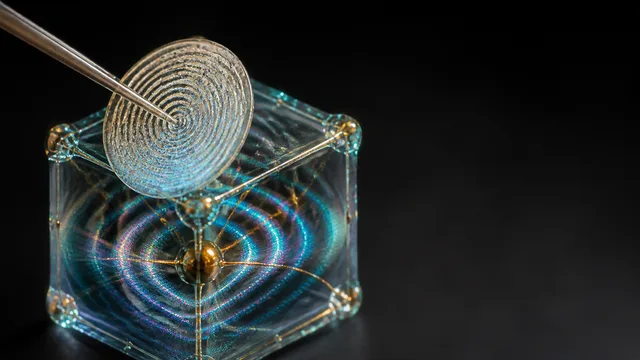
Hannah Cairo Disproved a 40-Year-Old Math Conjecture at 17
At 17, Hannah Cairo overturned the Mizohata-Takeuchi conjecture using a hypercube and a coin diagram. Here's what she actually did—and why it matters.
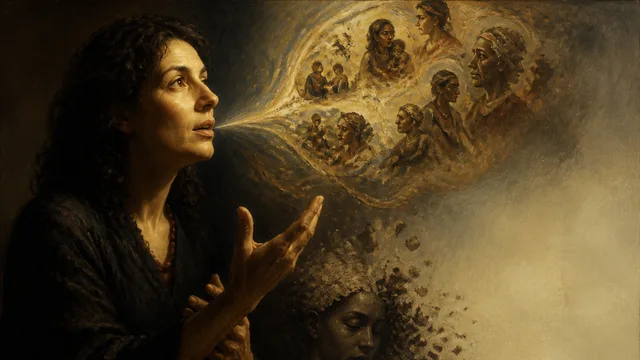
How Language Shapes Thought, According to Lera Boroditsky
Cognitive scientist Lera Boroditsky explains how the language you speak shapes memory, color perception, and thought—and what's lost when languages disappear.