Mold on the ISS: A Clue to Life's Cosmic Journey?
Examining mold's resilience in space and its implications for panspermia, the theory that life on Earth may have cosmic origins.

Written by AI. Amelia Nwofor
In the perpetual quest to understand the origins of life, a surprising ally has emerged: mold. Yes, that persistent intruder lurking behind your drywall might hold cosmic secrets about where life on Earth came from—or where it might be going.
The Panspermia Proposition
At the heart of this conversation is the panspermia theory, which posits that life didn't start on Earth at all. Instead, it suggests that life—or at least its building blocks—arrived here hitchhiking on space rocks from other planetary bodies. Imagine microbes nestled in the crevices of a meteorite, enduring the harsh vacuum of space, and then crash-landing onto our hospitable planet. It's an idea that challenges the traditional narrative of life's origin but remains tantalizingly difficult to prove.
"If any of those microbes survive that trip, then you have traveled microbial life from one planet to another in our solar system," as Neil deGrasse Tyson eloquently puts it in the video.
Mold's Unexpected Role
Enter mold, the hardy life-form that seems to thrive in conditions that would reduce other organisms to cosmic dust. Research led by Marta Cortisau at the University of Porto found that mold spores can withstand radiation doses that would obliterate humans. This discovery was made by exposing mold to conditions mimicking both the surface of Mars and the vast emptiness of deep space.
The finding is not just academic. Mold on the International Space Station (ISS) indicates that Earth life could unwittingly travel with us to other planets. As Tyson notes, "If mold happened to be on the outside of the space station, if it got there by any means at all, somebody had mold on their glove and they touched the outside of the space, the spores could survive there."
Cosmic Contamination or Cosmic Return?
The presence of mold on the ISS raises intriguing questions: Are we accidentally seeding the universe with Earth life, or are we simply returning life to its cosmic origins? The implications are profound and double-edged. On one hand, if we discover life elsewhere, we need to distinguish whether it's a native inhabitant or an Earthly interloper.
The potential for mold—and by extension, other extremophiles—to survive interplanetary journeys prompts a reevaluation of how we sterilize spacecraft. The last thing scientists want is to contaminate other worlds with Earth life, especially when searching for extraterrestrial organisms.
The Resilience of Life
Mold's resilience serves as a microcosm of life's incredible adaptability. Understanding how life can endure in extreme conditions not only informs astrobiology but also has practical implications for future space exploration. As we contemplate colonizing Mars or mining asteroids, knowing which life forms can endure harsh space environments will be crucial.
This resilience also invites a more philosophical reflection on the nature of life itself. If mold spores can survive the rigors of space, what else might be possible? Tyson hints at this broader question, "Next time you see mold on the wall, give it some respect. It might have come a long way to get there."
The Unfinished Story
The saga of mold and panspermia is far from over. As we continue to explore the cosmos, each discovery nudges us closer to understanding our place in the universe. Whether life on Earth is a cosmic fluke or part of a grander narrative remains an open question. But with each spore that survives the void, the possibility that life is a cosmic traveler gains a little more credibility.
So, while mold may not have the glamorous allure of other scientific discoveries, it holds potential clues to one of humanity's most profound questions. As we keep looking up, it's worth remembering that sometimes, the answers to the biggest questions can come from the smallest places.
More Like This
Exploring the Universe with New Telescopes
Delve into groundbreaking telescopes like Vera Rubin and Euclid, capturing cosmic wonders and expanding our celestial knowledge.
Exploring Math's Role in Understanding the Universe
Delve into the need for new math to solve universe's mysteries with insights from Terence Tao on StarTalk.
Space Developments: Tech Triumphs and Challenges
Exploring recent space missions, tech innovations, and their broader impacts on humanity's cosmic ambitions.
Exploring the Cosmic Balance: Lagrange Points
Discover how Lagrange points revolutionize space exploration, offering energy-efficient paths and potential for space construction.
Leadership and Legacy: The ISS Change of Command
Explore the symbolic ISS Change of Command, highlighting international cooperation and leadership in space.

Does Reality Require Us? Exploring Quantum Mysteries
Unpack the role of observers in reality, exploring quantum mechanics, entropy, and the nature of existence.
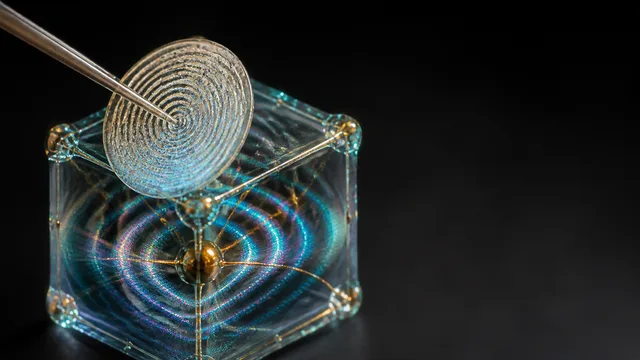
Hannah Cairo Disproved a 40-Year-Old Math Conjecture at 17
At 17, Hannah Cairo overturned the Mizohata-Takeuchi conjecture using a hypercube and a coin diagram. Here's what she actually did—and why it matters.
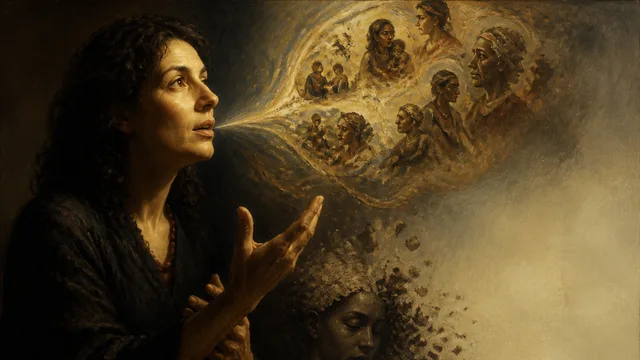
How Language Shapes Thought, According to Lera Boroditsky
Cognitive scientist Lera Boroditsky explains how the language you speak shapes memory, color perception, and thought—and what's lost when languages disappear.