Lakers Sell for $12.5B: What Walter's Exit Really Means
Mark Walter flipped the Lakers for $12.5B less than a year after buying them. Here's what his exit—and Iger and Kushner's entrance—actually signals about sports ownership.

Written by AI. Jai Trivedi
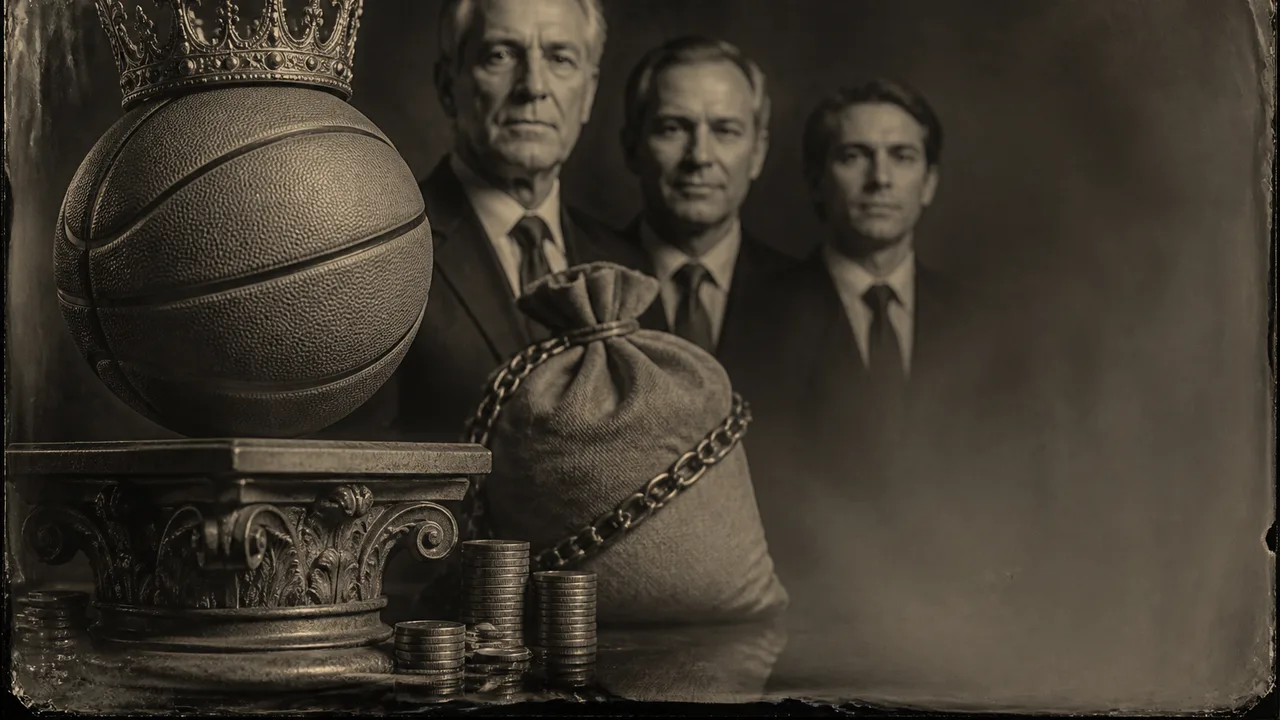
Ten months. That's how long it took Mark Walter to buy the Los Angeles Lakers, pocket a 25% return, and walk away from the most storied franchise in the NBA.
The deal closed Wednesday morning, with Walter selling his controlling interest to venture capitalist Josh Kushner and former Disney CEO Bob Iger at a $12.5 billion valuation, according to ESPN's Ramona Shelburne. The reaction from inside the league was immediate and unambiguous. "The news shocked all of us," one NBA executive told ESPN.
It shocked the sports business world too—and for good reason. This isn't how franchise ownership is supposed to work. You don't buy the Lakers and flip them before the season tickets even renew.
The Walter Question Nobody Can Fully Answer Yet
Walter paid roughly $10 billion to take a controlling stake from the Buss family last October, a deal that itself broke records at the time, per Forbes. Now $12.5 billion breaks that record too—with Walter as both the setter and the breaker.
The obvious read is that Walter turned a clean profit and timed a hot market. But Sportico's explainer on the deal adds a layer that reframes the whole thing: Walter is "in talks with investors to raise money to help pay down loans." That's not the language of a seller riding high. That's the language of someone managing a balance sheet under pressure.
Front Office Sports goes further, reporting that Walter may be dealing with a financial squeeze connected to an unspecified investigation—and notes that if that's the case, the Lakers might not be the only asset that moves. Walter's portfolio is large. Sportico flags that if he does sell another team, "it will be less of a surprise." That's a telling hedge.
What's notable is how carefully the blast radius is being contained. Walter's co-owner on the Dodgers, Stan Kasten, was quick to draw the line: "This is a Laker story. It's not really a Dodger story. It really has nothing to do with the Dodgers," Kasten told reporters Thursday, per Front Office Sports. That's a very specific denial—which means the question was being asked.
The Shohei Ohtani angle is also now in play. Forbes reports that Ohtani's contract with the Dodgers contains an escape clause that has resurfaced in conversation following the Lakers sale. The specifics of what triggers that clause aren't fully public, but the fact that it's being discussed tells you something about how unsettling this transaction has been for the broader Walter portfolio story.
None of this is settled. The record on Walter's specific financial situation is still thin, and treating speculation as fact would be a mistake. But the pattern—rapid exit, loan talks, carefully worded denials from associates—raises questions that a 25% profit alone doesn't explain.
What $12.5 Billion Does to Every Other Number in the League
Set Walter's situation aside for a second and look at what this price tag actually does to the market.
Every franchise valuation in American professional sports just got recalibrated. The Lakers at $12.5 billion aren't just a number—they're a comparable. Owners of the Knicks, the Warriors, the Cowboys, anyone with a marquee franchise in a major market, can now point to this transaction in the next round of valuation discussions, refinancing conversations, or ownership disputes and say: see?
SportsPro's analysis frames this as part of a broader story about the state of U.S. sports investment—the idea that top-tier franchises have become something closer to macro-resistant stores of value than traditional operating businesses. The on-court product matters, but it's increasingly secondary to the asset's scarcity, its media rights trajectory, and its cultural footprint.
Sportico also notes that the Lakers sale—combined with the Knicks' NBA title revenue bump—gave Madison Square Garden Sports' stock a meaningful lift. That's the transmission mechanism in action: a transaction in Los Angeles moves the stock price of a New York-based sports holding company. The market is treating these franchises as correlated assets now.
The Iger-Kushner Bet Is More Specific Than It Looks
The buyers deserve their own close read, because this pairing is not random.
Bob Iger spent decades running the most sophisticated content-and-distribution machine in entertainment history. He built Disney's streaming infrastructure, navigated the ESPN identity crisis, and understands—better than almost anyone alive—how sports rights function as both programming anchors and leverage tools in carriage negotiations. Josh Kushner runs Thrive Capital, a venture firm with a portfolio that skews heavily toward technology and consumer platforms.
Put those two together and the Lakers aren't just a trophy asset. They're a content platform with a global brand, a 17-championship legacy, and a media rights situation that will only get more valuable as the NBA's next broadcast cycle approaches.
Variety's breakdown of the deal makes the broader tech-billionaire-meets-sports-asset thesis explicit: AI's disruption of the broader economy has made artificially scarce entertainment assets—the kind that will always command attention regardless of what else is happening—increasingly attractive to people sitting on serious capital. You can't train an AI to replace the Lakers. You can't manufacture another franchise with that history. The scarcity is structural.
Iger, more than most, knows how to monetize that scarcity. His instinct won't be to run the Lakers like a basketball team. It'll be to run them like a media property that plays basketball—and the combination of his content-ecosystem fluency with Kushner's platform instincts suggests they're positioning the franchise as the centerpiece of a next-generation sports media play, one built for the post-linear, direct-to-fan distribution world that Iger spent his Disney years trying and mostly failing to fully crack.
The Roster Overhang
While the business story dominates, there's a real basketball dimension worth flagging. Hoops Rumors has been tracking the roster and front-office implications: questions around GM Rob Pelinka's status, what the sale means for Luka Dončić's tenure in LA, LeBron James' situation, and Chris Paul's role in the organization. Ownership transitions create genuine uncertainty in player and staff negotiations—agents need to know who's making decisions and what the new owners' roster philosophy looks like.
None of those questions have clean answers yet. New ownership tends to bring new front-office instincts, and Iger and Kushner are not conventional sports operators. Whether that's a feature or a bug for the Lakers' competitive outlook is genuinely unclear.
The Bigger Picture
The thing about this deal that keeps nagging at me is the compression. Ten months from purchase to sale. A record-breaking acquisition flipped for another record-breaking price before the ink was dry on the first one. That's not how long-term sports ownership has ever worked—or been marketed.
Leagues, including the NBA, have historically prized ownership stability. You're supposed to be a steward, not a trader. The fact that this happened—and the fact that the league apparently signed off—suggests the NBA is either comfortable with franchise liquidity or had limited leverage to stop it.
If sports franchises are now fully liquid investment vehicles for the ultra-wealthy, that changes the relationship between owners, cities, fans, and leagues in ways that haven't been fully worked out. Walter didn't do anything wrong by the numbers. But the speed of it forces a question the sports business world would rather not sit with: at $12.5 billion, is anyone actually buying a basketball team anymore?
More Like This

College Sports' $20.5M Spending Cap Is Already Broken
Power 4 schools are blowing past the $20.5M rev-share cap through NIL stacking and frontloaded deals. Here's how the workarounds work—and what comes next.

Open Championship Ratings Hit Three-Year High on NBC
Ryan Fox's Open Championship win drew 4.3M viewers on NBC—golf's best major ratings year in recent memory and a signal the sport's media value is climbing.
Jeff Bezos Eyes a $1.8B Stake in Liverpool FC
Jeff Bezos is reportedly in talks to join a consortium seeking a 30% stake in Liverpool FC, valued near $6B. Here's what the deal structure reveals.
Packers Reject Lambeau Naming Rights Despite Financial Strain
The Packers won't sell Lambeau Field's naming rights—even after posting their first operating loss since 1990. Here's what that choice actually costs them.

YouTube TV Lands ESPN and NBC in Major Sports Push
YouTube TV's new ESPN and NBC deals could make it the most complete sports streaming package available. Here's what the deals actually mean for the industry.

Lakers Sell for $12.5B as Sports Values Keep Climbing
The Lakers sold for $12.5B to Bob Iger and Josh Kushner—a team that doesn't own its arena. What that tells us about where sports capital is heading.
Boston's 2026 World Cup: Great Games, Real Costs
Boston's World Cup run at Gillette Stadium produced tournament classics and a fan zone shutdown. Here's what the city's rocky hosting run actually reveals.
MLS Names Larry Berg as Its Next Commissioner
MLS owners have chosen LAFC co-owner and Apollo Global veteran Larry Berg as their next commissioner, succeeding Don Garber starting January 2027.