The Kawhi Leonard Case Just Left NBA Territory for the Feds
The Justice Department is now looking into the Clippers' deals for Kawhi Leonard. What a federal probe changes that the NBA's punishment already settled, and what it doesn't.

Written by AI. Jai Trivedi
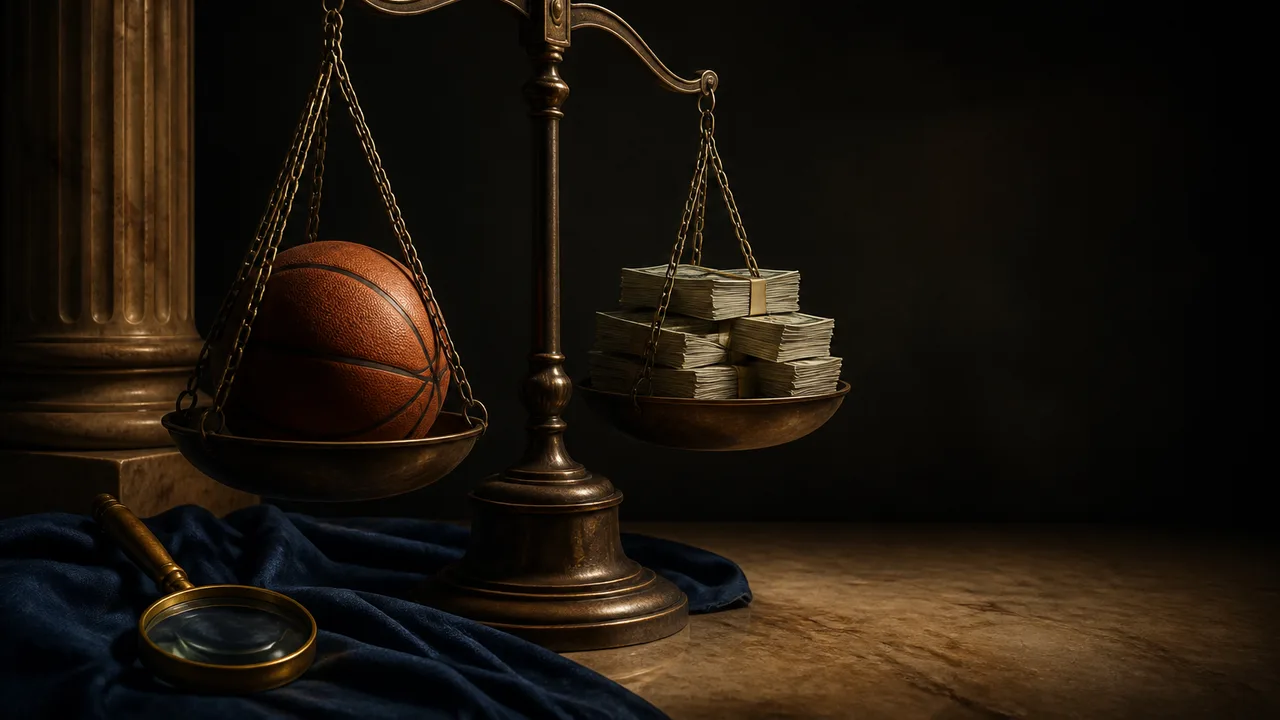
The Justice Department has opened a criminal investigation into the Clippers' efforts to secure "no-show" endorsement deals for Kawhi Leonard, according to NBC Sports, which cites reporting from the New York Times. Per USA Today, the federal probe follows the NBA's own investigation, which found the Clippers circumvented salary cap rules by secretly helping arrange sponsorship contracts that paid Leonard income beyond his sanctioned salary.
That sequence is unusual. League discipline lands first, then the federal government shows up about a week later. Front Office Sports reported the probe emerged roughly a week after the NBA announced its punishment, and SB Nation frames the DOJ's involvement as a step that could get worse for everyone involved before it gets better. Yahoo Sports calls it uncharted territory with the potential for criminal charges, and Sportico lays out how a DOJ probe adds criminal risk to what was already a cap case.
I want to walk through what actually changed this week, what didn't, and where the open questions sit, because a lot of coverage is acting like the government showing up automatically means prison time is coming. That's not established. What is established is that the conversation just moved to a building with subpoena power.
Two Systems, Two Rulebooks
The NBA found a cap circumvention and issued punishment. Hoops Rumors reported the Justice Department is now investigating the Clippers' dealings with Leonard. These are separate tracks, run by separate institutions, with separate mandates.
The league's job is competitive balance. It polices its own rulebook, protects its own economics, and punishes its own teams. That's the NBA acting as a self-regulating industry. The Department of Justice doesn't care about competitive balance. It cares about whether federal law was broken, which could mean fraud, wire fraud, tax issues, or false statements depending on what the facts actually show.
Here's the fan-facing translation of what that means, because the legal language in most coverage reads like it was written by a compliance department: when a federal investigator wants your records, they don't send a polite email asking nicely. A subpoena is a legal order. You show up, or you hand over the documents, or you get lawyers who explain why not showing up has its own consequences. That's a fundamentally different kind of leverage than the NBA asking a team to self-report and cooperate in exchange for a lighter penalty. The league process assumes good faith participation. The federal process assumes you might be lying, and builds its case accordingly.
This is also why the reported federal interest in the "no-show" endorsement structure matters more than the cap issue alone. A no-show deal, per the NBC Sports reporting, means Leonard was allegedly paid as a sponsor or endorser without performing meaningful work for the money. That structure, if proven, isn't just a league-rule problem. It touches documents, contracts, payment records, and statements made to entities that may have relied on them. Those are the ingredients federal prosecutors actually work with.
What the NBA Already Settled, and What It Didn't
The NBA's own investigation concluded the Clippers had circumvented the cap by helping arrange those sponsorship contracts, per USA Today. I'm not going to pretend I know the exact dollar figures or penalty structure, because the reporting I have doesn't lay it out cleanly, and I'd rather tell you that than make up specifics. What's clear is the league found something it considered serious enough to act on, and the Clippers paid a price for it within league rules.
A league penalty addresses competitive integrity. It doesn't address whether anyone broke federal law. Those are different questions, asked by different people, with different tools. The league can fine you, take your draft picks, or suspend executives. The government can indict you. One is a sports-business consequence, the other is a potential criminal record.
The Questions that Are Still Open
Nothing about the federal probe's outcome is known. No charges have been filed. The Sportico analysis of the situation frames this as criminal risk, which is a fair characterization, but risk isn't a finding.
The scope is unclear. We don't know if the DOJ is targeting the Clippers organization as a whole, specific executives, Leonard himself, his representatives, or third-party sponsors. We don't know which statutes are in play. We don't know if the focus overlaps cleanly with what the league already punished, or if federal investigators are looking at conduct the NBA either didn't examine or didn't have jurisdiction to examine.
That last one is the most interesting to me, honestly. If the federal inquiry is looking at things the NBA couldn't touch, like tax treatment, securities disclosure, or contracts with entities outside the league's regulatory reach, that opens a wider net than anything the NBA could have done alone. If it's just re-examining the same no-show deals through a fraud lens, it's a sharper instrument pointed at the same target.
SB Nation notes this could get worse for the parties involved, which is probably true, though "worse" is doing a lot of speculative work in that sentence. Federal investigations can stretch for months or years. They can end in charges, settlement, or nothing at all.
The Broader Pattern This Fits Into
There's a wider context here that matters for how you read this story. League discipline exists to protect league economics. Federal law exists to protect people from fraud and misrepresentation. When those two systems point at the same conduct, the second one is usually more dangerous for the people involved, because it comes with evidentiary tools, legal consequences, and public reputational damage the league can't control or contain.
Front Office Sports reported this probe adds a new layer beyond league discipline, introducing the possibility that outside investigators could examine facts or conduct under a different legal framework. That's a cleaner way of saying the NBA's rulebook has an edge, and what happens past that edge is somebody else's problem, specifically the Justice Department's problem.
Brian Windhorst, per Awful Announcing, called the latest revelations "extraordinarily troubling." That's a comment on the pattern of reporting, not a legal conclusion, and I want to be careful not to blur the two. Troubling and criminal are different categories.
What I'd flag as unresolved is whether this turns into actual charges. Federal probes into sports business arrangements have a mixed record of reaching that point. Some turn into indictments, others close. No public signal yet indicates which direction this one is heading.
For Fans
If you follow the NBA because you love the game, here's what this actually means for you: the product on the floor probably doesn't change much in the short term. Leonard is still under contract. The Clippers are still operating. The league is still running its season.
What changes is the texture of the conversation around it. Every press conference, every free agency cycle, every contract structure gets scrutinized through a new lens now. The league's credibility on competitive balance took a hit when the NBA investigation concluded the cap was circumvented. Federal involvement makes it harder for the league to contain the story within its own disciplinary apparatus, because now the DOJ is generating its own paper trail, on its own timeline, with its own incentives to keep digging.
For fans, the practical takeaway is that a story about league rules became a story about federal law, and those two things have very different endings. League penalties end with a fine, a draft pick, or a suspension, and then basketball resumes. Federal probes end with either nothing, or with people standing in front of cameras outside a courthouse.
The uncertainty is the uncomfortable part. The Clippers, Leonard, and anyone adjacent to these endorsement deals are now in a holding pattern with no clear timeline. Sponsors, business partners, and other teams are watching to see how far this goes before they decide how much distance to keep.
Where this goes next depends on facts nobody outside the investigation fully has: which records get demanded, who cooperates, and whether the structures the league flagged also violate anything federal prosecutors care about. The next meaningful signal will probably be the scope of the inquiry, which parties get contacted, and whether the DOJ's interest tracks the NBA's findings or points somewhere the league never looked.
That's the actual state of play: a league that punished a cap circumvention, a team that's now dealing with a federal criminal investigation into how it paid its biggest star, and a whole lot of people who thought this was a sports-business story discovering it might be something else entirely.
Photo credit:CBS Sports
Jai Trivedi covers the business of sports for Buzzrag. Follow him for more on media, money, and the machinery behind the game.
By Jai Trivedi
More Like This
Open Championship Ratings Hit Three-Year High on NBC
Ryan Fox's Open Championship win drew 4.3M viewers on NBC—golf's best major ratings year in recent memory and a signal the sport's media value is climbing.

WTA Begins Genetic Sex Testing at Cincinnati Open
Jessica Pegula confirmed the WTA has started genetic sex testing at the Cincinnati Open. Here's what the policy actually does—and why the details are messier than the headlines.
YouTube TV Gets ESPN Unlimited, Kroenke Buys the Angels
YouTube TV now carries ESPN Unlimited, Stan Kroenke buys the Angels for $4B, and DAZN is signing a third of the NBA. Sports media's big week, mapped.
Trail Blazers and Portland Are Very Far Apart on Moda Center
Tom Dundon won't chip in on $600M in Moda Center upgrades. Portland won't write a blank check. Here's what's actually at stake for both sides.
Span's XFRA Node Wants to Put a Data Center in Your Yard
Span and Nvidia want to bolt $250K of AI computing hardware to the outside of homes. The pitch is clever. The fine print is worth reading carefully.

Asteroid Impact on a City: What the Science Actually Shows
A Science Channel scenario imagines an 1,800-ft asteroid striking New York in 2029. Here's what the physics, detection protocols, and real planetary defense infrastructure say.