Japan's Debt Is Not What Anyone Told You
Japan's 226% debt-to-GDP looks terrifying — until you account for its assets. Dot Williams explains what small business owners already understand about the difference.

Written by AI. Dorothy "Dot" Williams

Photo: AI. Dexter Bloomfield
Picture the moment your banker hands you a loan denial. On paper, your business owes more than it's worth. Except the building you own has appreciated for fifteen years, and the equipment is paid down, and there's a line of wholesale accounts receivable sitting on your books that would make any reasonable person say: wait, back up. That's not the whole story.
Every small business owner I've ever talked to knows the difference between what you owe and what you're worth. The bank statement is not the balance sheet, and the balance sheet is not the business. You live in that gap. You make decisions in that gap.
Japan has been living in that gap for thirty years, and almost nobody noticed.
Japan's gross government debt hit roughly 226% of GDP in 2023 — the highest in the world, by a margin that makes France and the UK look fiscally austere by comparison. Those two countries have watched bond markets punish them in real time for far less. And yet Japan borrows cheaply, pays low interest rates, and has not faced the kind of debt crisis that the headline number practically begs for. Economic commentators have been predicting Japan's collapse for so long it's become a running joke in certain circles.
Dr. Joeri Schasfoort of the Money & Macro channel recently broke down a paper by economists Chin Du and a co-author whose surname is cited in the video as "Lustik" — I was unable to independently verify that spelling, and readers should note that the figures throughout this piece originate from Schasfoort's analysis of that research rather than from independently audited primary sources. With that caveat on the table: the argument Schasfoort presents is worth taking seriously, because it reframes the entire question.
The reason Japan's debt looks alarming, he argues, is that everyone has been reading only one side of the ledger.
"Japan's consolidated government — which includes institutions like the central bank and public pension funds — holds a massive financial portfolio of stocks and bonds that was worth about 192% of GDP in 2024," Schasfoort explains. Total gross debt, when you count the same consolidated government, runs closer to 270% of GDP. But net those two out — assets minus liabilities — and Japan's actual debt position lands around 77% of GDP. Lower than the US. Considerably lower than the UK.
Same books. Very different story.
How Japan got here is the more interesting part, and it starts in the postwar era with a structure that most Western economic coverage tends to gloss over.
During Japan's high-growth decades — roughly 1955 to 1973, when the economy was expanding at something close to 10% annually — the government essentially ran itself as a giant public bank. Japan Post, a government-owned institution, collected deposits from ordinary citizens. Legislation from 1947 reportedly kept savings account interest rates suppressed, though the precise legal mechanism deserves more scrutiny than it typically receives in popular accounts. Those cheap deposits were then routed through the Fiscal Investment and Loan Program — the FILP — which turned around and invested them in infrastructure and industrial development at higher returns.
None of this showed up in official debt figures. The borrowing happened off the government's formal books, through the post office. The investing happened off the spending ledger, through the loan fund. The profit margin between the two was never published. As Schasfoort notes, this is worth understanding not as a scandal but as context: "Japan's government bank structure worked really well, creating one of the most impressive growth stories of all time — that then China repeated."
When Japan's bubble burst in the early 1990s and economic growth flatlined, this banking model stopped working as well. And then, in what Schasfoort describes as an ideological pivot, Japan spent the early 2000s dismantling the structure entirely — privatizing Japan Post, cutting the FILP loose — because Western free-market economics had become the prevailing model. The government would act like a normal Western government. Fund spending with taxes. Minimal state apparatus.
The problem was that Japan was simultaneously hitting a demographic cliff that no Western government had faced yet. Pension costs climbing. Healthcare costs climbing. Tax revenues falling because an aging, stagnant economy produces less of them. Austerity was the orthodox answer, but austerity in a stagnant economy tends to make the stagnation worse — a tension economists have argued about for decades without resolution.
So Japan did something else. It kept the assets and borrowed to cover the gap.
Here is where the carry trade comes in, and I want to translate it plainly because it's actually a decision your readers may recognize.
Say you can borrow money at 2% — maybe a line of credit, maybe a refinanced commercial property. And say you know of an investment returning 6 or 7%. Maybe it's a rental property in a faster-growing market. Maybe it's a diversified fund. The spread between what it costs you to borrow and what you earn on the investment is your margin. This is not exotic. This is arithmetic that anyone running a small business has at least thought about, even if they didn't act on it.
Japan's government, through its central bank, was borrowing at essentially zero percent — the Bank of Japan was buying government bonds and issuing reserves that paid near-nothing — and its pension funds were taking that cheap money and buying US Treasuries, US equities, and other foreign assets earning meaningfully higher returns. Schasfoort calls this "a carry trading giant hedge fund, borrowing from people in yen at low interest rates and lending it out to the world."
What made it work even better than expected was currency movement. A Japanese pension fund that bought $100 worth of US bonds in 2013, when the exchange rate was 100 yen to the dollar, paid 10,000 yen for them. By 2024, with the exchange rate around 150 yen to the dollar, those same bonds — unchanged in dollar value — were now worth 15,000 yen when converted back. A 50% gain from currency alone.
Between 2012 and 2024, per Schasfoort's analysis, Japan's net debt fell from around 118% of GDP to 77% — not because Japan borrowed less (it borrowed more), but because foreign asset markets rose and the yen weakened dramatically. "The biggest part of the story," Schasfoort says plainly, "is simply that Japan got very, very lucky."
Luck, though, has a way of becoming a structural dependency.
For this model to keep working, three things need to remain true: foreign interest rates need to stay higher than Japanese rates; foreign asset markets need to keep rising; and the yen needs to keep weakening. The aging demographics actually support all three, at least in theory — an older Japan will produce less, import more, and generate less demand for yen. But two risks sit at the edges of this logic.
The first is geopolitics. A strategy that depends on holding foreign assets works only as long as foreign governments and markets permit it. Full deglobalization would be catastrophic — Schasfoort estimates Japan's net debt would jump from 77% to roughly 140% of GDP overnight if its foreign holdings became inaccessible. That's a tail risk, but it's not an impossible one.
The second risk is the one that should land harder for American readers of a certain age.
Anyone who owned a home or tried to start a business in the late 1970s remembers what inflation does. You watched purchasing power evaporate while the cost of borrowing went up. You remember what Paul Volcker's rate hikes in the early 1980s felt like — mortgage rates that touched 18%, businesses that couldn't refinance, a recession that was deliberately induced to wring inflation out of the system. It worked. It was also brutal.
Japan is aging so fast that LSE economist Charles Goodhart — and this is a contested projection, not settled consensus — has predicted that deeply old populations will eventually generate sustained inflation as retirees stop producing and start spending accumulated savings. If that happens in Japan, the normal response is to raise interest rates. But raising rates dismantles the carry trade. It makes government borrowing expensive. It makes the entire hedge fund structure unworkable.
"Japan's central bank will have no choice but just to let inflation increase ever and ever more," Schasfoort suggests as a possibility. He frames it as a question, not a certainty. But it's a serious question, and the first data points are already arriving: after decades of deflation, prices in Japan have started moving up.
The reason any of this matters to someone sitting at a kitchen table in Ohio, weighing their pension options or watching municipal bond yields, is that Japan is not an isolated case. It is the leading edge of a demographic curve that much of the developed world is on, just a few decades behind. The financial architecture Japan built — borrow cheap, invest abroad, let currency depreciation do the heavy lifting — is not a blueprint anyone designed in advance. It's a series of responses to situations that kept getting worse.
What works in a world of low rates, rising global markets, and favorable currency movement does not automatically work in a different world. The institutions managing your pension fund, your municipal bond portfolio, your retirement account — they are all, in some form, playing versions of this same game. Understanding the conditions under which it works, and the conditions under which it doesn't, is not an academic exercise. It's the practical question underneath every retirement projection you've ever been handed.
Japan got lucky. The question your financial future depends on is whether the luck holds — and whether the people managing it actually know the difference.
More Like This

Uganda Vanilla Could End the Price Chaos
Madagascar's vanilla monopoly has wrecked small business budgets for decades. Uganda's emerging industry might finally offer the stable supply chain Main Street needs.

AI Companies Are Running Out of Compute—and Money
As AI agents consume tokens at unprecedented rates, companies like Anthropic and GitHub are abandoning flat-fee pricing. The subsidy era is over.

Lloyd Blankfein's Risk Rules Work on Main Street Too
Lloyd Blankfein's frameworks on crisis management, contingency planning, and AI risk translate directly to small business — if you know where to look.
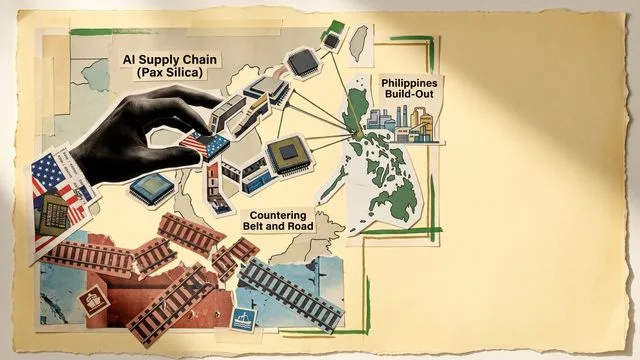
Pax Silica: America's Answer to Belt and Road
The Trump administration's 14-country AI supply chain coalition sounds ambitious. Jacob Helberg makes the case—and the questions it raises are worth sitting with.

When Trending Foods Leave Producers Behind
Oxtail now costs $14/lb. Acai farmers earn 20 cents/lb. A look at who actually profits when food goes viral—and who gets left out.

Wall Street Knew the Crash Was Coming. Saying So Got You Fired.
Jeremy Grantham's famous poll revealed 398 analysts knew the dot-com crash was guaranteed. A 2003 study shows why none of them said so publicly: accuracy cost careers.

Texas Is Becoming the Hub of Commercial Space
From SpaceX's Starbase to Firefly's moon landing, Texas has become the center of commercial space. Here's what's driving the shift—and what it costs.

Spain's Immigration Boom: Real Gains, Real Costs
Spain's mass immigration wave is propping up its pension system — but stagnant wages and a housing crisis reveal what the government isn't building alongside it.