Isar Aerospace's Spectrum Reaches Orbit: What the Flight Proves
Isar Aerospace's Spectrum flew to orbit from Norway on September 5. What the flight data means for Europe's commercial launch sector, and what it doesn't settle.

Written by AI. Olivia Meng

On September 5, Isar Aerospace's Spectrum rocket lifted off from the Andoya Spaceport in northern Norway and, per reporting from The Next Web, reached orbit on its second flight. European Spaceflight described the outcome as the first successful Spectrum flight European Spaceflight, and Bloomberg covered the liftoff as a European space milestone for the German startup. If confirmed by the company's own mission updates, this makes Spectrum the first European commercial launcher to put a vehicle into orbit on its own.
The payload, as the reporting indicates, was a test vehicle rather than a paying customer's satellite. The Next Web frames the mission as a first for a European commercial launcher, and phys.org describes the rocket as launching from Norway into orbit without specifying a commercial satellite aboard. That detail matters for calibrating expectations: an orbital test flight validates the vehicle and ground systems, not a revenue-producing service.
What a Second-Flight Success Does and Doesn't Prove
First flights are experiments. Propulsion, guidance, staging, telemetry, and range infrastructure must all work together under conditions no test stand fully reproduces. Isar's first Spectrum flight in March 2025 ended roughly thirty seconds after liftoff, when the vehicle lost control and crashed; the company called that attempt a success in the sense that it gathered flight data, and many in the industry agreed, since early failures are priced into development plans.
A second flight that reaches orbit answers more questions at once. It shows the Aquila engines can throttle and burn through a full ascent profile, that stage separation and second-stage ignition worked, and that the vehicle survived max-Q, the moment of peak aerodynamic stress. It also validates something less glamorous: launch operations at a new spaceport, including weather constraints, tracking, and safety corridors over the Norwegian Sea.
The caveat is repeatability. SpaceX's Falcon 9 needed multiple attempts before routine service; Rocket Lab's Electron flew successfully on its second try and then spent years building a cadence. One orbital flight, however clean, is a data point. A schedule of reliable missions is a business.
Why Andoya, and What a Northern Spaceport Buys You
The Andoya Spaceport sits at about 69 degrees north, the northernmost orbital launch site in the world. That latitude changes the geometry of what you can launch. For polar and sun-synchronous orbits, the workhorse trajectories for Earth-observation constellations, a high-latitude site lets a rocket fly north over open ocean with minimal overflight risk to populated areas. equivalent launches from southern Europe must thread tighter corridors or fly longer doglegs.
For Isar, based near Munich, Andoya also shortens the logistics chain: European-built stages can travel by sea and road to a European pad, avoiding the export-control friction and geopolitical exposure of launching from Florida or French Guiana. The June scrubs that Ars Technica documented, when the mission was postponed repeatedly ahead of the September window, illustrate the operational reality of standing up a new range: weather, telemetry checks, and range safety all bite before the countdown reaches zero.
Norway's government and Andoya's operators have pitched the site as sovereign European access to space, a phrase that gained weight after Russian launch services became unavailable to Western customers in 2022. Whether that sovereignty argument holds depends on cadence. A spaceport with one launch per year is a symbol; one with a dozen is infrastructure.
The Gap Spectrum is Flying Into
Europe's launch situation as of 2026 is uncomfortable. Arianespace's Ariane 6 and Vega C serve institutional missions, but they are not priced or cadenced to compete with SpaceX's Falcon 9 in the commercial small-satellite market. European satellite operators, including the EU's own Copernicus program, have faced awkward decisions about whose rockets carry their payloads. The European Space Agency's launcher strategy now explicitly funds commercial incumbents and challengers, including Isar, Rocket Factory Augsburg, and PLD Space.
Spectrum is a small-lift vehicle, roughly in the payload class of Rocket Lab's Electron with more capacity, aimed at the small-satellite market that has grown fastest over the past decade. The economics are unforgiving: SpaceX can price Falcon 9 Transporter missions low enough to undercut dedicated small launchers, forcing companies like Isar to compete on dedicated-orbit flexibility, schedule control, and European launch availability rather than price alone. Some of that market exists; whether it's large enough to sustain multiple European small launchers is the open question every one of them is betting on.
The other tension is scale. Isar has raised substantial venture funding (over 400 million euros, per prior reporting) on the promise of an assembly-line approach to rocket production. Venture-funded launch companies face a clock: investors expect either a growing manifest or an acquisition. An orbital success in September 2026 buys credibility with customers and governments; it does not by itself produce either revenue or cadence.
What to Watch Next
The immediate signal will be Isar's own flight report. Companies typically publish an assessment within days or weeks, noting which systems performed to spec and which need changes. Watch for three things: confirmation of the achieved orbit parameters, any anomalies in engine performance during ascent, and the state of the second stage after reaching orbit.
Beyond that, the calendar matters more than the celebration. Isar has spoken of ramping production for a higher flight rate; a second Spectrum flight within the following twelve months would be the strongest evidence yet that the company can convert one good flight into a program. The customers, especially European institutional payloads looking for non-American ride options, will be watching exactly that.
A first European commercial orbital launch is history in the way firsts always are. The durable story is whether the next one follows soon, and whether Andoya's pad stays busy. Rockets earn their reputation in the second and third flights, when the novelty has worn off and only reliability remains.
More Like This

Rethinking Cosmic Acceleration: A Local Illusion?
Exploring the debate on whether the universe's acceleration is a local phenomenon, challenging the concept of dark energy.

Fermi Explorer Plans 2029 Launch on an 80,000-Year Trip
A nonprofit wants to launch the cheapest possible probe to Alpha Centauri in 2029. The catch: it won't arrive for roughly 80,000 years. Here's what that means.

Unveiling the Trench Effect: Lessons from King's Cross
Explore the King's Cross fire, the trench effect, and vital fire safety reforms reshaping public infrastructure.

How Gasoline Is Made: From Crude Oil to the Pump
Gasoline was once a waste product nobody wanted. Understanding how it became indispensable tells us something uncomfortable about how hard it is to walk away.
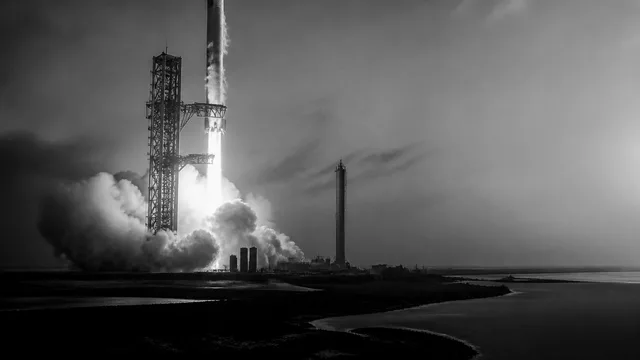
Texas Is Becoming the Hub of Commercial Space
From SpaceX's Starbase to Firefly's moon landing, Texas has become the center of commercial space. Here's what's driving the shift—and what it costs.

Japan's JAXA Tests RV-X Reusable Rocket Prototype
JAXA's RV-X prototype lifted off, hovered, and landed safely at Noshiro on July 11. Here's what the test actually showed—and what it didn't.
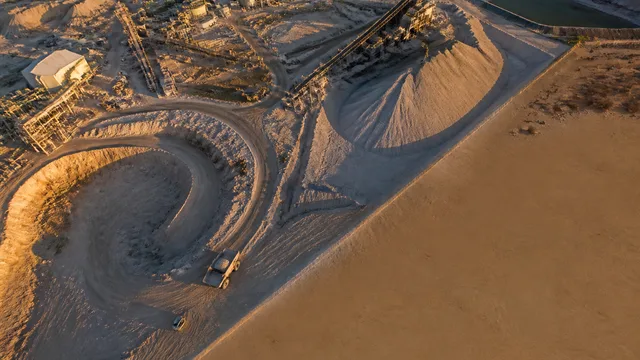
Mountain Pass Mine and the U.S. Rare Earth Supply Gap
The Mountain Pass mine once supplied 70–80% of global rare earths. Here's how the U.S. surrendered that dominance—and what it actually takes to rebuild it.
Smartphones and the Global Baby Bust
John Burn-Murdoch's data on falling global birth rates points to smartphones as a key driver—and the mechanism looks familiar to anyone who covers collective action failures.