India's 100 Million Visitor Goal Needs a Public Roadmap
India aims for 100 million foreign tourist arrivals by 2047. A public roadmap could clarify the baseline, interim goals, infrastructure needs and local costs.

Written by AI. Priya Chandrasekaran
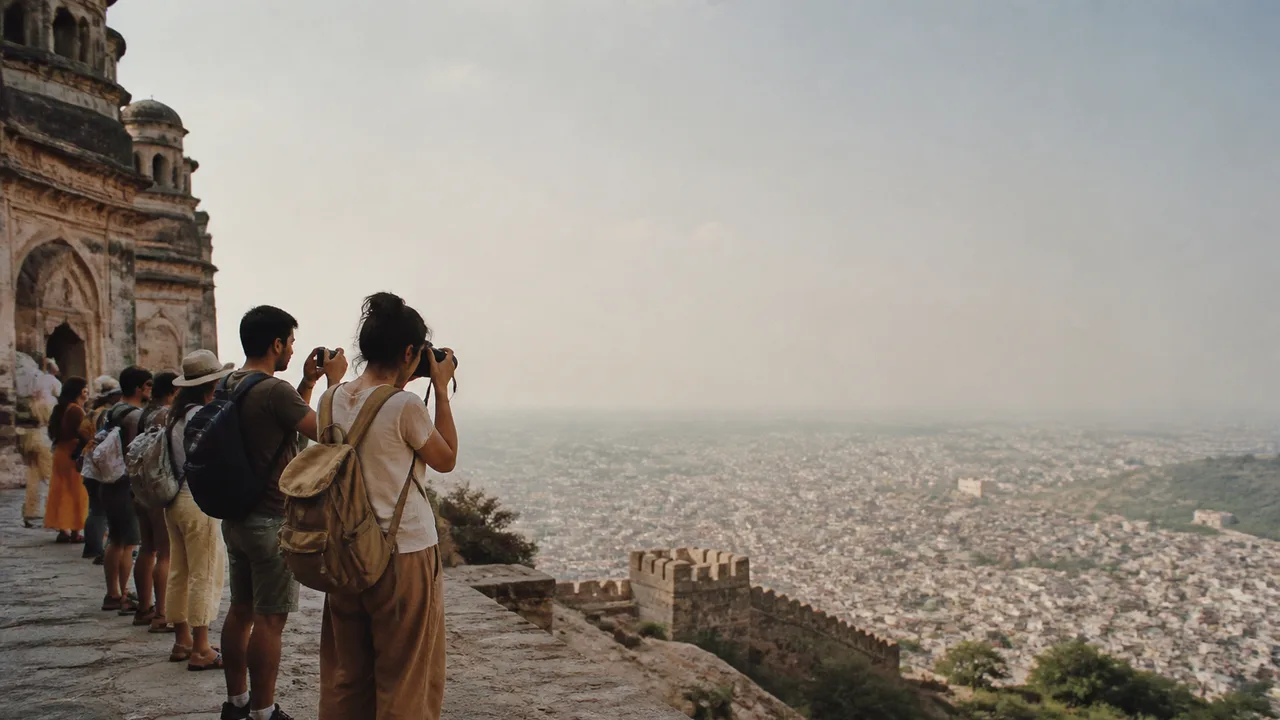
India wants 100 million foreign tourist arrivals by 2047, the centenary of its independence. Union Tourism Minister Gajendra Singh Shekhawat has also set out an ambition for tourism to contribute 7% of GDP by 2030. Those dates give policymakers a long horizon and a nearer checkpoint. They also invite a basic question: what would have to change, year by year and place by place, to get there?
The question is pressing because foreign arrivals are falling, while a public account of the steps to 100 million has yet to accompany the headline ambition. A four-part policy framework, described as the four Ps, signals priorities. It does not tell a hotel operator when to hire, a city when to expand transport, or a resident how many more visitors a neighborhood is expected to accommodate.
Tourism can be discussed as a single national number until it reaches a railway platform or a breakfast counter. Then someone has to move the queue, wash the dishes and decide where the wastewater goes. A credible roadmap would connect those tasks to the national target without assuming that more arrivals will produce the same benefits in every destination.
First, Define the Visitor
The starting figure needs a definition before it needs a growth curve. Does the target count foreign tourist arrivals, all international visitors, or individual people? If one person enters India twice in a year, does that count as two arrivals? How are visits for business or to see family classified? These questions determine the denominator against which progress will be judged.
A published baseline could give annual totals, explain the categories and show the method used to collect them. It could then state interim milestones. Without a consistent series, even an apparent improvement may be difficult to interpret: a change in classification can move a headline figure without moving a single traveler.
The timeline also needs a path between 2026 and 2047. The GDP ambition falls in 2030, 17 years before the arrivals target. A plan should explain how those two goals relate. Tourism's contribution to GDP can rise through visitor spending, longer stays and domestic activity as well as through more foreign arrivals. Policymakers need to say which measures they intend to track, so that success against one target does not get mistaken for progress against the other.
The strongest case for setting a distant goal is practical. Airports, rail connections, skilled workers and destination management cannot all be assembled in one budget cycle. A 2047 horizon gives governments and businesses time to coordinate investments. Interim figures would make that coordination more useful: they would show when projected demand is expected to arrive and where capacity must be ready first.
The Journey After Arrival
India plans to improve international visitor experiences and train 10,000 guides. Guide training is a concrete measure, especially for a traveler trying to understand a heritage site rather than simply photograph it. Its effect will depend on where guides work, what languages and knowledge their training covers, and whether paid work follows the training.
A visitor experience also has several stages before a guide enters the picture: finding a route, reaching a destination, navigating local transport and accessing reliable information. Some journeys combine major cities with smaller places; others concentrate visitors at a few famous sites. A national arrivals target cannot show whether either journey becomes easier. A roadmap could identify destinations expected to grow, the transport links serving them and the services needed when travelers arrive.
That geographic detail would also reveal who stands to gain. If new visitors spend their time in a narrow set of established destinations, businesses elsewhere may see little of the projected growth. Sending visitors toward smaller towns, meanwhile, requires more than promotion. Local transport, sanitation and visitor information need capacity before a place can absorb a sustained increase. Communities should have a say in how that capacity is built.
Food offers a useful test. A visitor can learn a great deal from an idli served hot, its fermented batter carrying the tang that tells you it had time to develop. The meal depends on work that a photograph rarely records: sourcing ingredients, preparing batter, cooking before customers arrive and cleaning afterward. A tourism strategy that advertises a place through its kitchens should ask whether the people doing that work can earn from rising demand, and whether their streets have the services to handle it.
Who Receives the Spending?
One hundred million arrivals would create opportunities for hotels, transport providers, guides, restaurants and other businesses. The distribution of those opportunities depends on where visitors go and how they spend. A traveler eating at a locally run stall and one buying every meal through a large package can contribute differently to the businesses around a destination, even if both count once in an arrivals total.
That is why spending and work deserve their own measures. Useful reporting would track visitor expenditure by region alongside employment, pay and conditions in tourism jobs. A guide-training program, for example, can report how many people completed courses. It could also report how many subsequently found paid guiding work and where. The second measure tells communities more about the program's economic effect.
Costs deserve the same attention. More visitors can increase demand for water, waste collection and transport, and add wear at heritage sites. The scale will vary by destination and season. A public plan could specify how authorities would monitor those pressures, who pays for added services and what happens if a site reaches a limit its managers consider safe. Otherwise, the arrivals target rewards growth even where local infrastructure cannot keep pace.
Travel can support livelihoods and give people a reason to protect the places and traditions they value. The question is whether the policy counts those outcomes with as much care as it counts entries at the border.
A Target the Public Can Check
An accountable roadmap would be recognizable by its working parts: a stable definition of arrivals, a published baseline, dated milestones, destination-level capacity plans and measures for spending, jobs and local pressures. Regular updates could explain missed milestones or revised forecasts. That would allow businesses to plan and residents to judge what growth means for the places where they live.
The four Ps may help organize policy, but a framework alone cannot answer those questions. Nor can a 2047 figure tell a guide whether work will follow training, or a town whether its next busy season will strain its water supply. India's ambition will become easier to assess when the country publishes the route between today's arrivals and 100 million, including the points at which it will check the condition of the places receiving them.
More Like This

When the Kitchen Was Already an Army
A French military doctrine is being proposed for hotel kitchens. But Escoffier already militarized the kitchen in 1900. What changes when the orders stop?
Istanbul's Layers: History, Faith, and Food
Rick Steves guides viewers through Istanbul's Byzantine ruins, Ottoman mosques, hammams, and tables. A food writer looks closer at what the camera catches and what it misses.

Local Staycations Are Reshaping Travel This September
With 72% of travelers preferring nearby getaways, the September staycation trend is more than a budget fix—it's quietly rewriting how tourism works.
Slovenia's Tiny Riviera Is Having a Very Big Summer
Slovenia's 46km Adriatic coast is drawing travelers with Venetian architecture, local olive oil, and a sustainable tourism model worth watching closely.
France Tests Low-Cost Rail Signalling for Rural Lines
France's NS2F consortium is trialling digital signalling tech to cut rural rail costs by 30%. Here's what's at stake for the towns trains forgot.
Small Group Italy Tours Are Reshaping Travel
Small group Italy tours promise authenticity over crowds. But do they deliver — and at what cost to the communities they claim to honor?