Human Creativity vs. AI: Where the Line Actually Falls
Oxford mathematician Marcus du Sautoy offers a three-part framework for creativity that clarifies exactly what AI can and cannot do — and where humans still hold the edge.

Written by AI. Bob Reynolds
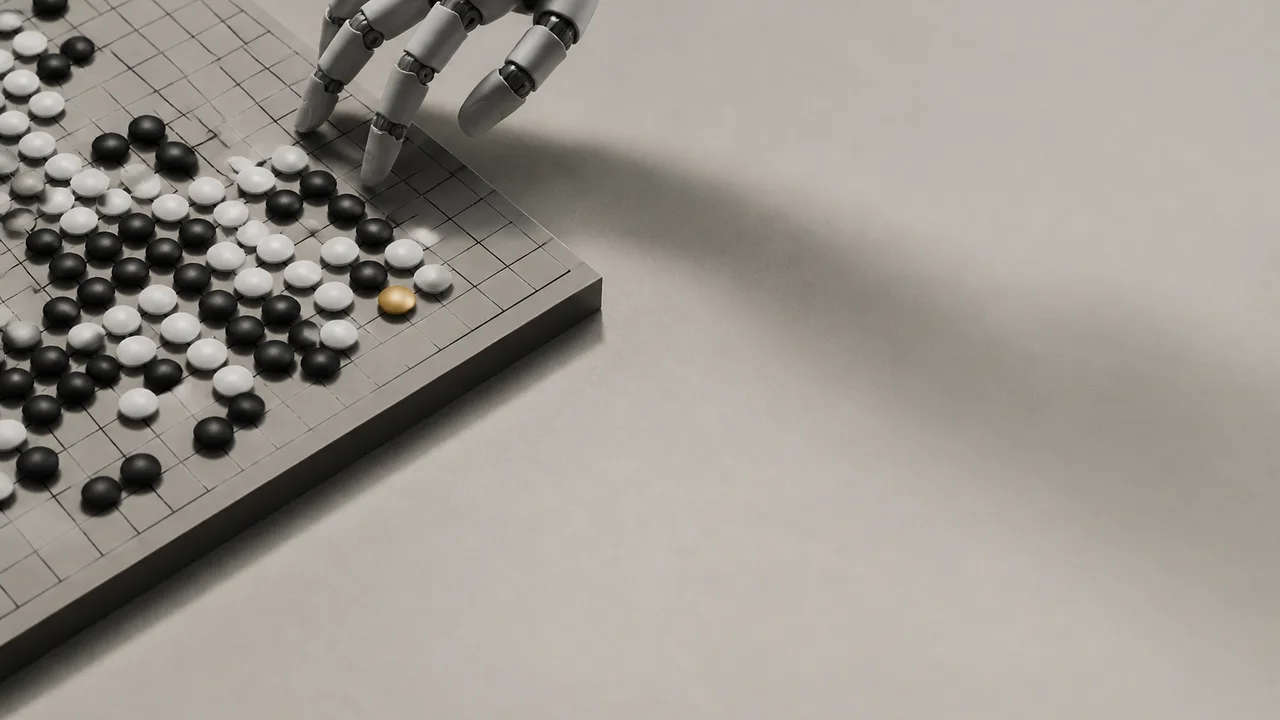
Photo: AI. Tomoko Hayashi
Every few months, someone publishes a piece asking whether artificial intelligence is creative. The answers tend to be useless — either breathless enthusiasm or defensive dismissal, depending on which side of the culture war the author lives on. What the conversation almost never has is a working definition of the thing being debated.
Marcus du Sautoy, professor of mathematics at Oxford and the Simonyi Professor for the Public Understanding of Science, thinks that definitional gap is the whole problem. In a recent conversation with EO, he offers something more useful than an opinion: a taxonomy. Three types of creativity, ranked by difficulty, with a clear-eyed assessment of where machines currently land on the scale.
It's worth taking seriously — not because du Sautoy is infallible, but because he's thought about this longer and more carefully than most people currently opining on the subject.
The Three-Level Framework
The first type du Sautoy calls exploratory creativity: working within an existing rule set and pushing it toward its limits. His example is Bach — operating within the formal structures of Baroque music while exhausting what those structures could produce. This is refinement at its most sophisticated, and it's something AI handles well. Feed a model enough examples of a style, and it can generate plausible extensions of that style at scale.
The second type is combinational creativity: taking tools or ideas from one domain and applying them to another. Du Sautoy says he uses this method in his own mathematical research — attending a geometry seminar as a number theorist, watching how geometers analyze their structures, and borrowing that analytical lens for his own problems. Fusion cuisine is the accessible version of the same idea. Again, AI proves capable here. Pattern transfer across domains is precisely what large models are trained to do.
The third type — transformational creativity — is where du Sautoy draws the line. This is the creativity that doesn't extend or recombine existing frameworks. It discards them. He points to the invention of serialism in early 20th-century music: not a refinement of harmonic structure, but the deliberate abandonment of it in favor of a 12-tone row. The rules weren't pushed to their limits; they were thrown out.
Du Sautoy's argument is that AI faces a structural obstacle here. Its creative process is, by design, learned from what already exists. Transformational creativity, almost by definition, requires breaking from that inheritance in ways the inheritance itself cannot predict.
This is a clean argument. It's also worth noting the tension it contains: the line between "very sophisticated recombination" and "genuine transformation" is not always obvious from the outside. Critics might reasonably ask whether serialism itself was, in retrospect, a novel combination of existing ideas about pitch and structure. Du Sautoy doesn't fully address this, and it's a question worth sitting with.
The Telescope, Not the Brain
Where the framework gets its sharpest illustration is in the mathematics. According to a report in New Scientist, an AI system recently solved an 87-year-old mathematical puzzle — not by proving it correct, but by finding a counterexample that showed it was wrong. The distinction matters. Finding a counterexample is, at its core, a search problem — exhaustive, computationally intensive, exactly the kind of task machines do well. Proving why something is true requires building an explanatory structure, a chain of reasoning that doesn't just locate the answer but accounts for it.
Du Sautoy frames this as the difference between a tool and a mind. "We really can regard AI in a similar way [to a telescope]," he says in the EO conversation. "It's almost like a digital telescope. It's allowing us to see into the digital world, see patterns emerging." The telescope metaphor is precise: Galileo's instrument didn't understand what it was showing him. It extended the range of human perception without replacing human interpretation. Du Sautoy is suggesting current AI occupies roughly the same position — augmented intelligence rather than artificial intelligence, in his preferred framing.
Move 37 and the Local Maximum Problem
The most interesting segment of du Sautoy's conversation concerns AlphaGo's Move 37 in Game 2 of its 2016 match against Lee Sedol. Go players and commentators watching live considered the move — a play deep into the board, unconventional at that stage of the game — to be an error. According to a KataGo analysis discussed on the r/baduk community, it was in fact a fifth-line shoulder hit, the kind of move that violates conventional opening wisdom. The commentators gasped. They called it weak.
AlphaGo won the game on the strength of that move.
Du Sautoy treats this as a genuine case of machine creativity — and makes the specific argument that the credit belongs to the AI, not the programmers. The strategy wasn't written into the code by a human designer; it emerged from the machine's learning process. No human engineer planned for Move 37. The implication is that what AlphaGo did wasn't execute a human's creative vision — it produced something the humans involved would likely have suppressed if they'd spotted it.
He frames this using the mathematician's concept of a local maximum: the highest point in your immediate vicinity, which looks like the summit until the fog clears and you see a taller peak across the valley. Human Go players had climbed to a local maximum — a sophisticated, time-tested understanding of optimal play. AlphaGo, unburdened by that inherited wisdom, descended into the valley and found the higher ground.
Whether Move 37 constitutes transformational creativity or merely very sophisticated exploratory creativity is something du Sautoy flags himself. He comes down on the side of transformational — because AlphaGo didn't just optimize within the existing paradigm, it changed the paradigm. Human Go players now play differently because of it. That seems like a reasonable standard.
The Laziness Argument
Here is where du Sautoy arrives at his most counterintuitive point, and the one that deserves more attention than it typically gets.
Humans, he argues, are constitutionally lazy. Not lazy in the pejorative sense — lazy in the sense that we are strongly motivated to avoid unnecessary work. When confronted with a problem that has an obvious brute-force solution, we tend to look for a shortcut instead.
He reaches for the story of Carl Friedrich Gauss as a schoolboy, asked to sum all integers from 1 to 100. The obvious approach is sequential addition — grind through every number until you reach the end. Gauss, reportedly around eight years old at the time, recognized that pairing the first and last numbers yields 101, pairing the second and second-to-last also yields 101, and so on — producing 50 identical pairs. Answer: 5,050. The calculation takes seconds. More importantly, the underlying logic scales to any number.
What Gauss did wasn't just arithmetic. He invented an algorithm — a generalizable procedure that converts brute repetition into elegant efficiency. Du Sautoy's point is that this kind of thinking emerges from the refusal to do it the hard way. The laziness is the engine of the insight.
"We're actually quite a lazy species," du Sautoy says in the conversation. "We're a bit like the lion that sits around all day in the savannah and then just does a short burst in order to capture its prey. I think that describes very much how we humans like to approach problems. And very often that leads to incredible innovation."
AI has no such incentive. A machine will run the sequential addition without complaint, at speed, indefinitely. The absence of impatience removes the pressure that generates shortcut-seeking. Du Sautoy suggests this may be where the genuinely human contribution to mathematics — and perhaps to problem-solving more broadly — resides.
What This Framework Leaves Open
Du Sautoy closes with a collaborative vision: humans providing the shortcut-seeking instinct, machines providing the computational endurance to execute and scale what humans discover. It's a reasonable optimism, and it has the advantage of being grounded in what AI demonstrably does well rather than what it might hypothetically become.
But the framework raises questions it doesn't answer. If transformational creativity is the standard by which humans maintain their edge, what happens when AI systems begin producing more examples like Move 37 — outputs that change the surrounding field in ways no human programmed? Du Sautoy does acknowledge the possibility, noting that the one signal he'd watch for is an AI that expresses something unprompted — that writes a novel not because it was asked to, but because it wants to tell you what it's like to be an AI. The intention, he suggests, would be the tell.
That signal hasn't appeared. Whether it will is the question that makes this conversation worth having at all.
By Bob Reynolds, Senior Technology Correspondent, BuzzRAG
More Like This
Anthropic's Claude Routines Targets No-Code Automation Market
Claude Routines lets users automate workflows with natural language instead of drag-and-drop builders. Is this the end of traditional no-code platforms?
AI Benchmarks Are Breaking. Here's Why That Matters.
New ARC-AGI-3 benchmark exposes how AI models memorize rather than learn. Humans score 100%, frontier AI models score less than 1%. The gap reveals everything.
AgentZero's Sub-Agents: Self-Modifying AI Delegation
AgentZero demonstrates AI agents that create and manage specialized subordinates on demand. The system modifies itself—which raises practical questions.
AI and Creativity: What Gets Lost in the Process
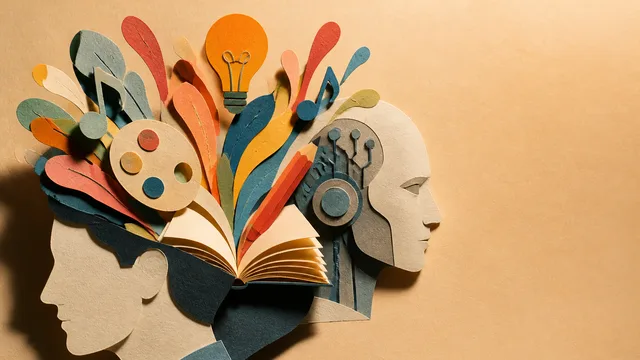
AI tools are reshaping how humans create. Marcus Obi examines what that means for the experience of making something—and what we risk handing away.

Grant Sanderson on AI, Math, and What Comes Next
Grant Sanderson of 3Blue1Brown breaks down why AI is advancing fastest in mathematics—and what that jagged frontier tells us about everything else.
Not Every Problem Needs AI. Here's How to Tell.
Google engineers explain when to use generative AI, traditional machine learning, or just plain code. The answer matters more than you'd think.
Python Backtesting Tools Promise a Lot. Know the Limits.
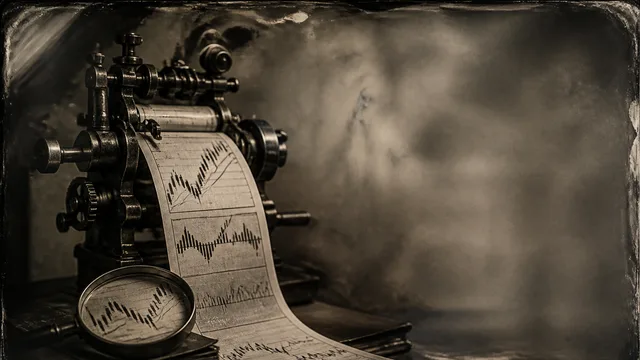
Zipline can simulate stock trading strategies in Python — but the leverage trap and survivorship bias can make bad strategies look brilliant. Here's what to watch.
Arm's Next Mali GPU Will Carry Neural Accelerators
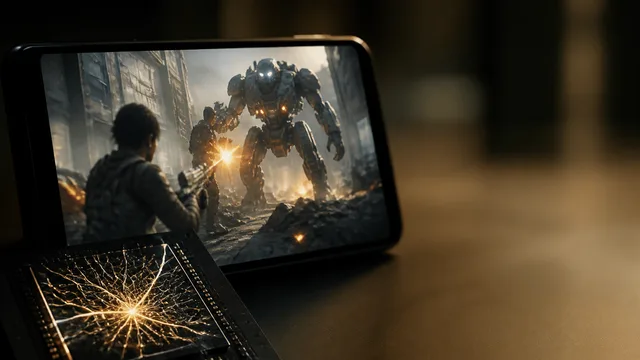
Arm's Neural Dawn demo signals dedicated neural accelerators in the next Mali GPU generation, bringing desktop-style upscaling and dynamic lighting to Android.