Grant Sanderson on AI, Math, and What Comes Next
Grant Sanderson of 3Blue1Brown breaks down why AI is advancing fastest in mathematics—and what that jagged frontier tells us about everything else.

Written by AI. Yuki Okonkwo

Photo: AI. Lev Zolotov
Mathematics is AI's canary in the coal mine. Whatever is happening there—what the models can do, what they still can't, where the edges are and why—is probably an early signal for what's coming to every other field. That's the framing Grant Sanderson, the mathematician and educator behind 3Blue1Brown, brought to a recent conversation with Dwarkesh Patel, and it's a genuinely useful lens.
The conversation is long (93 minutes), wide-ranging, and—because Sanderson is constitutionally incapable of giving a lazy answer—consistently interesting. What follows is my attempt to distill the terrain.
The benchmark problem, or: why solving the IMO didn't break anything
Three years ago, Patel asked Sanderson: if AI can get a gold medal at the International Math Olympiad, isn't that basically AGI? Sanderson was skeptical then. He was right to be.
AI did, more or less, reach that level. It didn't reshape the economy. It didn't even particularly reshape mathematics research. Sanderson's explanation for why: the IMO, despite its fearsome reputation, rewards a specific kind of trained pattern recognition. Combinatorics problems—the wild-card category, the ones that require something closer to playful improvisation—remained the stubborn holdout. The landscape inside math is spiky, just like the broader AI landscape.
This is the fractal nature of the frontier, as Sanderson describes it. You zoom out and AI looks impressive. You zoom in and you find pockets where it's dramatically overperforming and others where it's basically lost. The IMO gold story is a case of the former masking the latter.
The more interesting question now is what the next benchmark even looks like. Because this is where it gets philosophically weird.
What AI did that we thought it couldn't
For a while, a legitimate critique of AI systems was: you know everything, but you're not connecting it. A person with equivalent breadth of knowledge across fields would surely be stumbling onto cross-domain insights constantly. The AI wasn't.
Then it did.
An OpenAI model disproved a central conjecture in discrete geometry—the unit distance problem conjecture, as Sanderson discusses in the episode—which had the unmistakable character of an insight rather than just a solution. The chain of thought was legible to mathematicians. It used known concepts. It drew a connection. A similar thing happened with a problem involving primitive sets: the key move was importing a probabilistic approach from a seemingly unrelated domain, and once you stated it, anyone in the relevant field could see how to run with it.
Sanderson has a good name for this kind of insight: a lightning bolt. Expert in field A, expert in field B, draw the bolt between them. These are exactly the kinds of results that feel surprising but, in retrospect, make complete sense—which is why, Sanderson argues, they're also going to be the most human-parseable results AI produces. The lightning bolt is small. You just have to show where it started and where it landed.
The lurking question is what happens when the required insight isn't a lightning bolt. What if it's a mountain?
Mountains vs. lightning bolts
Sanderson uses Fermat's Last Theorem as the model for a different kind of mathematical progress. The problem is simple enough to write on a napkin. The solution required building two entire conceptual mountain ranges—elliptic curves and modular forms—before you could even ask the right question. The key insight, the connection between those mountains, only became visible once both had been constructed over generations.
Building a mountain is categorically different from drawing a lightning bolt. It requires coming up with the right new kind of object, the right new framework—not finding a connection between existing things, but producing something the field didn't previously have words for. Sanderson's read is that this capacity feels genuinely different from what current AI does well, and that a Riemann Hypothesis proof requiring mountain-building would signal a level of capability that would start leaking into the rest of the economy in meaningful ways. A lightning-bolt solution, by contrast, might be a much more contained skill.
That's not a guarantee of either outcome. It's a framework for thinking about what a given result actually implies.
The verification loop problem is older than you think
Here's the thing that stuck with me most from this conversation: the problem of recognizing a good mathematical idea without being able to immediately verify it isn't new. It's ancient. And it's exactly the problem AI faces with RLVR (Reinforcement Learning with Verified Rewards—basically, training systems by giving them feedback on whether their outputs are correct).
Sanderson walks through the history of group theory as a case study in century-scale verification loops. Lagrange noticed in the 18th century that something about symmetries of polynomial roots was the right way to think about solvability. Abel proved the quintic unsolvable. Galois—a teenager, writing in prison, as Sanderson retells it—pushed toward a deeper abstraction, but his work was so unformed that the academic gatekeepers of his time rejected it. He died young, and his notes were chaotic enough that even his friends struggled to get them to the mathematicians who might understand them. It was only some years later that Liouville recognized that there might be something in Galois's scattered writings worth excavating, and decades more before Jordan assembled anything resembling a modern treatment of group theory. The prediction of quarks via group-theoretic reasoning came in the 20th century—effectively completing the verification loop that Lagrange had started.
That loop is roughly 150 years long. The verified reward—the proof that this was the right way to think—came from physics, from cryptography, from applications nobody anticipated when the idea first appeared.
This is Sanderson's sharpest point, and I think it's underappreciated in most AI-and-math discussions: the things most worth discovering are precisely the things that can't be quickly verified. RLVR, as a training paradigm, is structurally blind to them. You can reward a model for solving problems. You cannot easily reward it for having the right instinct that a new layer of abstraction should exist.
"The kinds of things you can't make benchmarks for," Sanderson observes, "are also the kinds of things you can't easily train for."
Grindability: the underrated variable
Why is AI advancing faster in math than in, say, computer use? The standard answer is verifiability—math has right answers, you can check them. Sanderson's contribution here is adding a second variable: grindability.
Math problems can be containerized. You can spin up thousands of parallel rollouts, let the model attempt the same problem repeatedly, and use the differential between successful and failed attempts to figure out what worked. The environment is deterministic. The credit assignment problem—knowing why something succeeded—is actually solvable.
Computer use is verifiable (did the package arrive? is the event booked?) but not grindable: websites have bot detectors, real-world environments change between runs, you can't replay the same checkout flow ten thousand times without getting banned. Coding sits in the same sweet spot as math—containerizable, deterministic, parallelizable—which is why both are advancing fast.
This matters for predicting where the next wave of AI progress hits. Fields that are both verifiable and grindable are the ones to watch.
The entropy advantage
One of the more counterintuitive ideas in the conversation: AI's biggest advantage in research might not be intelligence. It might be the ability to systematically maintain diverse hypotheses.
Human researchers get anchored. They fall in love with a promising approach and struggle to back out of it even when it stops working. The unit distance conjecture sat unresolved partly because most mathematicians assumed it was true and spent their energy trying to prove it rather than disprove it. An AI system can, in principle, spawn one agent trying to prove a statement and another simultaneously trying to disprove it, each without the context contamination that makes it hard for a human to genuinely entertain both possibilities.
Sanderson flags this as something digital minds can do that we don't fully appreciate: not just thinking more or faster, but maintaining genuine entropy across approaches. The worry about AI entropy collapse—all models trained similarly, all converging on similar patterns—might actually be addressable through deliberate architecture. Old-fashioned software enforcing diverse priors at the prompt level, with models running off in different directions from there.
He also notes a structural advantage that has nothing to do with how smart individual systems are: parallelization at scale. The serendipitous lunch conversation between mathematician Hugh Montgomery and physicist Freeman Dyson at the Institute for Advanced Study—where Dyson recognized that Montgomery's formula for the spacing of Riemann zeta zeros matched expressions from random matrix theory in nuclear physics—is the kind of cross-domain connection that historically depended on two specific humans happening to be in the same place. AI systems don't need that serendipity. They can engineer it systematically.
What's left for humans
Sanderson's answer to "what will mathematicians be doing?" is more interesting than the usual "AI does the proving, humans do the explaining." He's updated away from that view. His current position: the same kind of intelligence that produces genuinely novel mathematical insights also tends to produce clear explanations of them. Einstein, Shannon, Feynman—all great expositors. Maybe that's not a coincidence. Maybe the same cognitive move that crystallizes a new idea also clarifies it.
Which leaves something more like curation as the distinctly human function. Not just explaining, but navigating: helping people understand which ideas are worth engaging with in an increasingly vast space of results. Sanderson compares it to an art museum curator—not making the art, not even necessarily the best person to analyze any individual piece, but the person whose judgment about what belongs on the walls you trust enough to follow.
"The people listening to this podcast," he tells Patel, "sort of trust your curation on what's an interesting topic in the first place. It's not that they're landing here because whatever your next topic is, that's what they in a prior sense wanted to understand. They're trusting you as a curator."
That's not a consolation prize for humans. It's a description of something social and relational that doesn't obviously get automated away—not because AI can't do it technically, but because the motivation to engage with ideas is, as Sanderson puts it, a social phenomenon. We follow people, not just content.
Whether that remains true as AI capabilities continue expanding in domains where humans still reliably outperform them is the open question sitting underneath all of this. Sanderson isn't predicting doom or utopia. He's mapping terrain. The map is unusually good.
More Like This

Google DeepMind Maps the Road From AGI to ASI
Google DeepMind's new paper treats AGI as a starting point, not a finish line. Here's what it actually argues—and what it leaves unresolved.
AI Progress Is Accelerating Faster Than Anyone Expected
New data shows AI capabilities doubling every four months, not seven. Industry leaders say coding is 'solved.' What does this mean for the rest of us?
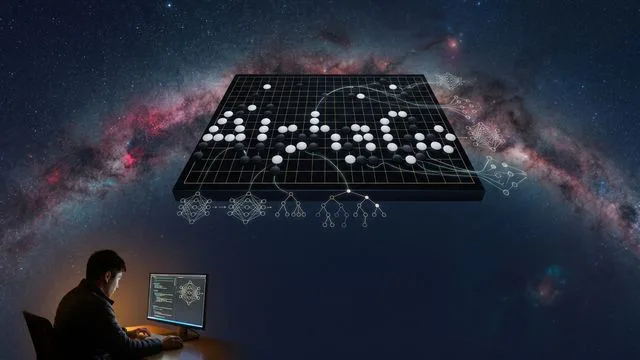
AlphaGo From Scratch: What Go Teaches Modern AI
Eric Jang rebuilt AlphaGo with modern tools—and what he found reveals a fundamental tension at the heart of how we're training today's LLMs.

Ray Kurzweil's AGI Predictions: What 2029 Really Means
Ray Kurzweil reaffirms his 2029 AGI prediction at a Diamandis event, citing physics gaps, robotics limits, and exponential compute growth as the final hurdles.
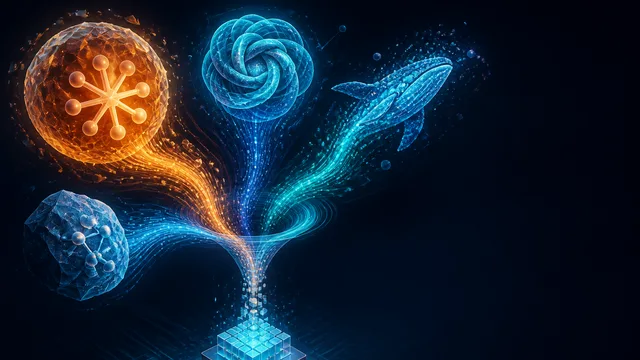
Claude Mythos, GPT-5.6, and DeepSeek's Pricing Bomb
Claude Mythos 1, Opus 4.8, and GPT-5.6 are all pointing toward a chaotic June. Plus: DeepSeek just repriced the entire API market. Here's what's real.
AI's Spiky Intelligence: Why We're Measuring It Wrong
Claude Opus 4.6 detects Russian syntax in six words. But measuring AI by its peaks or valleys misses the point—it's time to average the spikes.

GLM 5.2 Is Cheaper Than Claude. Switching Isn't.
GLM 5.2 is free, open-source, and beats Claude on everyday tasks. So why aren't companies switching? The answer has nothing to do with the model.

VEED's AI Video Platform Reviewed: One Tool or Five?
VEED promises to replace your entire AI video stack with one platform. We break down what it actually does, what it doesn't, and who it's really built for.