How to Tell a Cyberattack From an Ordinary Service Outage
A failed login can signal a cyberattack or a routine outage. Here's how responders check the clues, handle uncertainty and keep users informed during disruption.

Written by AI. Tyler Nakamura
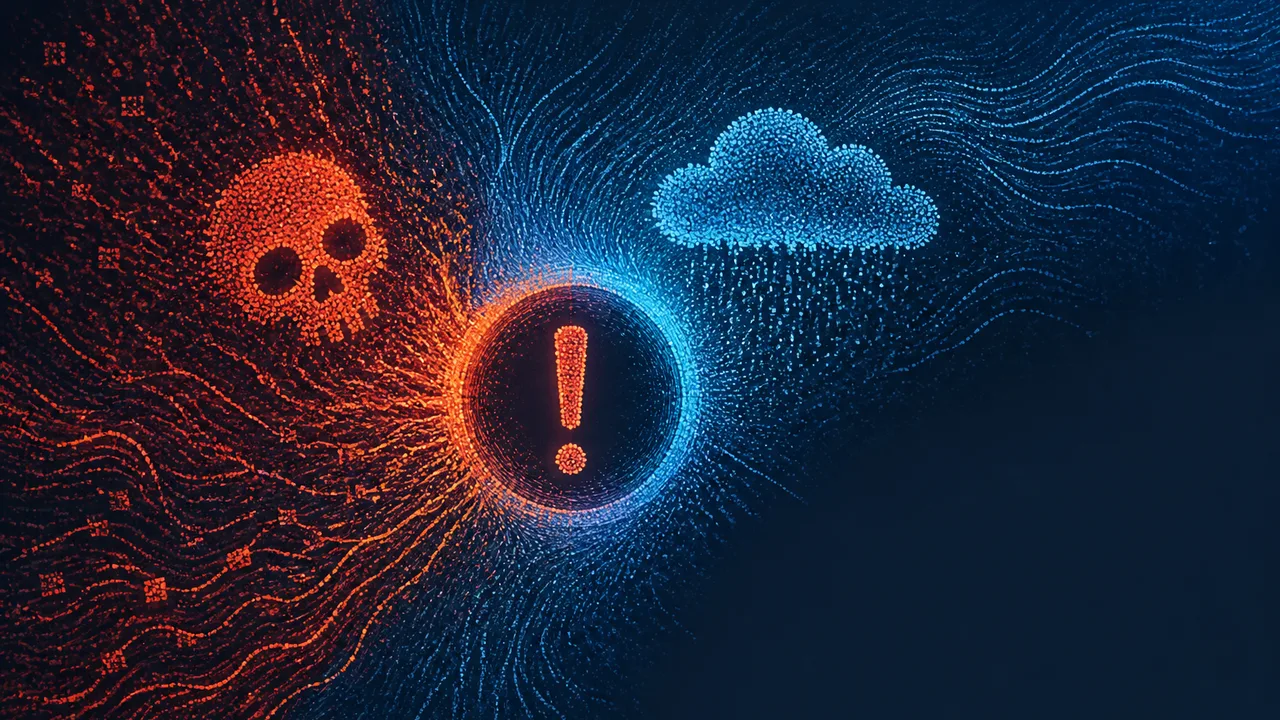
On November 17, outages disrupted banks, air travel and services associated with Apple and the NSA. That is a lot of broken stuff for one day. It is not, by itself, a diagnosis. A failed login at a bank and an inaccessible travel service can feel identical to the person staring at a phone, even if the failures have different causes.
For the teams trying to bring a service back, the first question is often harder than “When will it work?” They have to ask what broke, what changed just before it broke, and whether someone is actively interfering. A new guide to distinguishing an attack from an outage addresses that problem: the initial symptoms can look alike, while the right response may require restoring service, containing an intrusion, preserving evidence, or all three.
The temptation is to pick a label early. “Outage” sounds manageable. “Cyberattack” sounds urgent. Neither label repairs a system, and either one can send responders down the wrong path if it arrives ahead of the facts.
The Error Message Knows Less than You Think
A login screen tells a user that authentication failed. It usually cannot tell them whether the cause is a broken identity service, a network problem, a recent software change or malicious activity. An unreachable website has the same limitation. It reports a symptom at the end of a chain that may include the user's connection, a service provider and the company's own systems.
That makes the scope of a disruption more useful than any single screenshot. Can people reach the site but not sign in? Are multiple functions failing at once? Did the problems start at roughly the same time? Those questions help responders decide where to look first. They do not turn a cluster of complaints into proof of a shared cause.
The November 17 disruptions show how quickly that distinction can get blurry. The list of affected organizations spanned very different services. A separate report of trouble with an NSA workplace messaging system added another striking item. A long list of names is a useful prompt to investigate dependencies. It is a lousy substitute for identifying one.
Shared infrastructure offers one possible explanation for apparently unrelated failures. A problem with a common network or identity provider could reach several services at once. Separate faults can also land on the same day. The operational task is to test those possibilities against timelines and system records, rather than treating proximity on a news feed as a network diagram.
Investigate on Two Tracks
A service team has an immediate job: identify the failed component and get people back in. A security team has a different immediate job: determine whether access or systems have been compromised and, if so, prevent further harm. During an ambiguous incident, those jobs overlap.
Start with the timeline. When did the first failures appear? Did a configuration change, software deployment or infrastructure problem appear just before them? Were security alerts firing before the service failed, or only after it began rejecting requests? Logs can help put events in order, but an alert during an outage may reflect the outage itself. Failed logins, for example, become more common when people keep trying a service that is already struggling.
Then compare what is failing with what is still working. If a site loads but accounts cannot authenticate, investigation can focus on the login path. If multiple unrelated functions stop together, responders may need to look at infrastructure they share. If suspicious access appears alongside the disruption, a quick restart may be a poor first move: it could restore service while leaving the underlying access untouched.
The reverse mistake has a cost, too. Treating every disruption as hostile can consume the attention needed to fix an ordinary failure. It may also push a company to tell customers they are facing an attack before it knows that to be true. The goal is not to wait for certainty before doing anything. It is to separate actions that are sensible under several possible explanations from actions that assume one explanation has already won.
That can mean investigating a possible intrusion while engineers work on restoration. It can mean keeping relevant logs and records intact while troubleshooting, so a later finding is still possible. The order of work matters: a fix that erases clues can make the next decision harder, while a security investigation that blocks every recovery step can prolong disruption for users. Neither team gets to solve this with a dramatic dashboard color change.
What Users Need While Teams Are Still Unsure
Customers usually cannot see any of that work. They see a payment that will not go through, an account they cannot enter or a service they need for travel. Operational uncertainty has a real user-facing consequence: people need to decide whether to retry, wait or find another way to complete a task.
A useful status update can state what a company knows without naming a cause it has not established: which service is affected, when the trouble began, whether access is intermittent, and when the next update will come. If the company is investigating suspicious activity, it can say so. If it has identified an attack, it can say that instead. Those are different statements, and customers should not have to decode “technical difficulties” indefinitely to work out which one applies.
Companies also have a reason to be careful with early public claims. Announcing an attack prematurely can mislead users about what happened. Calling a developing intrusion routine downtime can leave people unaware of a problem that may require a different response. Clear communication is therefore part of incident handling, alongside technical detection, rather than a press-release task saved for after the servers recover.
For an individual user, an error message or a social post is weak evidence about cause. Checking the service's official status channel can clarify whether it acknowledges a disruption. If an essential task cannot wait, a fallback may be more useful than repeatedly tapping the same broken button. Neither step diagnoses the underlying incident; both help a person navigate it.
Interconnected Services Complicate the First Call
Disruption can reach well beyond the company whose name appears on a screen. Outages that ground planes and halt work illustrate why an incident can become consequential before anyone has pinned down its cause. An airline passenger needs an update about travel. An employee needs to know whether a work system is usable. A responder needs a much finer-grained picture of which components failed and when.
Those needs put pressure on the same timeline. Users want answers immediately; diagnosing an incident takes comparison across systems, changes, alerts and logs. An organization with a practiced way to route information between service and security teams can make decisions while its explanation is still developing. Without that coordination, the first plausible story can become the story everyone works from, even as new clues arrive.
The useful early question, then, is not “Can we call this a cyberattack yet?” It is “What must we check next, and what can we safely tell people now?” The first broken login supplies the urgency. The timeline, the system records and the next update have to supply the judgment.
More Like This
Antigravity A1 Drone Review: 360 Camera Meets FPV
The Antigravity A1 merges a 360-degree camera with FPV drone flight. Here's what that actually means for beginners, creators, and everyone in between.
AI Is Collapsing the Cost of Cyberattacks
Nebulock CEO Damien Lewke maps how AI has automated the cyber kill chain—and what defenders must do before the window to act closes.

The Real Talk Guide to Your First 100 YouTube Subscribers
VidIQ breaks down what actually works for new creators in 2026. Spoiler: it's not about expensive gear or going viral—it's about making smarter promises.

World's Fastest Drone Reclaims Record with V4
Discover how Peregreen V4 reclaimed the world's fastest drone title with a speed of 657 km/h.
Claude Code Plugins Automate SaaS Competitor Research
Software Engineer Meets AI demonstrates Claude Code plugins that handle competitor analysis, domain selection, design, Stripe integration, and security for SaaS builders.

ChatGPT, Claude, Grok and Gemini All Failed at Once
ChatGPT, Claude, Grok, and Gemini failed in the same window on September 3. What each company said, and didn't say, reveals how AI designs failure communication.
States Can Now Regulate Prediction Markets as Gambling
A federal appeals court ruled states can regulate prediction markets as gambling. Here's what Kalshi users need to know right now, and what to watch next.

Google Sets Android RAM Limits as AI Strains Memory Supply
Google is enforcing new Android app memory limits by February 2027, driven by an AI-fueled chip shortage. Here's what it means for developers and everyday users.